

There are destinations that people visit for their beaches, while others end up surprising them because of everything that happens far beyond the sand. Nayarit increasingly belongs to the second category.
The Pacific remains the main attraction, but around it a much more diverse destination has been taking shape: hotels where the jungle practically enters the room, towns to explore without rushing, surfing, nature, wellness, and, with increasing strength, a culinary scene that deserves to be part of the itinerary.
The sign that something is changing has also come from outside. In 2026, Riviera Nayarit appeared on Condé Nast Traveler’s selection of the best places to visit in North America and the Caribbean. Beyond the recognition itself, the interest has to do with a transformation that can be perceived when traveling through the state: there are more ways to get there, more places to stay, and more reasons not to limit the trip to a weekend by the sea.
A Trip That Begins Before Reaching the Beach
To travel from Guadalajara to Nayarit, using Tepic, its capital, as a reference point, there are very convenient options by car and bus due to the proximity and road connectivity between the two states.

In addition, the new Tepic-Compostela highway, inaugurated in November 2025, added 26 kilometers to the road network and cut the travel time between Tepic and Compostela in half.
For travelers, the difference is not only measured in minutes saved. The highway makes it easier to imagine a road trip through Nayarit: starting in Tepic, continuing toward the towns, and reaching the coast without turning every transfer into a small expedition.
By air, Tepic-Riviera Nayarit International Airport currently has connections to Mexico City, AIFA, and Tijuana, as well as international flights to Calgary, Houston, and Los Angeles. Between January and April 2026, it recorded 2,395 flights, 21.3 percent more than during the same period the previous year.
The consequence for travelers is simple: getting there is easier, and with that, it is also easier to think of Nayarit as a destination to explore rather than simply a place to spend a few days by the ocean.
A Destination for Changing Plans
Part of Nayarit’s current appeal lies precisely in not having to choose just one type of trip.
You can start the day at sea and finish it with a chef-driven dinner. Sleep in a luxury hotel and explore a town the next day. Go surfing in the morning, visit a market in the afternoon, and sit facing the Pacific to watch the sun go down.
You can also do the opposite: forget the itinerary altogether.
Because if there is something that has changed in Nayarit, it is the possibility of building a trip according to your own preferences. There are destinations for those seeking adventure, those who want to rest, families, couples, surfers, culinary travelers, and those who understand luxury as privacy, good food, and nature.
The numbers reflect part of this interest. In January 2026, the destination recorded an 82.9% hotel occupancy rate, placing it among the beach destinations with the highest occupancy levels in the country during that period.
But perhaps the best way to understand the moment Nayarit is experiencing is not through the numbers.
It is through the possibility of arriving with a very specific idea of what you want to do and ending up doing something completely different.
Because yes: the Pacific is still there, as spectacular as ever.
The difference is that now there are many more things to do before heading home. And among them, eating is becoming one of the best.
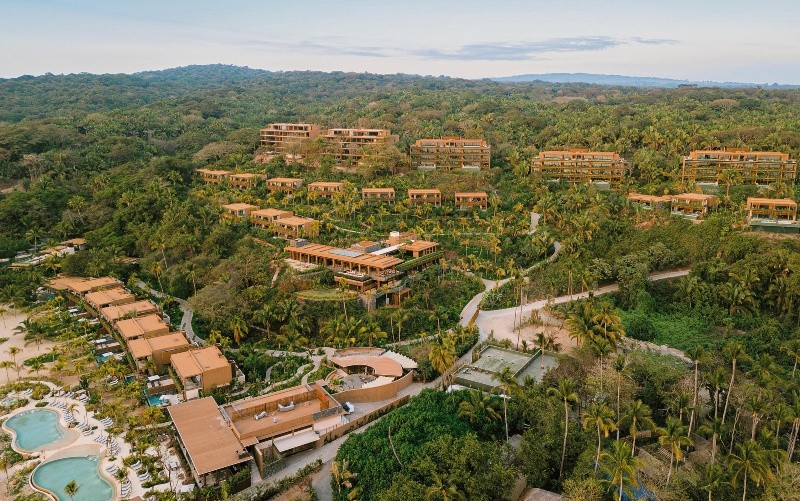
Between Jungle, Design, and the Pacific
Riviera Nayarit has added properties that understand luxury in a way that is increasingly connected to the landscape. Instead of competing with the jungle and the ocean, the new hotels seek to incorporate them into the experience.
Rosewood Mandarina, for example, was included by Condé Nast Traveler on its 2026 Hot List of new hotels, thanks to a concept centered on the coexistence of architecture, nature, and the Pacific.
This offering is joined by Siari Riviera Nayarit, a Ritz-Carlton Reserve, conceived around lodging, culinary, wellness, and environmental experiences.
But luxury is only one side of the destination.
There is Sayulita, with its mix of surfing, restaurants, and relaxed spirit; San Pancho, with a slower pace and a strong cultural vocation; Punta Mita, where sophistication meets the ocean; and places such as Lo de Marcos and Rincón de Guayabitos, for those who prefer a quieter coastal experience. And then there are the towns.
Nayarit has nine Pueblos Mágicos: Jala, Sayulita, Mexcaltitán, Compostela, San Blas, Ixtlán del Río, Ahuacatlán, Amatlán de Cañas, and Puerto Balleto, in the Marías Islands. Together, they create a route that allows travelers to exchange a hammock for a town square, a surfboard for a hike through the mountains, and a resort for a local eatery, market, or table.
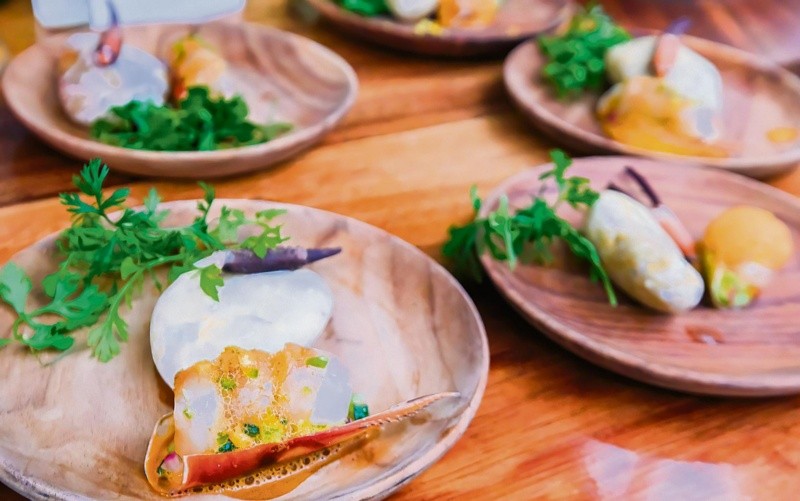
Eating Is Also Traveling
One of Nayarit’s great attractions for the contemporary traveler is its gastronomy.
The state does not need to invent a culinary identity. It already has one in its products, the kitchens of its towns, the fish and seafood of the Pacific, and a pantry that changes as one travels from the coast toward the mountains.
The difference is that this richness is beginning to occupy a more visible place within the tourism experience.
Today, a getaway can be organized around a good meal, a dinner by the sea, a visit to producers, a cooking experience, or a route to discover local ingredients. Eating ceases to be the break between one activity and another and becomes another reason to travel.
A Table Without Borders
If getting to know a destination means tasting it, Vallarta Nayarit Gastronómica is a good excuse to do so with an appetite. From October 4 to 7, the region will host the 18th edition of the event, bringing together more than 80 figures from the culinary world of Mexico, Spain, the United States, Brazil, the Dominican Republic, and Chile.
For four days, the protagonists will be the flavors, techniques, and stories that take place around a table. The program includes showcookings, gourmet workshops, premium tastings, and conferences, as well as meetings with chefs and mixologists.
The main venue will be the Sheraton Buganvilias Resort & Convention Center, although the experience will extend to Puerto Vallarta, San Sebastián del Oeste, Riviera Nayarit, and Bucerías. This distribution allows the event to go beyond the traditional format of a gastronomic conference and also become an invitation to explore the region.
A Table That Crosses Borders
Among the highlights of this edition is the participation of Mexican chefs recognized by the Michelin Guide, along with international chefs and specialists who will bring different perspectives to contemporary gastronomy.
Jalisco will be represented by Francisco Ruano, Xrysw Ruelas, and Óscar Segundo, along with products that are part of its culinary identity, such as Yahualica chili, raicilla, and tequila.
The result is a table where local ingredients, contemporary techniques, and culinary proposals from different parts of the world coexist. For travelers, the opportunity lies both in discovering new flavors and in meeting the people behind them.
The previous edition offered a glimpse into the power of gastronomy to attract travelers: more than 14,000 people attended the event, generating approximately 5,500 room nights. More than 85% of attendees came from other regions.
Eating Is Also Exploring
One of the event’s particular features is that the experience does not end when leaving the restaurant. Activities are distributed across different locations throughout the region, making it possible to combine a culinary agenda with beaches, towns, landscapes, and lodging options.
Thus, a tasting can become an excuse to discover San Sebastián del Oeste; a dinner, the perfect ending to a day beside the Pacific; or a showcooking event, the starting point for discovering new ingredients and local products.
In this sense, Vallarta Nayarit Gastronómica functions as more than an event for culinary professionals. It is a gateway to a region that increasingly has more reasons to be explored through the palate.
Because sometimes the best itinerary is not drawn on a map, but on a menu.

Source: informador