
Baja California Sur still does not have a registered habitat in Poliniza, a national initiative of the National Commission for the Knowledge and Use of Biodiversity (Conabio) that seeks to involve society in the conservation of pollinators. Nationwide, there are already 240 spaces, meaning residents of the state can become the first to register one.
The initiative was launched on May 27, 2026, as a result of work that began in 2020 with the National Survey for the Conservation and Sustainable Use of Pollinators (ENCUSP), in which the Secretariat of Agriculture and Rural Development (Sader), Conabio, and Semarnat participated.
Angélica Cervantes, deputy director of Information Management and Species Assessment at Conabio, explained that the work emerged in response to the global decline of pollinators, associated with factors such as climate events, habitat loss, indiscriminate use of agrochemicals, and diseases.
All ecosystems basically depend on flowering plants to survive.
Angélica Cervantes, deputy director of Information Management and Species Assessment at Conabio
She explained that pollination allows the reproduction of plants and contributes to food security, since a large number of the fruits, seeds, and crops we know today depend on this process.
A Desert Also Needs Pollinators
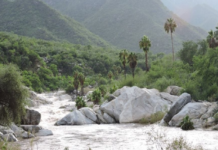
Although Baja California Sur has a predominantly arid territory, its ecosystems depend on the interaction between plants and pollinating animals.
Cervantes noted that the state is part of the Sonoran Desert, a region with distinctive flora and numerous endemic species. Among the plants she mentioned are cardón cacti, agaves, and ironwood, as well as various cacti whose reproduction depends on pollination.
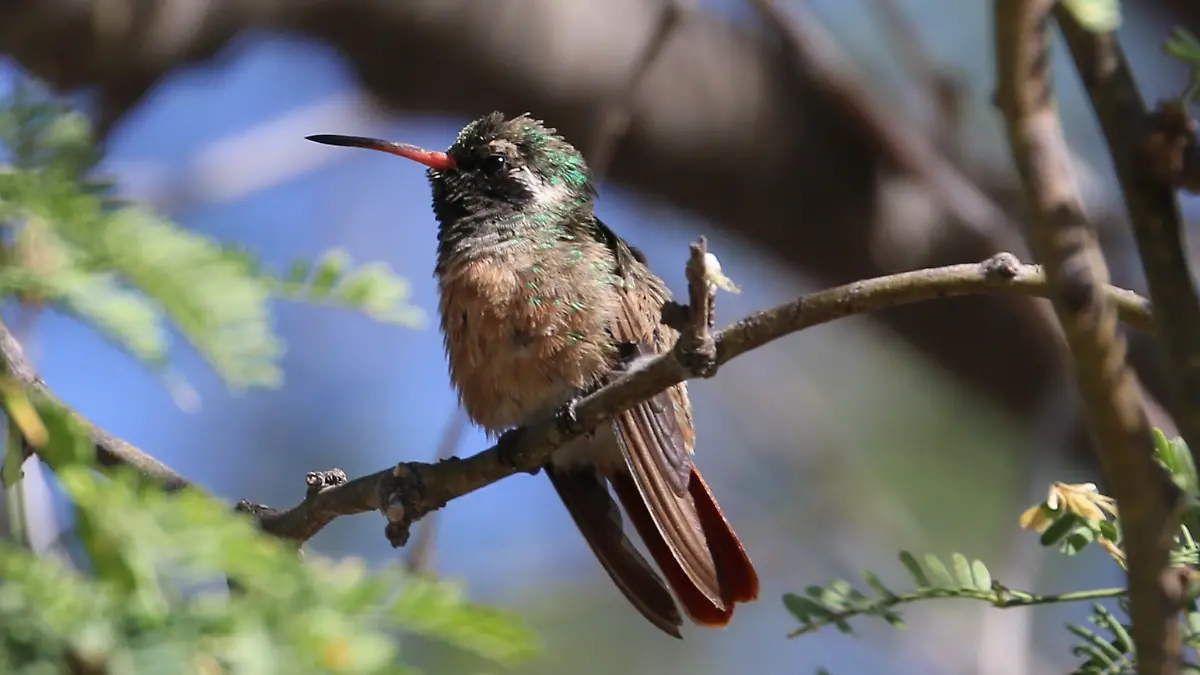
Among the pollinators present in these environments, she mentioned hummingbirds, bats, migratory birds, butterflies, beetles, and bees.
The cacti you have there simply could not exist if there were no pollination.
Angélica Cervantes, deputy director of Information Management and Species Assessment at Conabio
The conditions in Baja California Sur, however, represent a challenge for creating these spaces due to high temperatures and water availability. The alternative, she explained, is to turn to xeriscaping, meaning the use of native plants adapted to arid areas.
The Ethnobiological Garden of Baja California Sur at the Center for Biological Research of the Northwest has a publicly available catalog of native species suitable for pollinator gardens, including Mariola (Solanum hindsianum), San Miguelito (Antigonon leptopus), and Rama Prieta (Ruellia californica subsp. peninsularis).
How Can You Participate?
Poliniza has three components: pollinator habitats, monitoring, and outreach. The initiative is currently focusing its efforts on registering spaces, while a citizen network will later be promoted to identify and document the species that visit flowers.
Ivett Mota, head of the Biodiversity Outreach Coordination, explained that the initiative expanded the concept of a garden to include everything from a balcony or domestic space to protected natural areas.
To register a habitat, the space must have a greater proportion of native plants, not use agrochemicals, have a water supply, and contain natural materials that can serve as shelter for pollinators. The registration includes general information, location, description, and photographs, which are subsequently reviewed to validate the habitat.
Participation is not limited to people who have a garden. It is also possible to get involved through outreach or pollinator monitoring in other spaces, including streets and median strips.
Mota explained that approximately 180 gardens had previously been registered, but since the initiative was launched in May, there were already more than 100 new registered habitats, bringing the total to 240 Poliniza spaces. The information collected is subsequently intended to be used through citizen science tools such as the iNaturalist application.
Baja California Sur, a Pending Task
According to Mota, there are currently records in Baja California, but Baja California Sur still does not appear on the Poliniza habitat map.
The official noted that participation in northwestern Mexico has been lower compared with other regions and considered that one of the difficulties may be related to the perception that arid territories have less biodiversity.
For Cervantes, creating a habitat in Baja California Sur does not necessarily require a major investment. One option is to obtain seeds from native plants without removing entire specimens from nature and to rely on the knowledge of specialists.
In La Paz, the Ethnobiological Garden of Baja California Sur at Cibnor, known as Guyiaqui, has information about regional plants that can help identify suitable species.
The specialist also distinguished between providing water or sugar to animals and creating a habitat. Although these resources can attract wildlife, a space with native plants provides food and shelter.
If we want to replicate a habitat for pollinators, for example, it would be better to have the plants.
Angélica Cervantes, deputy director of Information Management and Species Assessment at Conabio
The goal of Poliniza is for these spaces to eventually become sites for observation, monitoring, and environmental education, so that citizens not only create a habitat but also learn which species use it and contribute to documenting them.

Source: oem