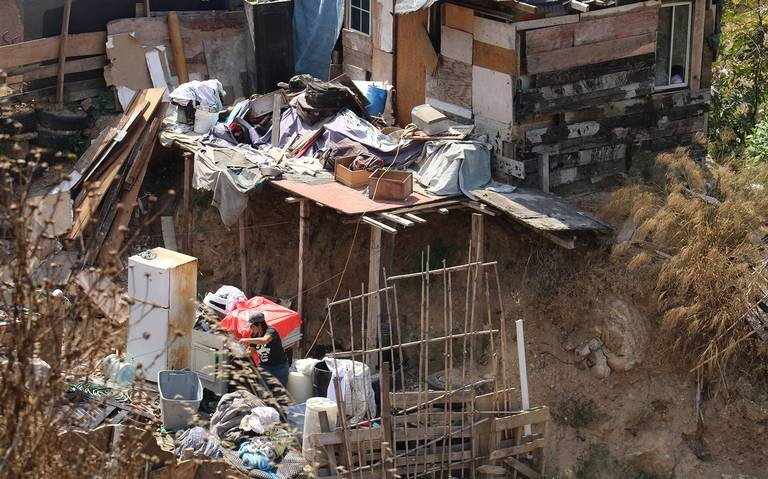

The Baja California government detected 53 areas of high marginalization in the state, where the highest percentage of people in poverty reside.
According to the governor of the state, Marina del Pilar Ávila Olmeda, in these areas they have found deficiencies such as the lack of water, drainage, and electricity services; as well as unpaved streets, which trigger respiratory problems for citizens in the future, due to being exposed to road dust.
Addressing the gaps in health services in Baja California
“We have solid arguments where we can think that policies and actions allow us to put an end to poverty, so that people live in dignified conditions and to achieve the objective we have to work on the levels of government,” she commented during her participation in a forum held at the Xochicalco University.
Figures from the National Council for the Evaluation of Social Development Policy (Coneval), which the president cited, show that the population in a situation of moderate poverty fell between 2020 and 2022, from 21.0% to 12.1, while extreme poverty was reduced from 1.5 to 1.3%.
“We continue to have a challenge and a problem to address, but we are well below the national average,” she added during the meeting.
The representative of the National Officer for Social and Economic Development of the United Nations Organization (UN), Cynthia Martínez, participated in the same forum, who pointed out that unlike other states where the priority is to address extreme poverty urgently, in the entity they aspire to eradicate poverty in general.
“We found that in this state where the rates are lower and that implies that the work will not be so positioned towards eradicating only extreme poverty, there is an opportunity to reach total eradication,” she explained.
Interviewed after the forum, the municipal Secretary of Welfare, Érik Morales, said that they are still in the process of analyzing to detect the most urgent areas to address in terms of social backwardness, although he said that most of them are in the East Zone of the city.
“We still do not have the data, I do not want to complain about the previous administration, but we are moving forward little by little. We will be coordinating in 2025 with the state, because this year the only thing we are doing is coordinating the work that was planned for the end of the year,” he commented.
He specified that the problems they have found are the lack of documentation of the houses, poor garbage collection service and undelivered subdivisions that do not receive public services.
Source: elsoldetijuana