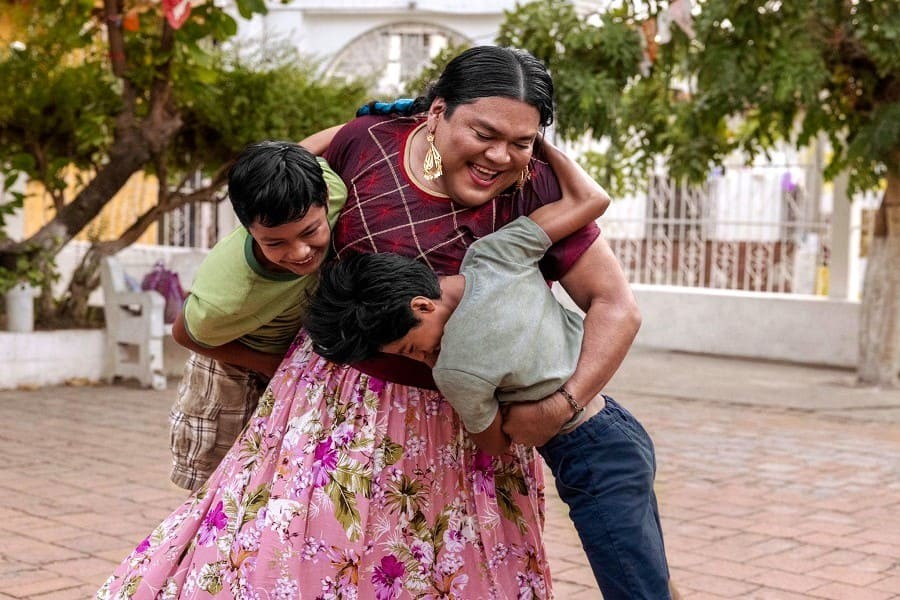

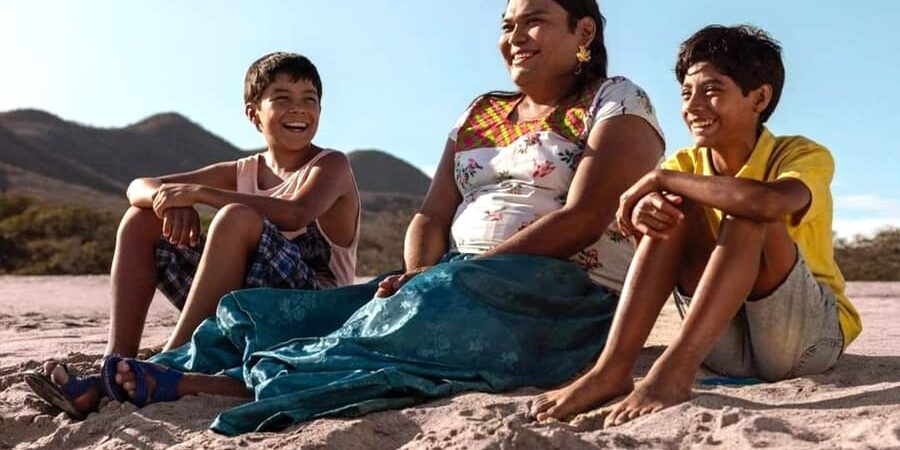
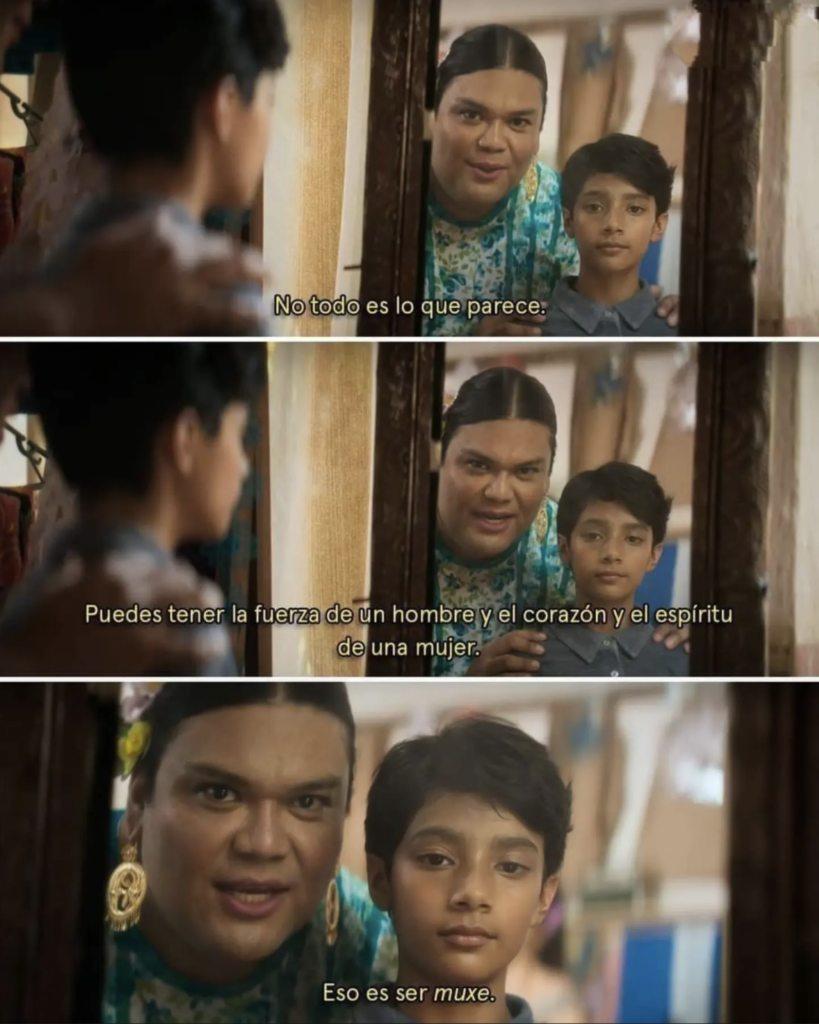
“El Secreto del Río” is a Mexican series directed by Ernesto Contreras that puts muxe identities on the scene in the Isthmus of Tehuantepec, Oaxaca. Newly released on Netflix, the series is an intimate cartography of the margins, where friendship becomes a refuge and dissident identities breathe through the cracks of daily violence. Manuel, a child played by actress Frida Sofía Cruz, transitions to Sicarú and shows the way to the desire to exist beyond heteropatriarchal control.
In a context full of hate speech and violence, this series emerges as a ray of hope. It delves into what it means to be muxe and LGBT. Through its characters and deep dialogues, it shows the struggles between tradition and dissent, questioning how the Mexican legal system continues to fuel aggression against trans and diverse people.
Who are the muxes?
“We muxes are people from the community of Juchitán, the region of the Oaxacan isthmus in southern Mexico, who are born with male biology but who identify with the female gender. That is how we integrate into our community and assume that place,” Amaranta Gómez Regalado told Presentes.
They recognize themselves as a “third gender” that challenges the binary notions of masculine and feminine. Muxes adopt traditionally feminine roles in their dress and behavior. In Zapotec culture, their existence is considered a blessing for families, although in practice they still face stigmatization and violence, especially outside their communities of origin.
In the series and through its protagonist Manuel, the series portrays the internal and external challenges of accepting an identity that does not fit into heteropatriarchal norms and reflects how the muxe identity can be a source of pride, a mirror of hope but also of exclusion in a patriarchal society that punishes difference.
Fabric of impunity
The series also exposes how corruption allows violence, such as sexual and family violence, to go unpunished, leaving victims unprotected. Municipal prosecutors and police, instead of protecting, participate in the criminalization and revictimization of trans and diverse people. This reality is reflected in one of the harshest phrases in the series: “I prefer a dead son to a whore son,” a horrifying statement that resonates with the symbolic and physical violence that many LGBT+ people face in their family environments.
Mexico remains one of the most dangerous countries for the LGBT+ community. In 2023, the organization Letra S documented 43 transfemicides. They represented 65% of the total number of violent deaths against LGBT people in Mexico. Institutional negligence not only normalizes aggression, but also perpetuates a narrative in which the lives of LGBT+ people are disposable.
Activist Sofía Guandulain from Trans Diffusion, a trans organization from Oaxaca, told this media that violence against muxe and LGBT+ people in Oaxaca has increased.
“The situation of violence in Oaxaca is affecting muxe and LGBT+ people, and mainly trans women. It is not only about hate murders. It is also structural violence and discrimination that is putting us at risk. And there are no public prevention policies, nor guarantees of rights.”
Source: agenciaspresentes