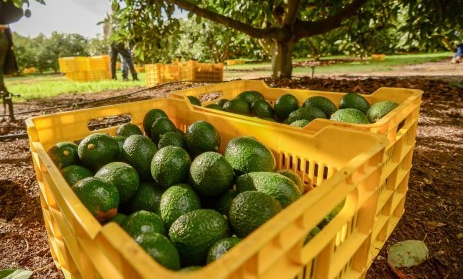


The Ministry of Agriculture and Rural Development reports for the first time that the municipalities of Mixtlán, Jalisco; Compostela and Amatlán de Cañas, Nayarit; Juchitepec and the agroecological zone of Tenería de Tejupilco, State of Mexico, are free of regulated pests of the avocado tree.
This boosts the competitiveness of avocado producers with more than 495 hectares, who improve the quality of their fruits and can sell them in more and better national and international markets. In the Agreement, published in the Official Journal of the Federation (DOF), it is established that the technicians of the National Service of Health, Safety and Food Quality (Senasica) confirmed the absence of the large avocado pit borer (Heilipus lauri), the small avocado pit borer (Conotrachelus aguacatea and C. perseae) and the pit borer moth (Stenoma catenifer) in the regions of the three states.
The above, in strict adherence to the procedures indicated in the Mexican Official Standard NOM-066-FITO-1995, Specifications for the phytosanitary management and mobilization of avocado, as well as in NOM-069-FITO-1995, For the establishment and recognition of pest-free zones. To maintain the status, producers must apply phytosanitary measures and carry out a culture of epidemiological surveillance and notification, so that after 24 months, from this date, Agriculture revalidates its status as a Free Zone.
Mexico is the first producer of avocado worldwide, with a production of more than two million 973 thousand tons. In addition to supplying the domestic market, Mexican producers, mainly small and medium-scale, export more than 1.3 million tons each year to countries such as the United States, Canada, Japan, Spain, China, the United Arab Emirates and the Netherlands, among others.
Source: gobernantes