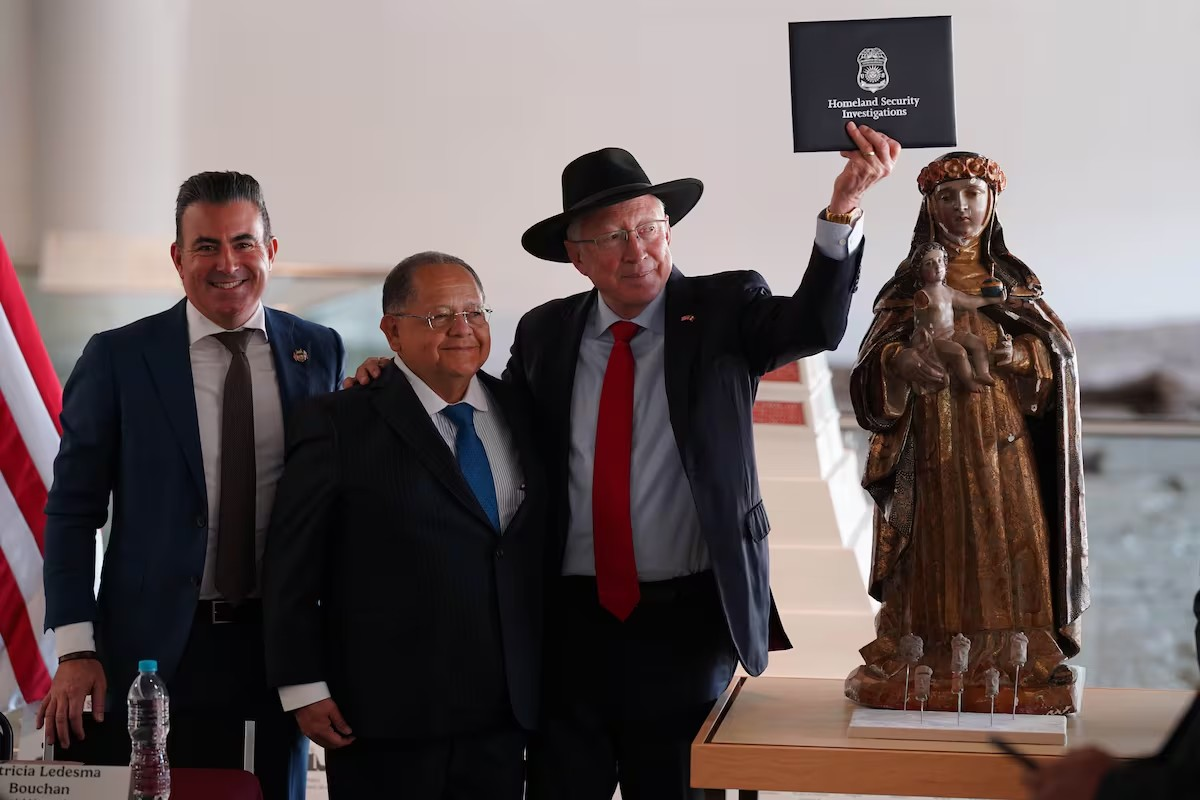

The United States government has returned to Mexico a viceregal statue stolen on December 30, 2007 in the town of Epazoyucan, Hidalgo, as well as six archaeological pieces of pre-Hispanic origin. The ceremony took place at the Templo Mayor Museum in Mexico City in an event attended by authorities from both countries. Cooperation between the United States and Mexican institutions facilitated the return of these cultural assets.
The United States ambassador to Mexico, Ken Salazar, said that “what is stolen must be returned,” when handing over the statue of Saint Rose of Lima and the archaeological pieces. The return was carried out after coordination processes between the United States Department of Homeland Security (HSI), the Attorney General’s Office (FGR), the National Institute of Anthropology and History (INAH) and the Ministry of Foreign Affairs. The authorities reiterated that bilateral collaboration is decisive against the illicit trafficking of cultural assets.
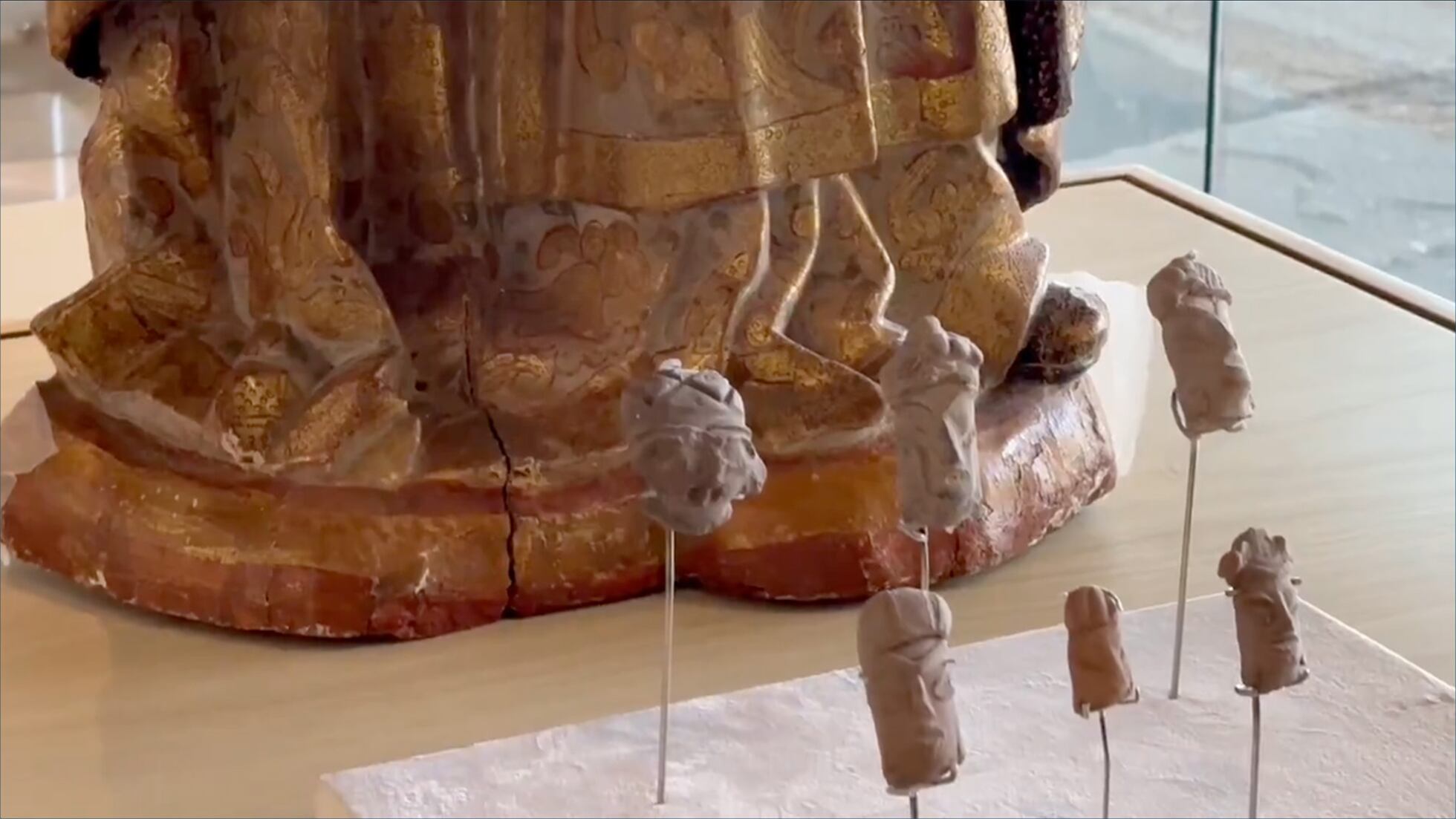
The recovered statue, Santa Rosa de Lima, is originally from the Viceroyalty of Peru in the 16th century. This heritage asset, made of carved wood, gold leaf and polychrome, dates back to the 17th century. Its theft from the chapel of Santa Monica in Epazoyucan was part of the theft of six other historical images. The INAH reported that the piece will return to its place of origin after the corresponding registration and study, with the aim of reestablishing its cultural and symbolic function within its original space.
Along with this image, the United States Government also returned six archaeological pieces from the pre-Hispanic era. According to data from the INAH, the total sum of cultural assets repatriated in recent years amounts to 14,048, while Ambassador Salazar emphasized that 10,500 pieces have been returned to Mexico in the last 10 years, making it the country that has returned the most objects to Mexico, among which stands out a manuscript signed by Hernán Cortés. These actions are part of an ongoing effort to rescue heritage extracted without authorization. According to the authorities, the location and recovery of these objects are the result of constant communication and legal assistance between agencies of both countries.
Ambassador Salazar stressed the importance of the work of Victor Torres, an HSI investigator in the Mexico City office who recently passed away. His participation was key in the processes of tracking and returning stolen pieces. Torres’ family attended the event, in which his dedication was recognized. The participating institutions highlighted that his work allowed previous deliveries to be carried out and lines of cooperation to be consolidated. In his memory, the authorities highlighted the merit of contributing to the preservation of cultural heritage.
The meeting to address the problem of trafficking in cultural goods included remarks on the importance of prevention. The INAH maintained that this crime alters the understanding of history and affects the transmission of heritage to future generations. “Cultural goods are a legacy that stores the most beautiful and profound part of the soul of the people who created them over time in Mexico. And for the INAH, cultural goods are not merchandise, they are above all a reflection of the history and identity of the people,” said anthropologist José Luis Perea, technical secretary of the INAH.
According to FGR representatives, the formal request for international legal assistance allowed the statue and other assets to be secured, with the support of the United States Department of Justice. Coordination between governments, prosecutors, security agencies and cultural heritage specialists has established a model of interaction against illicit trafficking. These dynamics involve technical efforts, consultations with experts and the application of legal procedures.
Source: elpais