
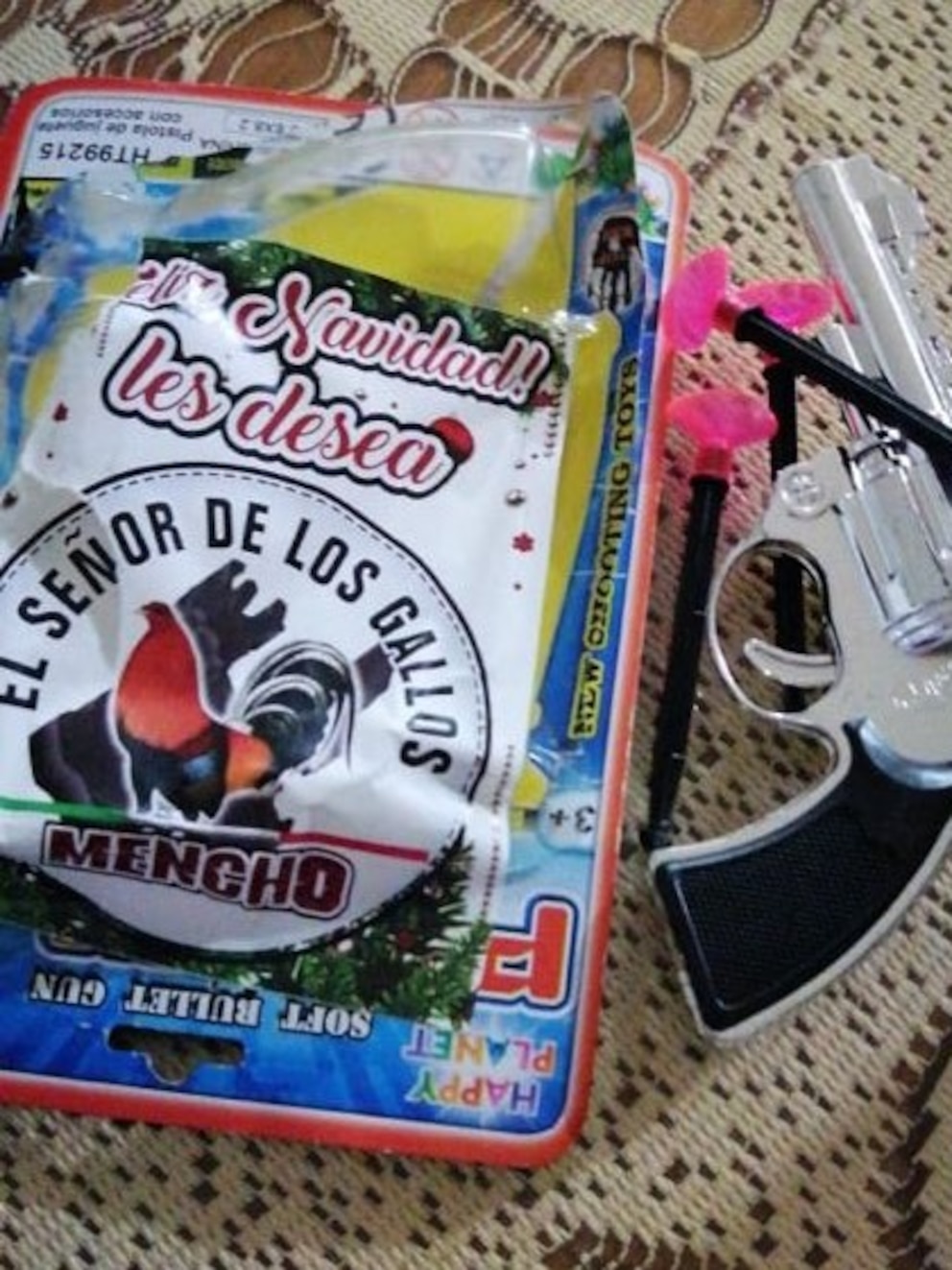
For decades, it has been documented how various organized crime organizations in Mexico carry out charitable acts such as the delivery of food and support to marginalized communities. This year was no exception. A few days ago it was announced that the Jalisco Nueva Generación Cartel (CJNG) distributed toys to children in the municipality of Coalcomán, Michoacán, as part of the Christmas festivities.
The event, which had the participation of municipal authorities, including Mayor Anavel Ávila Castrejón, of Movimiento Ciudadano (MC), generated controversy after videos and photographs were released in which a banner with a message of gratitude to the leader of the CJNG, Nemesio Oseguera Cervantes, alias “El Mencho”, and his children can be seen.
The message was read aloud by the host of the event in front of the attendees, in an act that did not go unnoticed.
After the events were made known, those involved denied any relationship with the criminal group; the party also condemned what happened; and the governor of Michoacán, Alfredo Ramírez Bedolla, demanded an immediate investigation.
The background of the “charitable” act
The delivery of toys has never been an isolated act. According to David Saucedo, an expert in public security, this type of event is part of a recurring strategy of the CJNG and other criminal groups, such as the Sinaloa Cartel, for various reasons.
“This is in order to build a narrative that they are the benefactors, they seek to replace the Mexican State in very remote, urban-marginalized regions, rural communities of low socioeconomic level, and this allows them to penetrate and even generate a positive image,” said Saucedo in an interview with Grupo Fórmula.
These types of actions, which are carried out on key dates such as Three Kings’ Day, Children’s Day or Christmas, seek to consolidate their territorial influence and gain social sympathy in regions where the State has a limited presence.
Medicines, toys and even Christmas dinners are distributed with the group’s distinctive seal, such as the logo of a rooster in the case of the CJNG. These actions, videotaped and disseminated on social media, are part of a propaganda strategy that reinforces the perception that the cartels are “protectors” or “providers” in neglected communities.
Saucedo said that this tactic has been in practice for several years and that its objective is to consolidate control over the areas where they operate.
In cases such as the one that recently occurred in Coalcomán, Saucedo described the situation as a clear example of narcopolitics. “It is evident that there was coordination between the criminal group and the municipal administration. These types of acts cannot occur without prior contact,” he said.
Another analysis by InSight Crime agrees that these acts of apparent generosity are not selfless. “The gifts are a flag planted in the territory, a clear message of who has control. Furthermore, those who accept these gifts are implicitly committed to maintaining their loyalty and support to the cartel,” the report warns.
Source: infobae