Control of buses, taxis and motorcycle taxis, mass kidnappings of migrants who are taken by “coyotes” along routes controlled by organized crime groups aggravate the crisis of human trafficking from Chiapas to Sonora, in a dispute between the Sinaloa and Jalisco Nueva Generación cartels seeking to control this illicit business that centers its main crimes in five states: Chiapas and Oaxaca in the south and Chihuahua, Tamaulipas and Sonora in the north of the country.
Information from the Federal Government, from organizations defending the rights of migrants, from the organization InSight Crime, as well as from researchers from the Colegio de la Frontera Norte reveal that as the day approaches for Donald Trump’s arrival at the White House, pressure increases among groups of migrants who try to cross into the United States to request asylum or refuge.
Migrant groups that are advancing in dribs and drabs told InSight Crime, an international organization dedicated to the study and investigation of threats to national and citizen security, as well as to human rights activists, that drivers of these units divert their routes and take them to checkpoints controlled by armed men along stretches from Chiapas to Sonora.
Some of those affected say that at the aforementioned checkpoints they are interrogated by armed individuals who extort them and in many cases kidnap them to demand ransom from their families.
A Mexican migrant who decided to seek the American dream after being pursued by a criminal cell after refusing to pay an extortion, said that these two drug trafficking groups fight over migrants and control of the different routes that are usually abandoned by the authorities and without federal surveillance and that are usually corridors used to avoid the National Guard and personnel from the National Institute of Migration (INM).
This Mexican, who asked to remain anonymous, says that if the “coyotes” or “coyotes” assigned by one of these cartels deviate from the route and enter the territory of the opposing group, they kidnap them and take control of these people, demanding higher fees than those agreed upon by the other cartel to take them across to the United States.
EXPLOSIVES
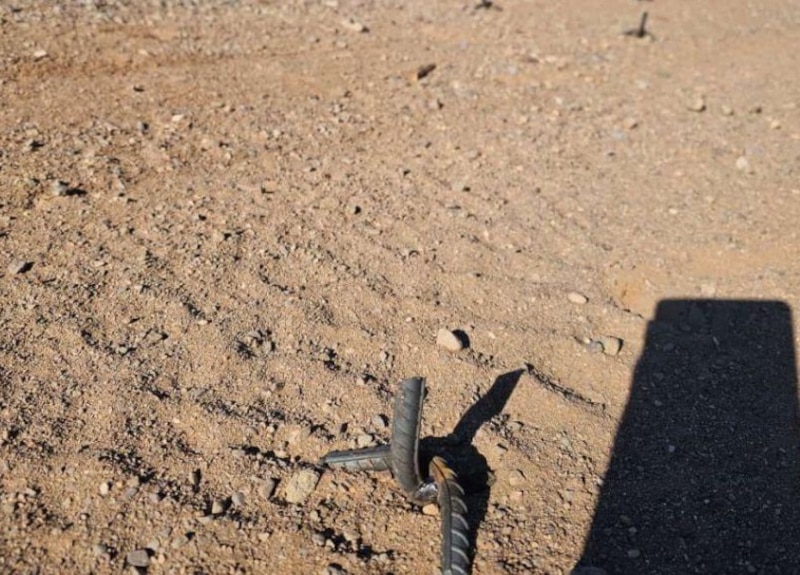
The dispute over snatching groups of migrants between these two drug groups has led them to resort to placing explosives on roads or tire-puncturing devices to stop caravans of vehicles that travel through inhospitable areas.
Cases of this type have been recorded in Sonora, where, according to an investigator on the northern border who asked to remain anonymous for security reasons, he stressed that for some time migrants could reach the municipalities of Altar and Caborca, in the north of the state, with relative ease, but now these regions have been taken over as assault points by human traffickers.
If any of these criminal groups do not have established criminal cells in the region, they place a small group of “hawks” (vigilantes) who will alert groups with armed men to stop vehicles to hold them and kidnap them for ransom.
Likewise, residents of communities in desert areas of the municipalities of Altar and Sásabe, in Sonora, report that there are points in the area that are obligatory passages for migrants and that are now sites with a high presence of drug traffickers, where these criminal groups have even placed explosive traps or “ponchallantas” to stop the progress of those trying to reach the border with Arizona, in the US.
FROM SOUTH TO NORTH
A report from the organization Alto al Secuestro states that the journey to reach the neighboring country is a pilgrimage of thousands of kilometers full of dangers for migrants, who must face both inclement weather and possible kidnappings by drug traffickers.
The NGO highlights that along the migration routes, people who try to reach the US are exposed to constant threats of extortion and deprivation of liberty from the moment they leave Chiapas and pass through Oaxaca, states where human trafficking and migrant trafficking groups operate that work for the two largest cartels in the country.
According to information from this NGO, the states where migrants run the greatest risk of being sure targets for drug traffickers are Chiapas and Oaxaca in the south of the country, as well as Tamaulipas, Chihuahua and Sonora in the north.
Although cases of extortion or kidnapping of small groups of migrants have been documented in Veracruz, Puebla, State of Mexico, San Luis Potosí and Guanajuato, the states where the red flags are under scrutiny are Chiapas, Oaxaca, Tamaulipas, Chihuahua and Sonora.
In the cases of Chihuahua, Tamaulipas and Sonora, they are the main routes to cross into the United States and have a greater presence of local criminal groups that operate as cells of the Jalisco Nueva Generación, the Sinaloa and also the Gulf Cartel.
In the cases of Chiapas and Oaxaca, they are highly vulnerable points, since both receive hundreds of migrants from Central America every day, as well as from nations in Europe, Asia and Africa.
In Oaxaca, the main focus of interest is on the Isthmus of Tehuantepec, and according to state security authorities, what interests them (the CJNG) is to have control of the Transístmico due to the large amount of economy that is being handled in that area (…), since the area is a key connection between the Atlantic and Pacific oceans, with which the route could be used by criminal groups to transport illicit substances and illegal merchandise.
Authorities in the state highlight that criminal groups take an estimated 500 thousand to 600 thousand pesos just for the transfer of migrants.
GULF ROUTE
The Ministry of the Interior, through the Migration Policy, Registration and Identity of Persons Unit (UPMRIP), has documented since 2022 that criminal groups such as Santa Rosa de Lima in Guanajuato and the Familia Michoacana in Guerrero and the State of Mexico, have tried to add extortion and kidnapping of migrants to their illicit drug sales activities, which places them as minor rivals of the two main drug organizations.
The agency highlights the dangers that migrants face on their way to reach the US, including being victims of violence, segregation, criminalization and discrimination, coupled with the conditions of high-risk routes.
A 2022 Segob report states that 63 percent of migrants who passed through Mexico and have been deported claim to have crossed into the neighboring country through Tamaulipas, making this migration route in the Gulf of Mexico one of the most used by “Polleros.”
According to the “Diagnosis of Human Mobility in Tamaulipas,” it highlights that the flow of people crossing through the area do so because it is the shortest route when leaving the southern border to reach the northern border of the country.
Likewise, the report highlights that migrants have ventured to look for new points with less presence of immigration personnel to avoid being detained, although these represent a greater risk as they are desert areas, where there is a presence of armed men.
On the other hand, the “Diagnosis of Human Mobility in Baja California” points out that the cities of Tijuana and Mexicali represent two strategic points between the transit routes in Mexico, since the so-called Pacific route ends there, known for the presence of drug cells and where it is also easy to fall into the hands of bad elements of security forces linked to criminal groups to whom they usually hand them over in exchange for monetary commissions.
Source: cronica