
The imminent arrival of Donald Trump to the presidency of the United States has set off alarm bells in Coahuila. Given the possibility of mass deportations announced by the Republican, the state government activated an action plan to deal with the impact on the region.
The governor, Manolo Jiménez, highlighted the coordination with the federal government and the municipalities to address the situation. “We are ready to support the returning compatriots, with temporary shelters and humanitarian assistance. We will not leave them alone,” he said.
The state government set up four shelters in coordination with the municipalities of Acuña and Piedras Negras, strategic points due to their border location. These facilities offer basic services and facilitate the transit of migrants to their places of origin.
The migratory flow showed a significant decrease. In previous months, daily crossings reached three thousand people, while now they average between 300 and 400. This reduction responds to joint operations by the National Migration Institute and the National Guard, together with the state police.
Coahuila strengthened security on borders and highways, with actions aimed at immigration control and the prevention of crimes such as human trafficking and fuel theft, in coordination with the Mexican Army, the Navy and the National Guard.
But uncertainty increases as the date on which Trump will take office approaches.
Coahuila, historically a recipient of migrants, faces a humanitarian and logistical challenge.
“We are prepared,” Jiménez said.
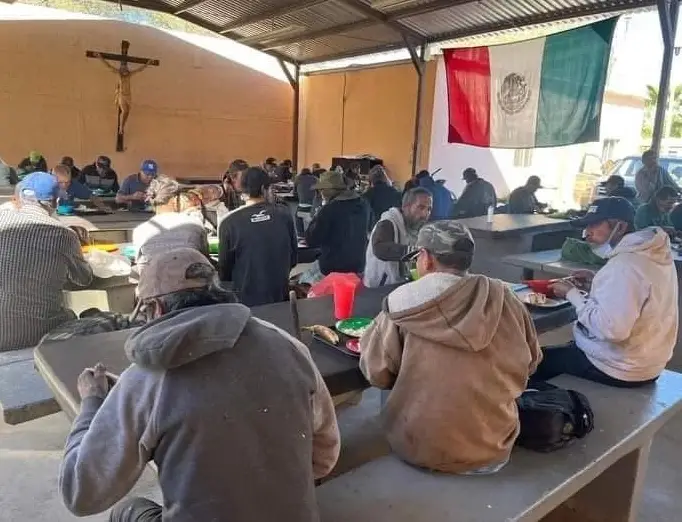
Alarms go off in shelters and soup kitchens for migrants in Sonora
In light of the return of Donald Trump to the presidency of the United States and his threats of mass deportations, shelters and soup kitchens for migrants on the border and in central Sonora are on alert; while the State Civil Protection Unit reported that they have established protocols to attend to massive groups of migrants before the return of large groups through the state’s borders begins.
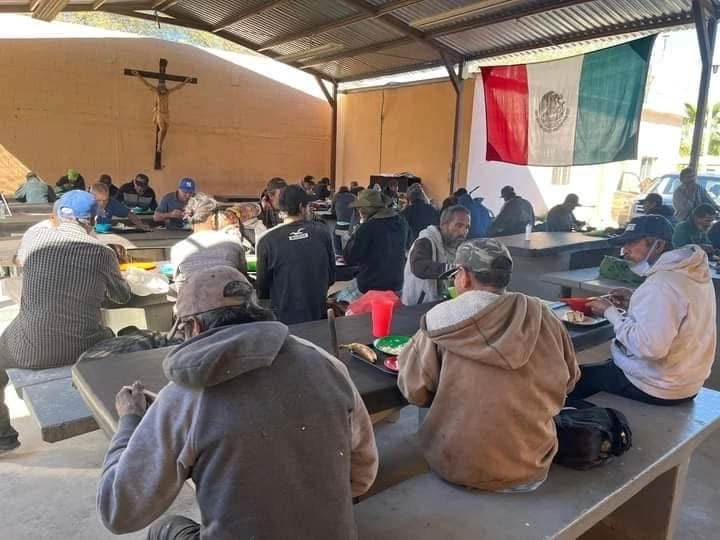
The soup kitchen for migrants run by the San Luis Gonzaga parish is prepared to receive food for about 400 people, and has even considered increasing the number of people who serve them if necessary. Father José Gilberto Lezama Rodríguez, head of the soup kitchen, said that they are prepared to deal with a possible humanitarian emergency.
“We are working calmly, waiting to see how we could join in if this reality occurs. We try not to create psychosis; once he takes over, we will know what the reality is. Our work is here, regardless of the decisions he makes, as well as that of the local governments,” said Lezama Rodríguez.
The soup kitchen, which daily provides support to between 30 and 100 people, migrants facing forced displacement, has noticed a change in the migratory flow. According to the priest, more and more migrants are choosing to go directly to the borders, particularly Nogales, Tijuana and Mexicali, avoiding the traditional connecting cities.
The uncertainty surrounding the policies of the next US administration is also testing the response capacity of the three levels of government in Mexico, said the priest who cares for migrants in the La Victoria ejido, a few kilometers east of Hermosillo.
Meanwhile, Armando Castañeda Sánchez, coordinator of the State Civil Protection Unit, said that the agencies assigned to respond to emergencies have coordinated to establish protocols in case a significant influx of floating population begins.
“Sonora has 144 temporary shelters ready to care for the fixed or floating population that needs a safe place. Depending on the circumstances that may arise after January 20, the state government is prepared to enable additional spaces that meet the necessary requirements,” said Castañeda Sánchez.
The official stressed that, in the case of a major contingency, such as the massive entry of migrants through the borders, specific protocols will be implemented. This includes the provision of shelters with adequate infrastructure, such as kitchens, showers, beds and separate areas for women, children and families.
“The government is ready for any eventuality. These temporary shelters are essential to serve the local and migrant population, guaranteeing their well-being and safety in critical circumstances,” said the head of Civil Protection.
According to Gloria Ciria Valdez Gardea, coordinator of the Center for Transborder Studies at the Colegio de Sonora (Colson), the coming scenario could be even more severe than what occurred in the first Trump administration, including mass deportations, the separation of families and the “Stay in Mexico” program.
“Experience shows that this character, with his belligerent, fascist, xenophobic and discriminatory narrative, acted in the past and will now do so in a stronger way. His cabinet includes people dedicated to security who share his views,” said Valdez Gardea.
The researcher from Colegio de Sonora stressed that Mexico, and particularly Sonora, are not prepared to face a scenario of mass deportations. “We do not have clear inclusion policies, nor a design that addresses the migration issue from a human rights perspective; it continues to be seen from a security perspective,” she added.
In the first seven months of 2024, the flow of migrants through Sonora registered an increase of 7.8 percent compared to the same period of the previous year, according to data from the Migration Policy Unit of the Ministry of the Interior. Between January 1 and July 30, immigration authorities detected 15,213 people in exodus in various municipalities of the state, a figure higher than the 14,105 reported in the same period of 2023.
The profile of the migrants detected in the state reveals a growing presence of people from Africa and Asia. Among Africans, citizens from Senegal, Guinea, Mauritania and Angola predominate, while Asian migrants come mainly from countries such as China, India, Jordan, Turkey, Nepal, Bangladesh, Afghanistan and Vietnam, among others. This phenomenon shows the diversity of nationalities that pass through the state in search of reaching the northern border.
Source: jornada