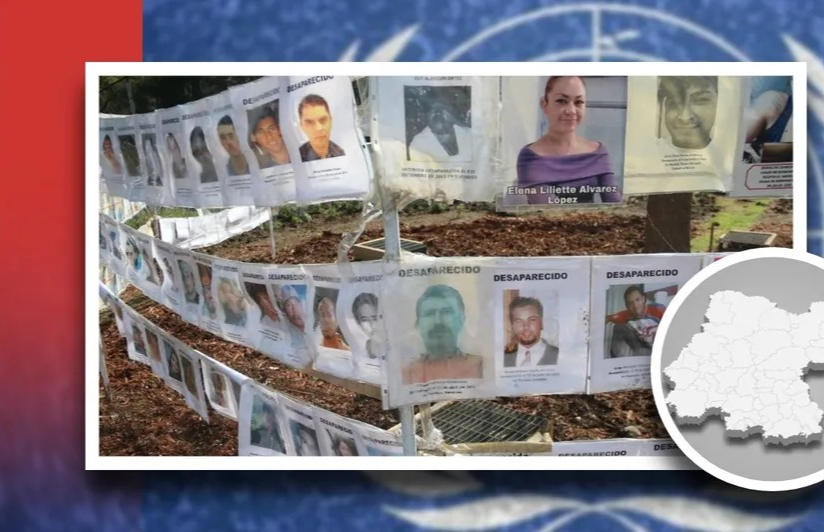

The crisis of disappearances in Guanajuato and the situation of the people being searched for were the main topics addressed in a private meeting between Juan Pablo Alban Alencastro, member and rapporteur of the UN Committee against Forced Disappearances, and various state actors.
Fabrizio Lorusso, academic and coordinator of the academic body of social inequality at the Universidad Iberoamericana León, announced that the meeting, held last Tuesday, included the State Attorney General’s Office, the state government, the Executive Branch, social organizations and search groups.
“There were a series of meetings that were published on social networks with the Attorney General’s Office and with the state government of the executive branch, but also with social organizations and groups including platforms for peace, the Iberoamerican University of León and the more than 25 groups in the state through their representatives,” said the speaker.
Lorusso commented that during the meeting, topics such as impunity in cases of disappearances, the lack of protection for searchers, security, threats and murders of activists, as well as the increase in disappearances were discussed. In addition, the forensic crisis in the state, unidentified bodies and failures in official records were addressed.
“The issue of drug addiction as a problem of consumption and health of the population was also touched upon, that is, disappearances are an interdisciplinary issue where searchers and groups are the ones who quickly have the pulse of the situation in neighborhoods, communities, etc. There was also talk of an institutional and state plan by the Attorney General’s Office, the government and the search commission for the sum of mass graves,” said the coordinator.
There was also talk of an institutional and state plan for the exhumation of mass graves in Guanajuato, in which the Attorney General’s Office, the state government and the Search Commission would participate. However, Lorusso warned about the “poor functioning” of the federal protection mechanism, which still does not automatically recognize many human rights seekers and defenders.
“The problems were aired, the state system must be strengthened, which would be the most direct, including why not the municipal system, which would depend on municipal public security, police in which there are failures in mutual trust or in rapid action to be able to remove people from extreme emergencies, threats, attacks, but immediate against groups or defenders, but also in the medium to long term,” she concluded.

Source: milenio