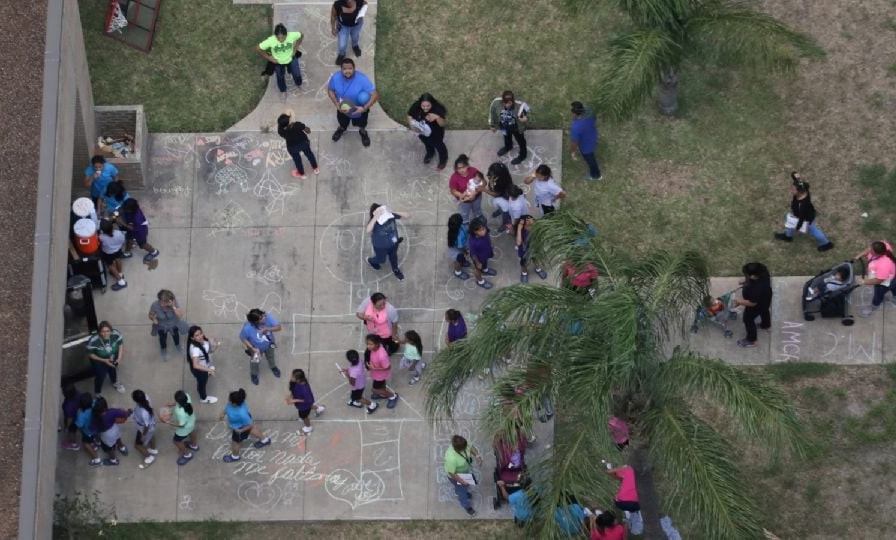

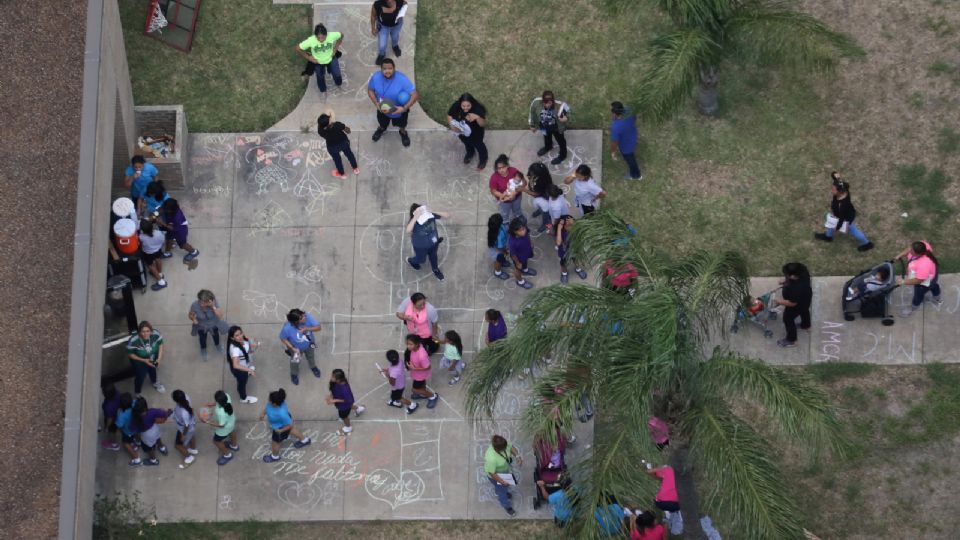
Migrant children face multiple human rights violations while transiting through Mexico, where the number of minors on the move has increased by more than 500% in the last six years, according to a report by the civil society organizations Plan International and Save the Children, presented this Monday.
Amid the tightening of immigration policies by the United States government, the NGOs presented the results of the research “Unaccompanied Children: Risks and Violence on the Migration Route through Mexico,” based on 155 interviews with minors on the move and their caregivers in three northern Mexican border cities: Ciudad Juárez, Reynosa, and Tijuana.
Carmen Elena Alemán, regional director of Plan International, noted that the research is part of a “very critical” context for Latin America and the Caribbean, where one in four migrants is a minor, according to UNICEF data.
These figures are also reflected in Mexico, Alemán indicated, where the number of minors in transit increased by 514% in the last six years, rising from nearly 17,600 in 2018 to 108,400 in 2024, according to government data.
“Thousands of children and adolescents undertake a journey through Mexico each year, alone or accompanied, in search of protection (…), family reunification, or because they are seeking better living conditions,” Alemán explained.
Unaccompanied Minors, Totally Unprotected
The investigation also revealed that, although many minors undertook the journey accompanied by family members or loved ones, they frequently ended up separated, increasing their vulnerability to violence and criminal networks.
In Ciudad Juárez, for example, almost two out of three minors surveyed, 63%, left home with a relative or guardian, but only a third arrived in Mexico accompanied.
According to official figures, the number of unaccompanied minors has also multiplied in recent years, rising from 69,500 in 2019 to more than 137,000 in 2023.
Ángeles Camacho, national humanitarian response coordinator at Save the Children in Mexico, noted that unaccompanied minors represent “one of the most serious expressions of child protection,” because “being a child or adolescent on the move alone in a country like ours is synonymous with total vulnerability,” she warned.
She noted that when they migrate, children and adolescents are exposed to forced recruitment, trafficking networks, labor or sexual exploitation, prolonged detention, and lack access to healthcare or education.
Invisible Routes, Silent Risks
Camacho also warned that while “visible” migratory flows have decreased, “child mobility does not stop” and, moreover, the way it occurs has changed.
“There are more and more invisible routes, more silent risks, more emotional distress that no one addresses,” she warned.
The report also shows that the militarization of the border and the tightening of Mexican immigration controls, rather than halting migration, actually makes it precarious and forces people to resort to irregular routes through unsafe areas, increasing risks.
Exclusion of Rights
Furthermore, the research warns of insecurity in shelters, located in “very high-risk areas,” which exposes minors to danger, limits their mobility, and hinders their access to basic services.
Researcher Eugenia Morales highlighted the “alarming violation of the guarantee of fundamental rights for children” revealed in the report.
“Especially in education and mental health, which are key areas for their development and severely compromised, for more than a short time now, by long waits at the border,” she explained.
She noted that more than 70% of girls and adolescents who attended school in their places of origin are “completely excluded from the education system after migrating,” Morales emphasized.
Given this situation, Verónica Zambrano of Plan International issued a “clear and urgent” call to “not allow the rights of children and adolescents to be held back at the border.”
Source: latinus.us