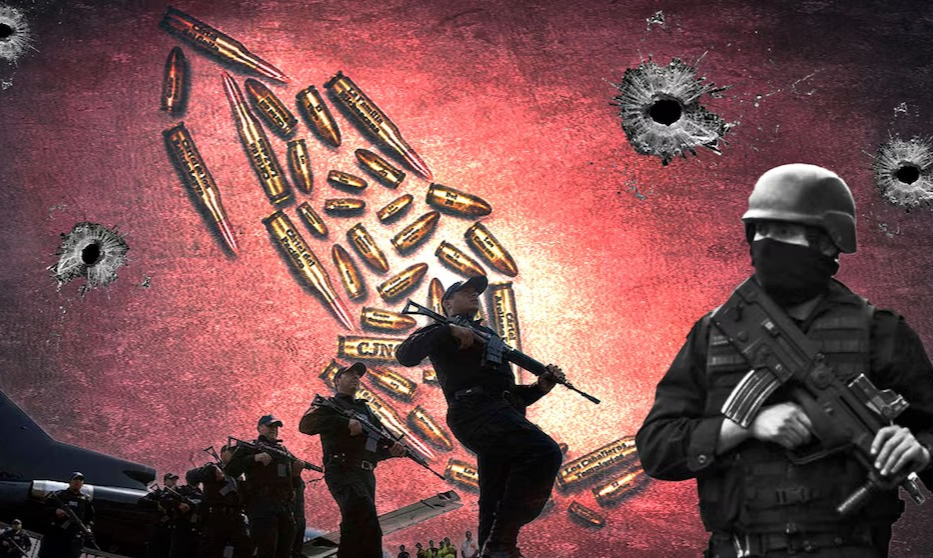

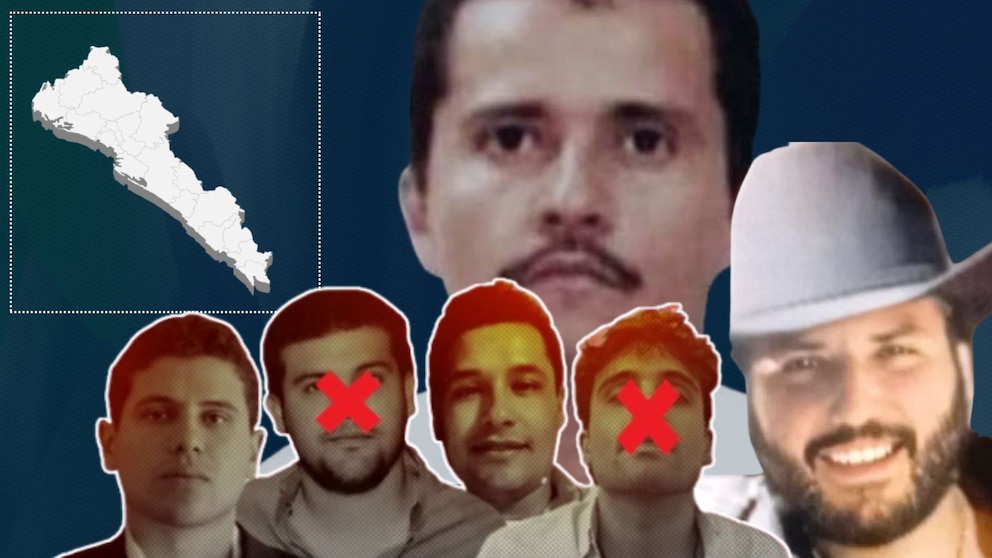
Mexico’s criminal landscape faces a possible reconfiguration. Following a series of operations by Mexican authorities and US agencies against the two factions of the Sinaloa Cartel (Los Chapitos and La Mayiza) and the Jalisco New Generation Cartel (CJNG) in northern Mexico, analysts warn that the pressure generated could shift operations to new regions.
The result could be a reactivation of crime hotspots in states that, until now, had maintained more stable control or less visibility.
According to national security specialist Ghaleb Krame, in an interview with the Pie de Nota program, the states of Colima, Nayarit, and Quintana Roo are emerging as the next critical areas for organized crime operations.
The estimate is based on a criminal simulation model developed with artificial intelligence, data analysis from the Drug Enforcement Administration (DEA) 2025 report, and recent events such as seizures, arrests, and ongoing legal proceedings.
According to specialist Ghaleb Krame, the first signs of criminal reorganization in these states are expected to become apparent in the next six to eight months.
New Routes, New Disputes
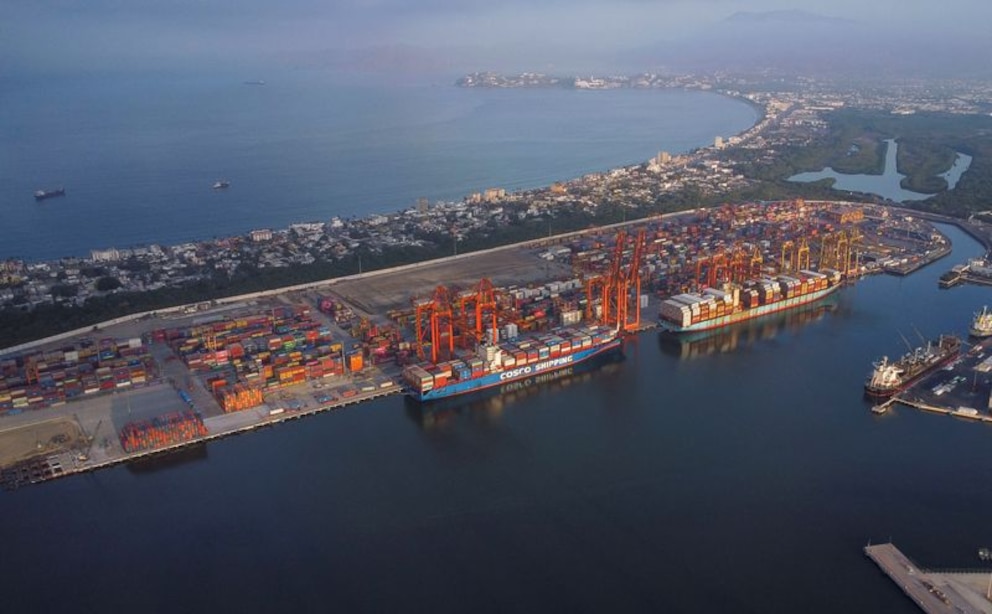
These three states share strategic characteristics that make them especially vulnerable: in the case of Colima, the port of Manzanillo represents a key logistics hub for international trafficking.
Nayarit, for its part, offers a discreet coastal corridor between Jalisco and Sinaloa, and Quintana Roo, with its intense tourism activity, facilitates the flow of financial resources and a growing drug trafficking network.
In Krame’s opinion, the partial dismantling of criminal networks in the north has created power vacuums that other cells, or reconfigured factions, would be willing to fill.
This suggests that organized crime does not operate in a vacuum: when an area becomes saturated with operations and surveillance, networks adapt, migrate, and rearm in places with less institutional pressure.
The displacement does not imply a complete departure from current areas, but rather an expansion of territories of influence, with new fronts of violence, logistics, and corruption. This reshuffle, if confirmed, would mean a stealthy but sustained expansion.
Criminal fragmentation and operational mutation
In addition to the expected territorial shift in southern and western regions, the criminal reshuffle could also imply an internal transformation in the cartel structure, according to analysts’ interpretations of the phenomenon. While Ghaleb Krame did not directly refer to organizational fragmentation, his assessment does point to a clear differentiation between the operational capabilities of the main factions of the Sinaloa Cartel.
While La Chapiza appears more exposed, battered by arrests and judicial pressure, La Mayiza maintains—in the words of the specialist—a “more direct transition” and more cohesive regional leadership, allowing for a “slow but steady” expansion. This asymmetry, coupled with the entry of other groups such as the CJNG and the Caborca Cartel, has given rise to new territorial tensions and redistributions of power in different parts of the country.
The CDS and the CJNG
Although Krame did not detail specific illicit economies or local dynamics of violence, the movements he describes can lead to more localized conflicts over control of routes, logistical points, and criminal economies such as drug dealing or extortion, especially in states with institutional weaknesses.
The case of Sonora is an example of how organized crime adapts to operational pressure. According to data from the National Drug Threat Assessment 2025, that state accounts for 65% of the fentanyl seized on the southern border of the United States. Furthermore, the country’s five main criminal groups (Sinaloa Cartel, CJNG, Caborca Cartel, Cartel del Noreste, and remnants of the Beltrán Leyva cartel) currently operate there, a situation that has led to an escalation of structural violence.
In the first quarter of 2025 alone, Sonora recorded nearly 700 disappearances and 346 intentional homicides, according to the specialist’s tally. This disproportionate impact suggests an operational shift in the ways violence is perpetrated, with fewer visible murders and more forced disappearances, complicating the institutional response. Impunity also exacerbates the situation: only one in every hundred crimes goes to trial, Krame indicated.
The specialist also warned about the emerging risk of carfentanil, a synthetic opioid even more lethal than fentanyl, whose presence has already been detected in recent seizures in the United States. If this substance enters Mexico, states with high international connectivity such as Quintana Roo and Colima could be especially vulnerable to its distribution.
Technology and Crime Prediction
To construct this scenario, Krame has developed predictive simulations with artificial intelligence, which cross-reference various variables.
In this model, the three aforementioned states consistently appear as entities with a high probability of criminal reorganization in the short term.
Although this is a prospective model, the specialist affirms that simulations have shown high accuracy in previous years. Preliminary signs are already visible: cells operating in Cancún, movements in Tepic, and reports of new groups in Manzanillo reinforce the prediction.
Source: infobae