
Mexico is a melting pot of history, where every corner seems to whisper tales of times past. From ancient pre-Hispanic civilizations to the vibrant colonial period and the struggle for independence, the country has been the scene of profound transformations that have shaped its identity. This rich heritage is evident in its magical towns.
For those looking to immerse themselves in this legacy without straying too far from urban centers, there are destinations that offer a perfect combination of accessibility and historical value. These places, often nestled among natural landscapes, house architectural and cultural treasures that transport visitors to other eras, revealing lesser-known facets.
The Baroque Jewel of Atotonilco
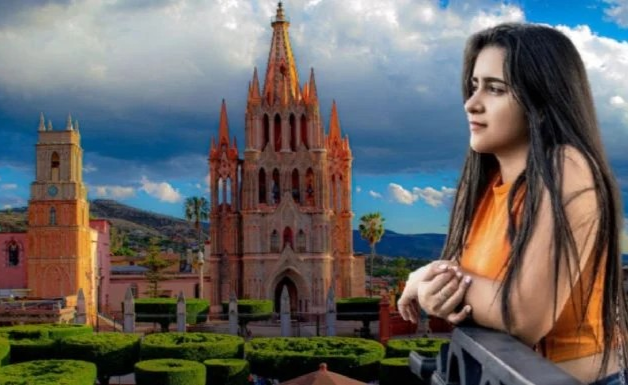
Approximately four hours from Mexico City, near San Miguel de Allende, Guanajuato, lies the Sanctuary of Jesús Nazareno de Atotonilco, a site that has been nicknamed the “Mexican Sistine Chapel.”
This 18th-century Baroque monument is famous for its lavish interior decoration, which includes an impressive collection of murals, frescoes, and sculptures that cover almost its entire surface.
The artistic richness and detail of its paintings, created by artists such as Antonio Martínez de Pocasangre, offer an unparalleled visual and spiritual experience, serving as the heart of the town’s rich history and a cultural landmark. To fully appreciate the magnitude of its art and history, it is recommended to explore more about the Mexican Sistine Chapel.
The illuminated bridges of Hidalgo’s Pueblo Mágico (Magical Town) are a must-visit at night for a grand spectacle.
Conceived in the 18th century as a space for spiritual retreat and evangelization, the sanctuary has been a center of devotion and pilgrimage throughout the centuries. Its art is not only a visual delight but also a testament to the complex blend of European and indigenous influences that characterized New Spain art, uniquely merging worldviews.
In addition to its artistic value, the sanctuary holds transcendental historical significance, as it was here that Miguel Hidalgo took up the banner of the Virgin of Guadalupe, which would become a key symbol during the beginning of the fight for Mexican independence. Its location in a region combines the beauty of the mountains with proximity to major cities.
Worldwide Recognition and Cultural Significance
The importance of the Sanctuary of Jesús Nazareno de Atotonilco has been internationally recognized. In 2008, UNESCO included it on its prestigious list of World Heritage Sites, consolidating its status as a universal treasure of humanity.
Two years later, in 2010, it earned a second distinction when it was incorporated as part of the Camino Real de Tierra Adentro, a historic trade route that linked Mexico City with Santa Fe, New Mexico. These recognitions underscore not only its artistic and architectural value, but also its crucial role in the history and culture of Mexico and beyond.
Visiting this sanctuary is like entering a universe of faith, art, and history. The halls and chapels invite contemplation of every detail, from the intricate altarpieces to the biblical scenes that cover the ceilings and walls, transporting the visitor on a sensorial and temporal journey. It is a place that allows one to connect with the deep spiritual and artistic roots of a nation.
How to get there from Mexico City
For those departing from Mexico City (CDMX), the route to this magical town, the Sanctuary of Atotonilco, is accessible. Generally, take Federal Highway 57D (Mexico-Querétaro) north, and once in Querétaro, turn off towards the Sierra Gorda.
The most common route involves arriving in San Miguel de Allende or Cadereyta de Montes, from where one follows the signs to Atotonilco. The trip by car takes approximately three to four hours, depending on traffic and stops. It is recommended to use navigation apps to get the most efficient and up-to-date route.
Source: fmglobo