
Federal investigations into fuel trafficking linked the latest cases of “huachicol,” or fuel theft, to Juan Manuel Múñoz Luévano, alias “El Mono,” a former alleged money launderer for Los Zetas, and to Ernesto Guillermo Ruffo Appel, former governor of Baja California and the first governor to be a member of a political party other than the Institutional Revolutionary Party (PRI) in 60 years.
This was revealed on July 8, 2025, by the newspaper Reforma. Ruffo Appel, 73, was the governor of Baja California from November 1, 1989, to October 31, 1995, and is a member of the National Action Party (PAN).
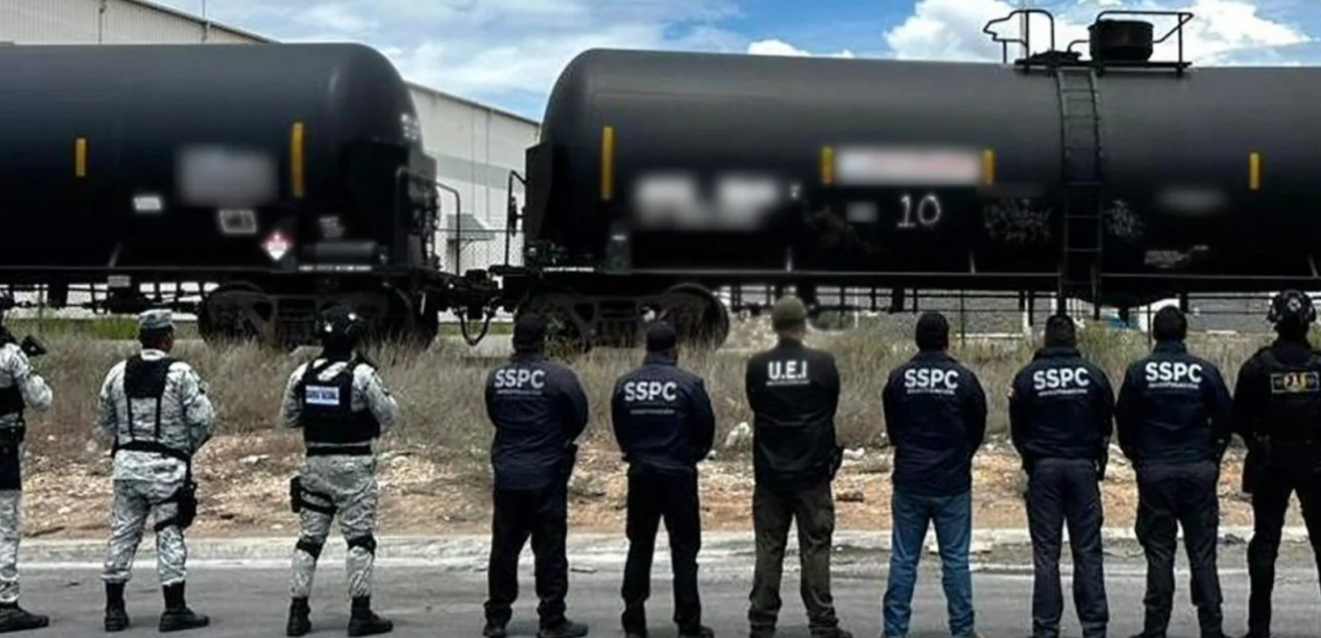
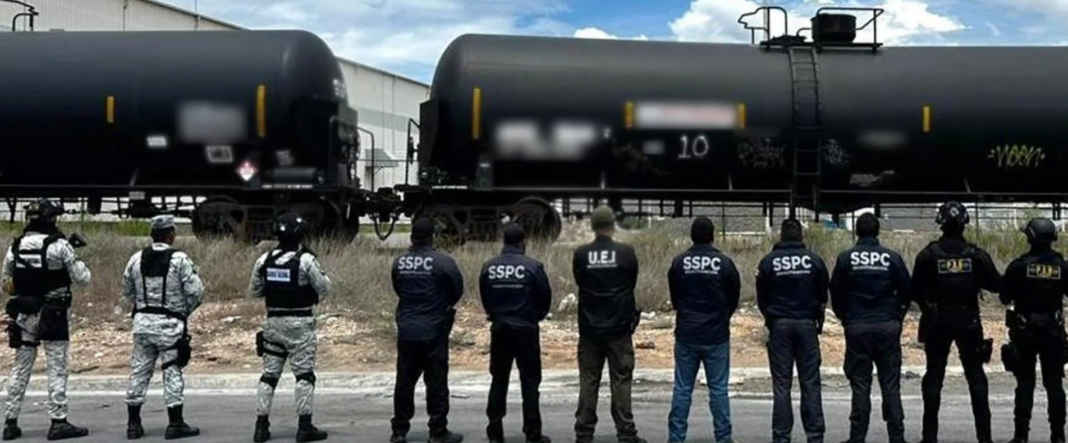
On July 7, 2025, the Federal Security Cabinet reported on the largest hydrocarbon seizure of the administration headed by Claudia Sheinbaum Pardo. Authorities seized 129 tanker trucks containing more than 15,480,000 liters of illicit fuel in operations carried out in Ramos Arizpe and Saltillo, Coahuila.
Connection to “El Mono” Múñoz
Múñoz Luévano was arrested on May 22, 2025, in Torreón, Coahuila, when he attempted to intervene on behalf of truck drivers transporting illegal fuel. The gas owner arrived at 6:50 a.m. at a Federal Public Prosecutor’s Office (MPF) office located in the Luis Echeverría Álvarez neighborhood, where he and his bodyguards displayed violent behavior.
The Attorney General’s Office (FGR) confirmed that Múñoz Luévano was never brought before the federal agency after his arrest. State authorities charged him with threats and cocaine possession; however, he was released on May 24, 2025, under precautionary measures.
The Attorney General’s Office (FGR) compiled investigation files FED/COAH/TORR/0000604/2025 and its accompanying files FED/COAH/TORR/0000613/2025 and FED/COAH/TORR/0000615/2025 regarding Múñoz Luévano’s possible involvement in the illicit transportation of hydrocarbons.
Criminal Record
Múñoz Luévano pleaded guilty on May 20, 2019, in the United States to federal charges of laundering drug proceeds before Judge David Alan Ezra of the Federal District Court for the Western District of Texas. On November 25, 2019, the Mexican businessman was sentenced after becoming an informant for the U.S. government.
On March 21, 2016, Múñoz Luévano was arrested in Madrid, Spain, where he remained in prison on charges of money laundering and drug trafficking. On March 1, 2019, the Spanish government decided to extradite him to the United States.
Wiretaps conducted by the Spanish police revealed Múñoz Luévano’s alleged connections with Mexican politicians, including brothers Humberto and Rubén Moreira Valdés, Homero Ramos Gloria, Adrián Emilio de la Garza Santos, and Jesús Torres Charles.
Government Permits
Despite investigations by the Attorney General’s Office (PGR), the federal government headed by Enrique Peña Nieto granted Múñoz Luévano permits to transport and sell gasoline. On March 16, 2017, the Energy Regulatory Commission (CRE) authorized him to operate a gas station in Saltillo, Coahuila.
On January 14, 2016, the CRE granted Múñoz Luévano a 30-year concession to transport fuel in the Laguna region, including the municipalities of Mapimí, San Pedro, Matamoros, and Viesca.
Link to Ruffo Appel
On July 8, 2025, the Secretariat of Security and Citizen Protection (SSPC) reported that the US companies Belar Fuels and the Mexican company Ingemar S.A. de C.V. were linked to the seizure of fuel in Coahuila. Authorities indicated that both companies falsified documents to import more fuel into Mexico than authorized.
Ruffo Appel is listed as the majority shareholder of Ingemar. The company was incorporated in 2018 and received hydrocarbon import permits during the last year of the Andrés Manuel López Obrador administration and the first months of Claudia Sheinbaum Pardo’s administration.
On July 8, 2025, Ruffo Appel released a video recorded from Mexicali, in which he made all the information about Ingemar available to authorities. The former National Action Party senator rejected the allegations and explained that the import permit was obtained through an injunction (amparo) after seven years of negotiations.
Business Operations
The seized rail tankers bore the seals of Lambrucar, a Houston-based company with branches in Monterrey, San Luis Potosí, and Querétaro. Authorities identified Lambrucar as part of a fuel trafficking network between the United States and Mexico.
The Fundentes company, located in Saltillo, was listed as the recipient of the seized rail tankers. The seized fuel included gasoline, diesel, and petroleum distillate.
Ongoing Investigations
On July 8, 2025, Pardo confirmed that the investigations into fuel trafficking will continue “to the fullest extent.” The president warned that she will not protect officials or businessmen involved in fuel theft.
For his part, the head of the Secretariat of Security and Citizen Protection (SSPC), Omar Hamid García Harfuch, explained that the operations against fuel theft are ongoing and have resulted in multiple arrest warrants.
The federal official linked the Coahuila seizure to the seizure of the Challenge Procyon vessel in March 2025, which was transporting 10 million liters of illegal fuel from Texas.
Federal authorities raided seven gas stations owned by the Cargo Gas franchise, owned by Múñoz Luévano, as part of the investigation. On June 28, 2025, an additional 2 million liters of hydrocarbons were seized in Saltillo, along with 20 tankers, tractor-trailers, and pumping equipment.
Source: zetatijuana