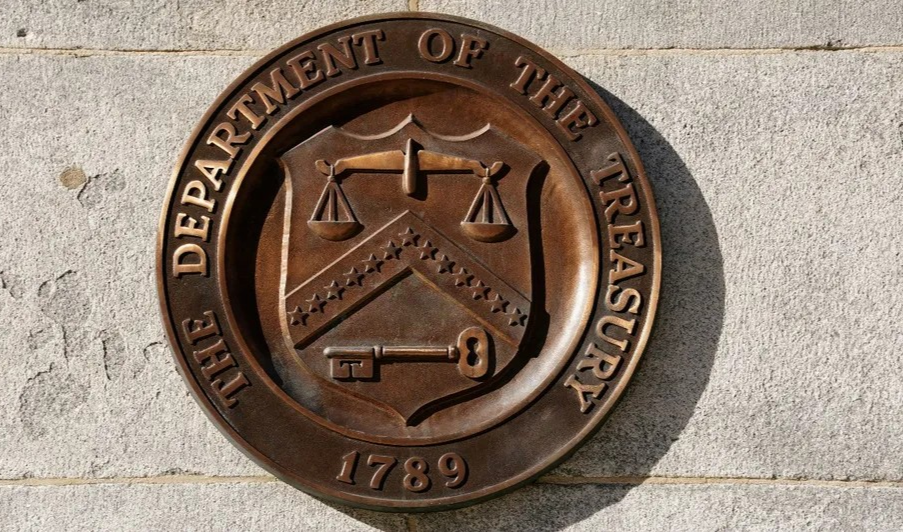

The U.S. Department of the Treasury, through its Financial Crimes Enforcement Network (FinCEN), announced a 45-day extension for the entry into force of its financial embargo on three Mexican banks, which it accused of participating in money laundering for cartels that traffic fentanyl.
In a statement, the Treasury’s anti-money laundering unit detailed that the measure announced on June 25 against CIBanco, Intercam, and Vector Casa de Bolsa will now take effect until September 4 of this year.
The agency’s order, the document details, responds to the efforts made by the Mexican government after the case became public, which included the Ministry of Finance and Public Credit’s decision to spin off the trust business of CIBanco and Intercam to ensure the operational continuity of the trusts managed by the banks.
“This extension reflects that the Mexican government has taken further steps to address the concerns raised by the FinCEN orders, including temporarily assuming control of the affected institutions to promote regulatory compliance and prevent illicit finance,” the document states.
On the other hand, the U.S. Treasury assured that it will continue working closely with the Mexican government and that there could be further extensions to the implementation of the financial blockades as progress is made in complying with the anti-money laundering measures.
“The Treasury will continue to coordinate closely with the Mexican government on these issues and will carefully consider all facts and circumstances in considering any future extensions to the implementation of the orders,” the statement concludes.
Just last June 25, FinCEN announced a sanction prohibiting certain financial transactions against three Mexican banks, CI Banco, Intercam, and Vector, for facilitating the trafficking of fentanyl to the United States and laundering proceeds from drug trafficking.
CIBanco, for example, was accused of exhibiting a “long-standing pattern of partnerships, transactions, and provision of financial services that facilitate the trafficking of illicit opioids by Mexican cartels, including the Beltrán Leyva Cartel, the Jalisco New Generation Cartel, and the Gulf Cartel,” as well as facilitating the purchase of precursor chemicals in China for the manufacture of synthetic drugs.
Intercam is linked to the Jalisco New Generation Cartel. “For example, Intercam executives met directly with alleged members of the CJNG in late 2022 to discuss money laundering schemes, including the transfer of funds from China. From 2021 to 2024, a Chinese firm associated with an individual who shipped precursor chemicals from China to Mexico for illicit purposes received more than $1.5 million from Mexican companies through Intercam,” the sanction states. Finally, Vector was accused of having ties to the Sinaloa Cartel and the Gulf Cartel, as well as its involvement in the purchase of chemical precursors. “For example, from 2013 to 2021, a Sinaloa Cartel money mule used various methods to launder $2 million from the United States to Mexico through Vector,” the Treasury Department detailed.
Among other things, Vector was also accused of having allowed the laundering of bribes allegedly paid to former Secretary of Public Security, Genaro García Luna, by the Sinaloa Cartel.

Source: milenio