
On the Tamaulipas border, Nuevo Laredo is a strategic point for Tamaulipas, Mexico, and the United States, where growth and progress are firmly built every day. Under the leadership of Mayor Carmen Lilia Canturosas Villarreal, Nuevo Laredo has undergone a profound transformation in recent years. What will happen in the coming weeks, with the implementation of the Mexican National Customs Agency, will strengthen its strategic role in the bilateral relationship.
Last Monday, at the flag-raising ceremony led by the Governor of Tamaulipas, Dr. Américo Villarreal Anaya, in Ciudad Victoria, several mayors attended the launch of the “Economic Boost 2025” program, as well as the delivery of resources from the Tamaulipas Fund to Tamaulipas entrepreneurs.
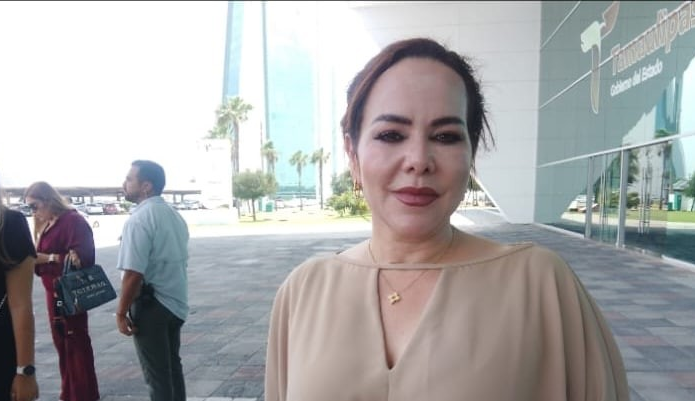
Among the city council members present was the mayor of Nuevo Laredo, Carmen Lilia Canturosas Villarreal, who spoke at length with the press at the end of the event, answering all the questions and concerns that arose.
To speak of Nuevo Laredo is to speak of a strategic city for Tamaulipas and Mexico. Why? Because the municipality of Nuevo Laredo stands out nationally and internationally for several important reasons:
First, Nuevo Laredo is a key customs gateway—the “customs capital of Latin America”—and is the main land port in Latin America. An average of more than 17,000 trucks move through this border crossing daily, generating nearly 20% of the value-added tax on foreign trade. To try to put this figure into perspective, let me tell you that Mexico’s National Customs Agency reported a collection of 593 billion pesos between January and May 2025, which is already considered a historic record. And Nuevo Laredo is the transit point for trade that has increased from $88 billion per year in 1993 to $1.3 trillion in 2023.
But Nuevo Laredo also processes more than 40% of trade between Mexico and the United States, through three international vehicle bridges and one rail bridge. And due to the volume of its operations, Nuevo Laredo is recognized as the number one destination for national customs participation, contributing more than 36% of international land trade.
Nuevo Laredo also stands out for its first-class logistics infrastructure: it has industrial parks, distribution centers, and a multimodal network—land, rail, and air—that facilitates and supports the efficient transit of goods. And more major projects are being planned, such as the expansion of the vehicular bridge and the creation of a second railway bridge, with joint federal and private investments.
The border city is also part of the strategic USMCA Corridor that connects Mazatlán-Durango-Monterrey-Nuevo Laredo and continues toward the central United States, serving as a vital link between major industrial hubs in northern and central Mexico, facilitating the flow of exports and nearshoring. It is difficult to imagine Mexico’s foreign trade without Nuevo Laredo.
And one of the good news is that Nuevo Laredo is not only very important for its customs role, but is also positioning itself as a tourist destination: in 2024, this border city welcomed more than 116,000 visitors, with a 61% growth in hotel occupancy, representing a record figure that, given its importance, is difficult to match.
Nuevo Laredo also boasts significant connectivity, with the Quetzalcóatl International Airport being a highlight, boosting air travel and offering a wide variety of flights to various destinations in Mexico and the United States. The Mexico-Nuevo Laredo train is also underway, strengthening mobility to and from the Mexican border.
Thanks to all these efforts, Nuevo Laredo has climbed the Urban Competitiveness Index, becoming one of the most efficient municipalities in public administration. Public and social infrastructure projects—such as the new headquarters of Mexico’s National Customs Agency, medical services, and security services—have been promoted, strengthening the urban environment and driving significant investment.
This is how Mayor Carmen Lilia Canturosas Villarreal explained it: “We have been working on Nuevo Laredo’s infrastructure for a long time, in coordination with the federal and state governments, and fortunately, there has been much progress in our city.”
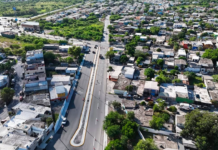
Canturosas Villarreal reported that they are finishing Highway Mex 2, the main road leading from the World Bridge, which had been unfinished for 20 years. She stated that, in coordination with the Government of Tamaulipas and the Federal Government, they authorized it to be completed with municipal funds, investing 250 million pesos in the road. “This road has been requested for a long time by transporters, operators, and customs officials, to make it more agile and prevent accidents. Well, we are already working on it and hope to complete it between September and October. This will be a very important step forward to continue strengthening the international trade infrastructure in the Nuevo Laredo region,” the mayor added.
Speaking about the state secretaries’ visit to Nuevo Laredo, President Canturosas Villarreal said she was proud of the coordinated and collaborative work they have been doing “closely in collaboration with the state and federal governments.” She emphasized that the Secretary of Urban Development and Environment, Karina Lizeth Saldívar Lartigue, had already visited the city to strengthen efforts to improve the city’s environment.
Carmen Lilia also spoke about the visit of the Secretary of Education, Dr. Miguel Ángel Valdez García, thanking him for all his support in strengthening the infrastructure of municipal schools. The mayor shared that “the municipal government will provide a bonus to more than four thousand teachers, starting July 14th. A call for proposals has been opened for all public school teachers. We will provide a back-to-school bonus of $2,000.00 pesos, and more than ten million pesos will be distributed to all our teachers, in recognition of their hard work.”
The Secretary of Social Welfare was also in Nuevo Laredo, “with whom we worked in community kitchens where we fed low-income families in need. “Every day we get up to work to strengthen Nuevo Laredo and Tamaulipas,” said the mayor.
Carmen Lilia affirmed that this municipal government of Nuevo Laredo is deeply concerned about environmental protection and has taken many actions to achieve results. One of them was the challenge of combating the sewage “that was coming from everywhere and was sprouting all over the city, but now it’s channeled and goes directly to the Pitar Plant.” El Laguito was also rescued, a body of water that had been subjected to seven wastewater discharges for more than twenty years. And today it’s a recreational space for people, a space where families can walk, and where a bridge was built to connect us from one side to the other, where there are sports facilities, and where there are no longer any bad smells, because it always smelled of sewage. Just as This year, we have recovered many spaces in Nuevo Laredo for families.
The mayor stated that the issue of making Nuevo Laredo a green city “is very important to me, and we are working on it every day.”
The mayor added that Nuevo Laredo has a tire shredder “where we can dispose of up to 40,000 tires per month,” and that the waste material “is being used to make speed bumps, and we are using it in some parks so that if children fall, they land on a soft surface.”
She also reported that many actions are being taken to strengthen the environment, including creating a purple line where all the wastewater, instead of flowing into the Rio Grande, returns, is treated, and remains in the industry in Nuevo Laredo. “We are already working on a project worth approximately twelve million pesos to pipe all that water so that it reaches the industry for its processes, where they don’t need fresh water and can use recycled water.”
That same Monday, during her morning press conference, President Claudia Sheinbaum Pardo announced that she would soon be inaugurating the National Customs Agency in Nuevo Laredo. When asked about the matter, the mayor stated, “We are all very happy. It is a majestic building. They did the job as they should have, very beautiful. And right next to the customs office, we have a military barracks. Within the ANAM, there are more than 10 km of land.” And all the software is about to be installed, and soon people will begin migrating to Nuevo Laredo, although another group of people will be hired right there in Nuevo Laredo.
But not only has the mayor of Nuevo Laredo built excellent relationships with the different levels of government and with the key players in the border city, she has also built solid bridges with her neighbors to the north. So much so that she was invited to participate in the prestigious international forum “Beyond Borders: Immigration and the Texas Economy,” organized by the Border Security and Trade Council in collaboration with the Texas Lyceum, an event chaired by the United States Ambassador to Mexico, Ronald D. Johnson.
And it is clear that Mayor Canturosas’ participation in this important international meeting underscores the binational leadership that Nuevo Laredo has developed under her administration, positioning the city as a benchmark in border cooperation and economic development.
During her remarks, Mayor Canturosas presented the achievements that have consolidated Nuevo Laredo as the leading customs center in North America, highlighting that the city handles 40% of bilateral Mexico-United States trade, with 17,000 daily truck crossings and a trade flow that has grown from $88 billion in 1993 to $1.3 trillion in 2023.
“Nuevo Laredo,” said Carmen Lilia, “has evolved from being a regional border crossing to becoming the main land-based engine of international trade in Latin America.”
Likewise, Mayor Canturosas’ participation in this forum takes on special relevance in the current context, where President Donald Trump’s immigration and tariff policies have generated tensions in the bilateral relationship. And in this context, the mayor highlighted the work of Nuevo Laredo as an example of cooperation and bridge-building between both nations: “Our approach has been to build bridges of collaboration, not walls,” stated the mayor, who presented successful binational initiatives such as the “Dos Laredos Smart Port” project, which uses IoT technology to optimize logistics management, and the “CruzLink” platform, which shares real-time data between the customs offices of both countries.
At this important forum, the mayor of Nuevo Laredo stated that thanks to the good relationship with President Claudia Sheinbaum Pardo and the governor of Tamaulipas, Américo Villarreal Anaya, projects are being carried out such as the expansion of Puente III, which will increase capacity to 25,000 trucks per day by 2027; the Saltillo-Nuevo Laredo Train, a railway infrastructure that will transport 5.5 million users annually; the construction of the MEX II Bypass with an investment of 250 million pesos to ease congestion at the World Trade Bridge; the conversion of Quetzalcóatl Airport, its development as a logistics hub with a capacity of 50,000 tons per year; and the Nearshoring program, which aims to attract 30 global companies with AAA credit ratings.
But it’s not just economic and customs projects that are successful in Nuevo Laredo. Security and migration issues are also high on the city’s agenda, highlighting the implementation of the Industrial Protection Unit, which has reduced theft by 35%, and the “Héroe Paisano” program, which assists 120,000 Mexican migrants annually.
Furthermore, the mayor has been pushing to turn the “Two Laredos” into a global model of economic and social integration for the next 10 to 20 years. This vision includes the development of digital logistics corridors, the creation of a “Border Tech Hub” for sustainable mobility startups, and the implementation of a binational ecological corridor that will reduce CO₂ emissions by 20% by 2030. Therefore, Carmen Lilia asserts that “Nuevo Laredo is not only a border city, but a laboratory for innovation in binational cooperation.”
Mayor Carmen Lilia Canturosas’ participation in this important high-level forum confirms the international recognition of the work done in Nuevo Laredo over the past five years.
Is Nuevo Laredo important for Tamaulipas and Mexico? It’s more than that. It’s a strategic city for bilateral relations and North American trade.
“Beyond Borders” is positioned as one of the most important forums for dialogue on immigration policy and border economic development, and the participation of Nuevo Laredo Mayor Carmen Lilia Canturosas Villarreal reinforces the city’s leading role in the Mexico-United States binational agenda.
PS. 1. Information published today indicates that during the first eleven days of July, 607 people were murdered in the country, an average of 55 victims per day, according to preliminary figures from the Ministry of Security and Citizen Protection.
With 70 victims of intentional homicide, July 4th is currently the most violent day of the month, followed by July 10th, with 65; July 5th, with 60; and July 9th, with 57.
Sinaloa remains the state with the most murders in the country, in absolute numbers, accumulating 71 from July 1st to 11th, according to the SSPC’s daily report, prepared based on information provided by state prosecutors’ offices.
Following Sinaloa are Guanajuato, with 59; Chihuahua, with 50; Michoacán, with 41; State of Mexico, with 39; Baja California, with 37; Guerrero, with 35; Sonora, with 32; Veracruz, with 30; Morelos, with 25; Jalisco, with 24; Oaxaca, with 22; and Tabasco, with 20. The highest homicide rate is concentrated there.
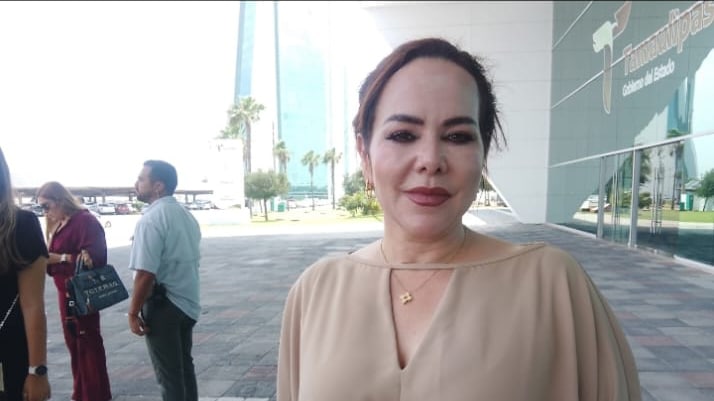
Source: notatamaulipas