
Ramiro hasn’t gone on a car trip since November. That night, on the Salamanca-León highway in Guanajuato, he saw a huge rock in the high-speed lane. He was driving with his wife, going about 110 kilometers per hour. He thought about avoiding it, but the risk of rolling over was greater, so he crashed into it. Fortunately, the impact only damaged the truck’s tires, but it couldn’t move forward. It wasn’t an accident; someone placed the rock in a planned attack. According to Carlos Jiménez, spokesperson for the Mexican Association of Insurance Institutions (AMIS), blocking roads to force drivers to pull over is an increasingly common modus operandi on the country’s highways. Traveling at night, being accompanied by a woman, and driving a new truck all worked against Ramiro, as the groups that commit these robberies specifically target those travelers.
After the crash, Ramiro got out to check. It was dark and he couldn’t see anything. A few minutes later, another van stopped in front of them. A man approached, offering assistance to search the car, but Ramiro quickly understood that this wasn’t meant to be helpful. Suddenly, a second voice came from behind him: “Throw your cell phone and everything else you’re carrying.” That night, his wife, Lucero, felt like she was “on the line between life and death,” and they both wondered, “Are they doing all this for a little money and a couple of cell phones? Throwing a rock at you could kill you.” It took 30 minutes, which they recall felt like an eternity in the dark, for the police to arrive. When they finally did, they were advised not to mention anything about the robbery to their insurance company because they wouldn’t be paid for the damages. “It’s totally illogical that they don’t cover vandalism when they don’t do anything to prevent it,” he complained, referring to the coverage offered by the toll ticket.
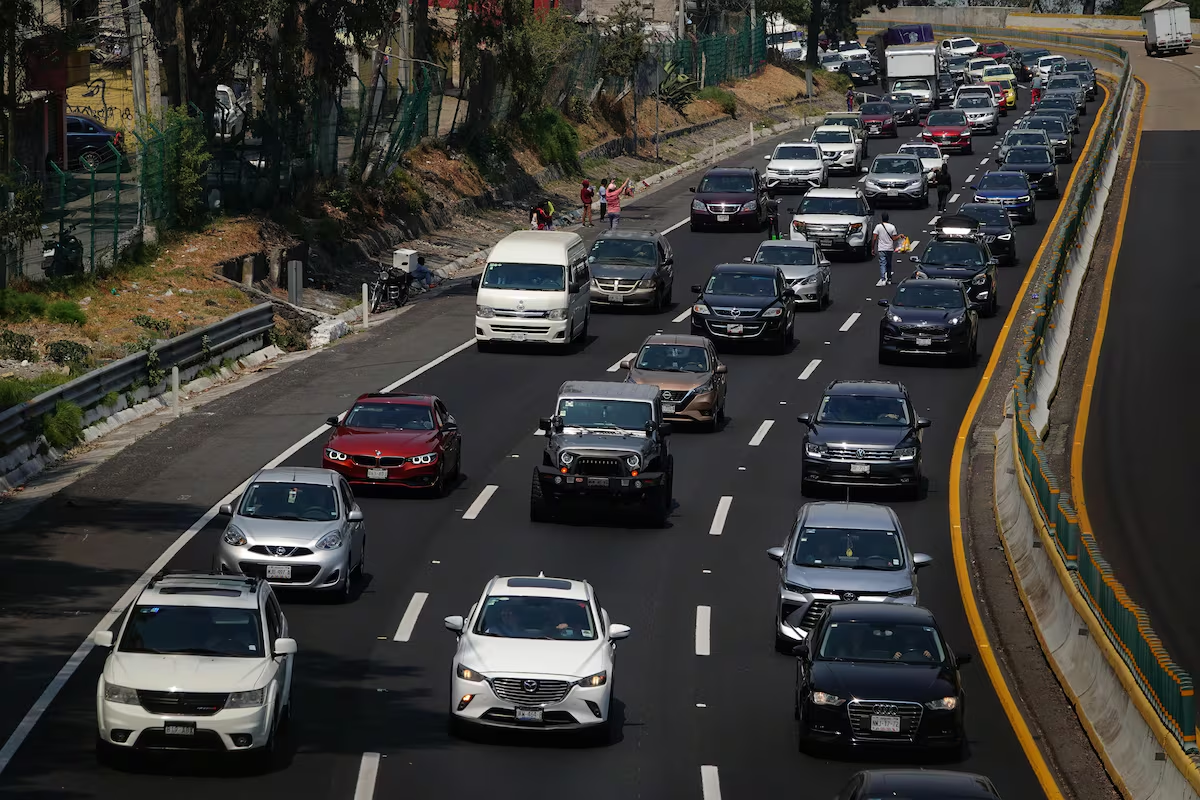
Jiménez, who is the director of property and auto insurance at AMIS, explains that criminals use several well-studied strategies to force drivers to stop or take advantage of moments where they are vulnerable. They place obstacles such as rocks, rods, or blocks in the road. They take advantage of traffic jams caused by accidents or toll booths to divert motorists to less-traveled, unmonitored roads, or they create complete blockades with vehicles parked across the road. The case of Ramiro, who is 61 years old, fits the first example.
AMIS has detected another key finding: criminals don’t attack randomly, but rather choose their targets. “They look for newer SUVs, cars carrying women, older adults, or families. The most vulnerable profiles,” they explain. Reports made by citizens on social media coincide with what the Association describes. Every so often, a new video of highway robberies goes viral, and almost always the victims are families. The stolen cars are later used by the criminals themselves or sold for parts, depending on the model.
Eric, who also fits the profile described by AMIS, was robbed along with his family, whose last name he prefers not to share, while traveling from Mexico City to Querétaro. At 11 p.m., just before the toll booth in Cuautitlán Izcalli, a car blocked their road. Four men got out, stole everything, took their Audi Q3, and left them stranded. They filed a report and were informed some time later that the car had been found in Oaxaca.
The latest National Census of Federal Public Security shows that vehicle thefts on the highway increased from 1,860 in 2022 to 3,204 in 2023. Although the majority were cargo trucks (65.6%), private cars are also targeted. “Situation on the highway” is the most frequently reported incident in the 088 system, the anonymous report number.
In response to the insecurity, the government last week presented the Zero Robbery strategy to “improve the security of all federal highways.” This strategy involves deploying hundreds of National Guard troops, helicopters, drones, and detection towers to the country’s roads. For now, they are concentrated on the Mexico-Querétaro, Mexico-Puebla, and Culiacán-Mazatlán highways, where these crimes are most frequently reported. The Federal Highways and Bridges (CAPUFE) announced that starting in January of next year, toll booths will implement automatic payment via TAG (Tag Card) to expedite traffic at the main toll booths and limit the use of cash.
Source: elpais