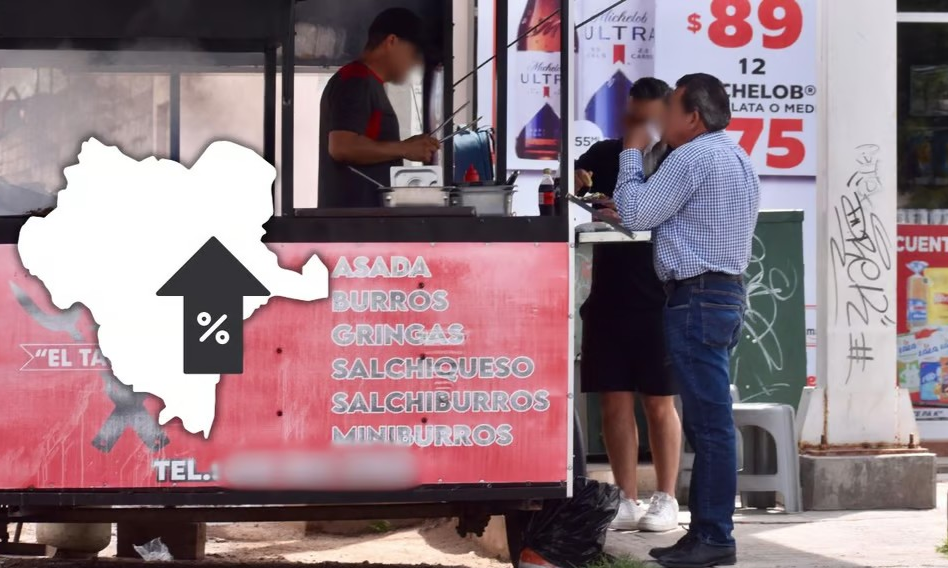

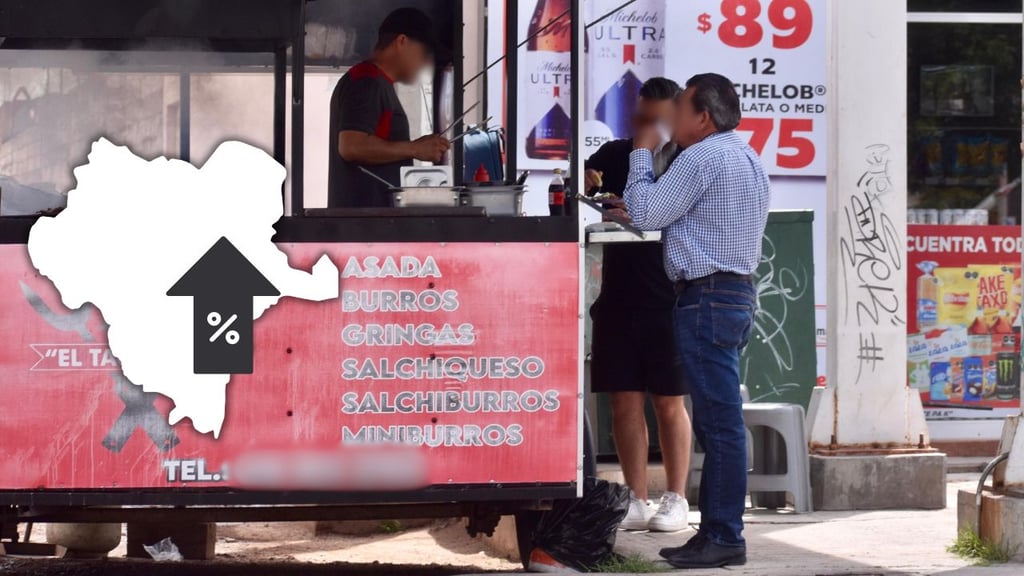
In Durango, informal employment exceeds 50 percent of the Economically Active Population (EAP). By mid-2024, it had dropped to 48.9 percent; However, a year later, it had rebounded to 51.2 percent.
The National Employment and Occupation Survey (ENOE) reflects the state’s labor market, including employment, informality, underemployment, and unemployment.
At the end of the second quarter of 2025 (June), the EAP in Durango was 884,069 workers. Of that population, 23,518 were unemployed, equivalent to 2.7 percent, just one-tenth less than in the same period of the previous year.
71,000 work less than 15 hours per week
The part-time employment and unemployment rate—which includes both the unemployed and those with short-term employment (less than 15 hours per week)—showed an increase. It rose from 89,291 people in June 2024 to a total of 94,595 in June 2025, an increase of 5,304 people.
Of this figure, in addition to the 23,518 unemployed, 71,077 people worked less than 15 hours per week. This brought the rate up from 10.1 to 10.7 percent in one year.
Nearly 600,000 are looking for additional work
The survey also measures the General Pressure Rate (GPRR), which corresponds to unemployed people looking for work and those who, while employed, are looking for a second job or additional income. In Durango, this indicator reached 69.4 percent, representing 613,544 people.
Of these, 590,026 are seeking a second job to improve their economic situation.
Critical Employment Conditions
Another indicator is the Critical Employment Conditions Rate (TCCO), which includes those who, despite having a job, work in precarious conditions: less than 35 hours a week, more than 35 hours with income below the minimum wage, or more than 48 hours with a wage of up to two minimum wages.
In Durango, this rate stands at 33.3 percent, equivalent to 294,395 workers.
Informality Continues to Rise
Within the labor market, the informal sector stands out, comprised of self-employed workers in the public sector, as well as companies and businesses that operate illegally and do not offer social benefits.
At the end of the first half of 2025, informality stood at 51.2 percent. This means that of the 860,551 people employed in June, 440,602 were employed informally.
This figure is higher compared to June 2024, when informality reached 48.9 percent. Throughout that year, it remained below 50 percent, but in 2025, the trend reversed, and it has shown steady growth since January.
Source: elsiglodedurango