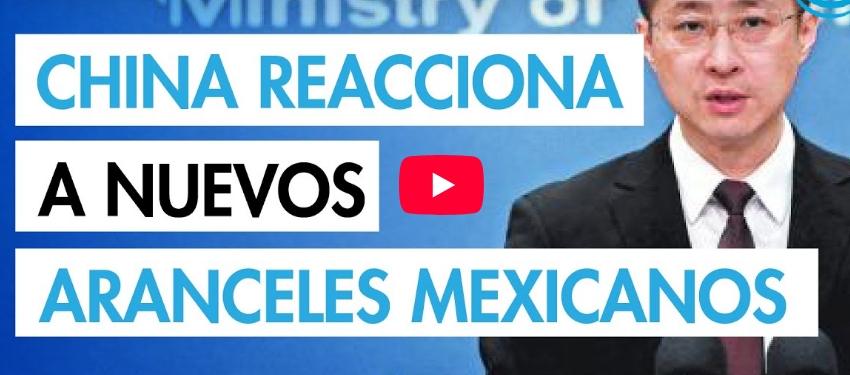

Facing trade pressure, Mexico announced a few days ago a proposal to raise tariffs on various imported products from countries with which it does not have free trade agreements.
The measure, which generated heated debate, aims to strengthen domestic industry, but has provoked an immediate reaction from China, its main affected trading partner.
Mexico Raises Tariffs: The Target Is Domestic Industry
The Mexican government presented a plan to raise tariffs up to 50% on imports from countries without trade agreements.
The proposal, which must be approved by Congress, seeks to protect key sectors such as the automotive, textile, and steel industries.
The initiative comes at a time of rising trade tensions with the United States, and although it does not directly mention any country, Chinese products are the most affected.
If approved, the measure would significantly increase tariffs on light vehicles, which would increase from the current 15% to 20% to 50%. Other products such as textiles, clothing, and steel would also see an increase in their import taxes.
China Responds with “Caution” and Warnings
The Chinese government immediately reacted to the proposal, calling it “coercive” and calling on Mexico to act with “caution.” Through its embassy, Beijing warned that it will take the “necessary measures” to defend its rights and interests. Although the actions were not specified, the diplomatic tension is evident.
Mexican President Claudia Sheinbaum denied that the measures are coercive or specifically targeted at China. In an attempt to calm the waters, she announced that she will meet with Beijing representatives next week.
The Context of the Decision: Pressure from the United States and the Effect on the Market
Mexico’s plan comes amid pressure from the administration of US President Donald Trump, who has demanded that its trading partners, including Mexico, increase tariffs on China.
Experts point out that the main targets of the new tariff policy would be Chinese electric and gasoline car manufacturers, such as BYD and Tesla, whose sales in Mexico have grown exponentially in recent years. However, large US companies with plants in Mexico, such as General Motors and Ford, would be protected.
The tariff increase threatens to slow the growth of the electric car market in Mexico and could have a significant impact on consumers.
Despite China’s concerns, President Sheinbaum insists that the measures seek to “strengthen domestic production” and will not affect Mexico’s relations with Asian countries.
Source: eleconomista