
On the eve of the celebration of the beginning of the country’s independence process, the Archdiocese of Mexico called for unity, asserting that “the Eucharist gives us the fuel to make progress in Mexico.”
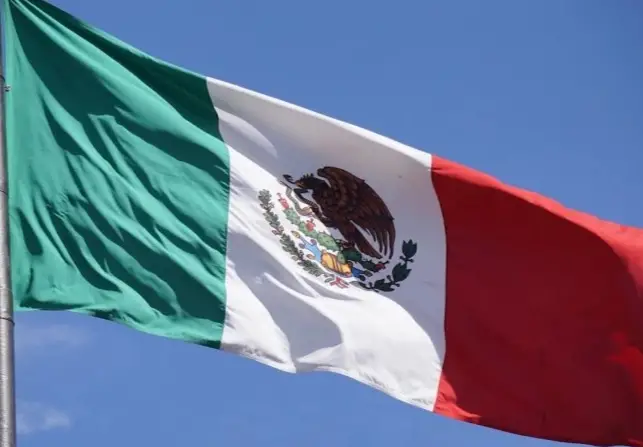
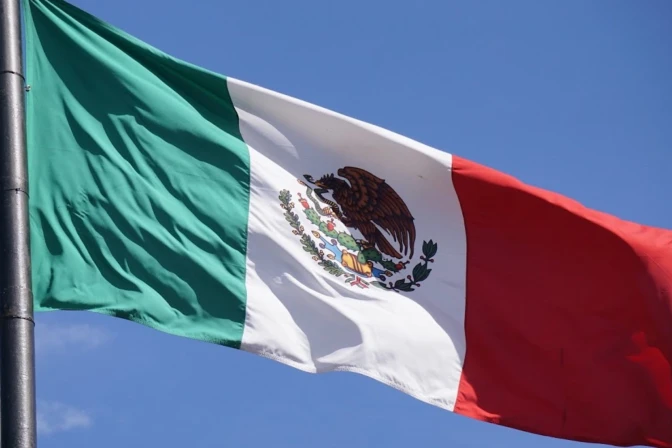
The celebration of national holidays in Mexico commemorates the early morning of September 16, 1810, when Catholic priest Miguel Hidalgo y Costilla delivered what is considered the starting point of the country’s independence process, with what is known as the “Grito de Dolores” (Cry of Dolores) at the parish of Our Lady of Sorrows in Dolores Hidalgo, Guanajuato.
Traditionally, on the evening of September 15, the president of the country, as well as governors and mayors, hold a speech in remembrance of that first proclamation.
Mexico’s independence was achieved on September 27, 1821, when Agustín de Iturbide entered Mexico City at the head of the so-called Trigarante Army, which defended three “guarantees”: the Catholic faith as the national religion, independence from Spain, and unity between Americans and Europeans.
In the editorial of its weekly Desde la Fe, titled ¡Que viva la unidad de los mexicanos! (Long Live the Unity of Mexicans!), the archdiocese laments that “there are times when Mexico hurts,” including “when we learn of a story borne of insecurity, when we learn of those whose future has been robbed by violence or corruption, or when division chills the public spirit.”
However, it emphasizes that “this country also knows how to rise up when it decides to work together. We are not talking about uniformity, which nullifies, but about plural unity, which allows for dissent without destruction and for joining hands for what is essential: protecting the life, dignity, and future of our children.”
The Eucharist: “Our Starting Point”
“From the Church, we want to foster that unity. And our starting point is the Eucharist,” he notes.
“The movement we need,” indicates the Archdiocese of Mexico, is “‘go,’ said by the priest at the end of each Mass, a ‘go’ that means going out to meet those who suffer.”
“If the Eucharist doesn’t make us more brothers and sisters, more just, and more available, it remains a ritual. But if it transforms us into shared bread, the parish becomes a workshop for the country,” he asserts.
Unity is necessary, he specifies, “to combat the evils that afflict our country also demands honesty to call evil by its name; courage to not normalize extortion or conform to the ‘this is how it is here’; and, of course, temperance in the face of the polarization that reduces everything to factions.”
“This unity to which we invite from the Church does not nullify criticism, it guides it. It asks us to lower the volume of the shouting and raise the frequency of the encounter,” it emphasizes.
“For those of us who believe in God, the Eucharist gives us the fuel to make our way in Mexico,” the Archdiocese of Mexico concludes.
“If we find ourselves there, in the broken bread and in the shared street, we trust that we can emerge from this period of fear and fracture. Not with magic, but with hopeful realism, with the sum of small acts, just as our greatest ancestors became great,” it concludes.
Source: aciprensa