
The exhibition, dedicated to more than five decades of archaeological research at Cobá, restores the relevance of this Mayan site, not only for its historical richness, but also for the impact of the work carried out since the second half of the 20th century.
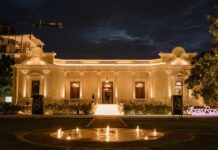
The Museo Maya de Cancún currently houses the exhibition, organized by the National Institute of Anthropology and History (INAH) and the Boundary End Archaeology Research Center, in collaboration with the local government of Cobá.
The inaugural event, held on September 4, 2025, featured David Stuart, epigraphist and director of the Boundary End Archaeological Research Center, who emotionally recalled his childhood experiences at the site.
The exhibition, titled “Cobá: More than 50 Years of Archaeological Research,” pays tribute to the pioneering work of the Cobá Archaeological and Topographic Project, Quintana Roo, directed by George Stuart and William Folan.
This project began its first field seasons half a century ago, laying the foundation for current knowledge about the ancient city. The exhibition also recognizes the career of archaeologist María José Con Uribe, to whom it is dedicated for more than three decades of work at the Cobá Archaeological Site.
During the opening, David Stuart, a specialist from the University of Texas at Austin, recounted that his interest in Mayan glyphs arose at the age of eight, while living in Cobá with his family.
His father, George Stuart, led the research camps with William Folan, while his mother, the artist Gene Stuart, documented the murals through drawings.
This family experience marked the beginning of a vocation that would lead him to become a leading figure in Mayan epigraphy.
This is the location of the Mayan city of Cobá
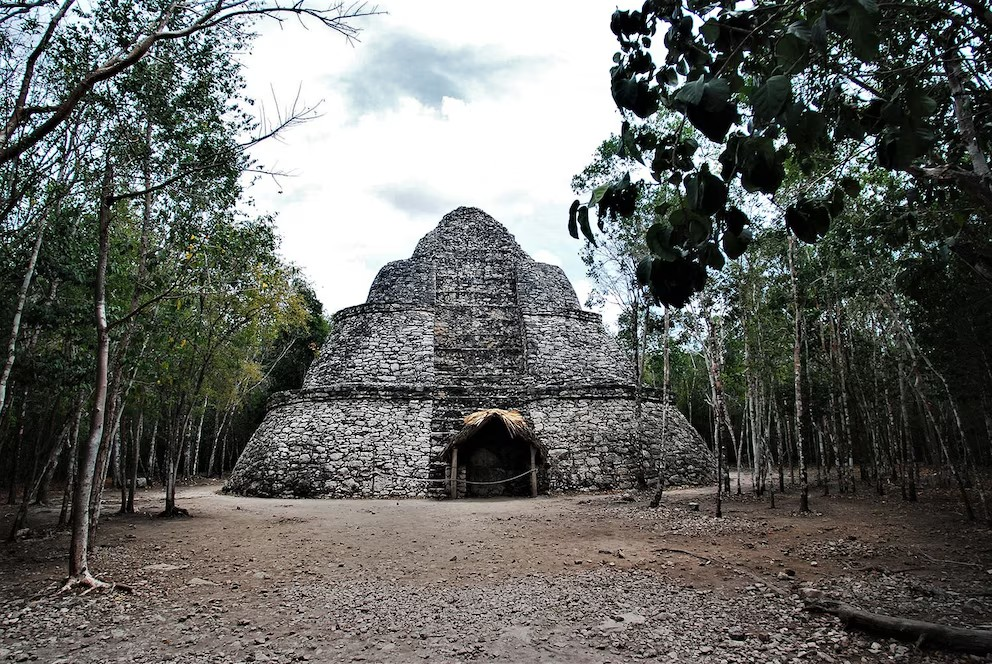
Cobá is located in northern Quintana Roo and, in its heyday, it housed between 80,000 and 120,000 inhabitants, a figure comparable to that of the current archaeological site of Tikal in Guatemala.
The name of the city, one of the few ancient ones preserved in the Mayan area, means “place of rippling waters,” alluding to its foundation next to several lakes.
Among its most notable features is an extensive network of white roads, known as sacbe’ob; the longest of which stretches 100 kilometers and connects to Yaxuná, a city near Chichén Itzá.
Archaeologist María José Con Uribe emphasized the magnitude of Cobá as a Mayan metropolis, highlighting the presence of large architectural complexes, a network of roads of varying lengths, and a residential area that exceeds 70 square kilometers.
In his words, “its dynastic history continues to be studied and in the future will reveal the future of the site, its relationships with other entities, and the extent of its hegemony.”
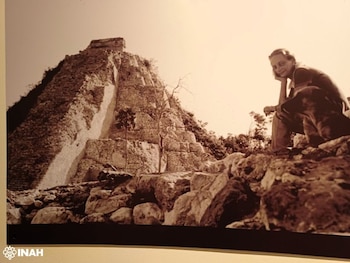
A tour of the exhibition allows one to see images of the archaeological site, records of fieldwork, and scenes from the Stuart family during their stay in Cobá.
Also on display are drawings made by George and Gene Stuart, who documented several monuments, as well as materials illustrating David Stuart’s professional career as an epigrapher.
Photographs of Cobá residents who lived with the archaeologists and their families complete the human panorama of the exhibition.
The exhibition consists of more than 50 photographs, documents, and drawings from the Boundary End Archaeological Research Center Collection, an organization founded by George Stuart.
The closing section includes images of other archaeological projects carried out at the site, primarily by the INAH (National Institute of Archaeology), along with fragments of mural paintings and a stone panel found in Cobá.
The exhibition was curated by Nelda Issa Marengo Camacho, executive director of the Boundary End Archaeology Research Center, and archaeologist María José Con.
Following its run at the Museo Maya in Cancún, the exhibition will open at the Mexican Cultural Institute in Washington, D.C., on October 15, 2025.
Source: infobae