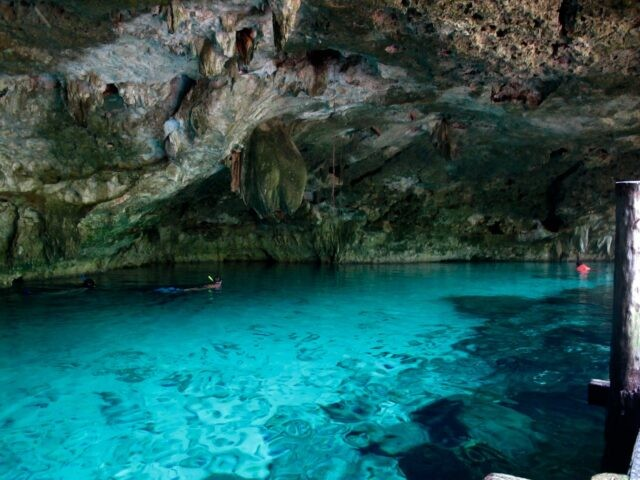

A scientific analysis conducted in monitoring wells and urban cenotes detected high concentrations of nutrients in several areas of Playa del Carmen, which could be linked to untreated wastewater discharges, reported Alejandro López Tamayo, general director of Centinelas del Agua (Water Centenaries).
The study, jointly promoted by engineering and architectural associations, as well as the City Council and private sector, revealed that in neighborhoods like Luis Donaldo Colosio, many homes lack sewage connections, causing raw sewage to flow directly into underground caverns and caves. López Tamayo warned that this phenomenon not only compromises the quality of the aquifer but also impacts the beaches, the region’s main tourist attraction.
In the initial phase, the project enabled five families in that neighborhood to be connected to sewage systems, with funding from Centinelas del Agua and support from municipal authorities. However, of the 500 lots analyzed, at least 168 remain unconnected, demonstrating that efforts are still insufficient. The specialist emphasized that greater investments in infrastructure are required because, although these projects are not always visible, they are essential for preserving natural resources.
López Tamayo added that the lack of wastewater treatment in Quintana Roo increases nutrient levels in the coastal zone, which favors the proliferation of macroalgae such as sargassum. He emphasized the urgency of modernizing tertiary treatment plants and ensuring compliance with environmental regulations, as otherwise, marine ecosystems will continue to deteriorate. “Protecting the aquifer and the Caribbean Sea is key to ensuring the environmental health and tourism sustainability of the municipality,” he emphasized.
A new tourism vision is emerging in Playa del Carmen with a clear focus: diversifying the current offering and opening the door to new market niches. This was recently announced by Estefanía Hernández, the municipality’s Secretary of Tourism, who announced the creation of Mexico’s First Cenote Corridor, an inter-destination strategy that seeks to position the region as a benchmark for nature and sustainable tourism.

Source: reportur