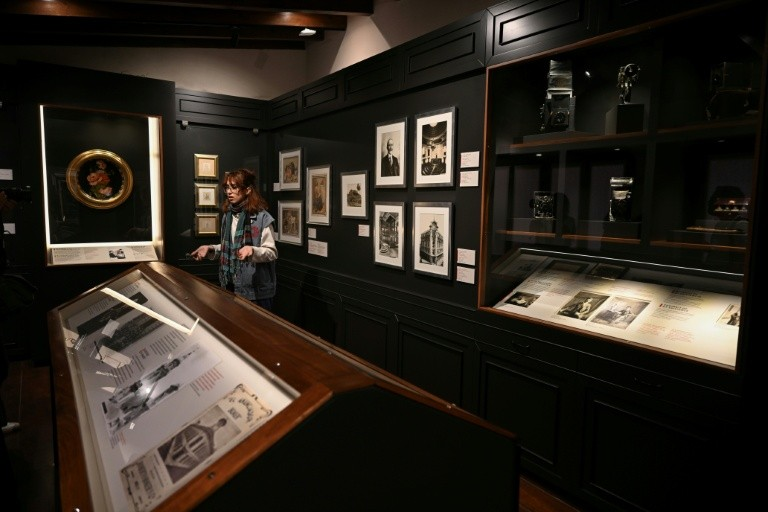

A loving, warm, and sparkling Frida Kahlo is revealed in the objects and spaces of a new museum that celebrates the life of this Mexican artist, beyond the pain and harshness of many of her famous paintings.
The Museo Casa Kahlo opened its doors just a week ago in Mexico City, hosted by one of the artist’s great-nieces and two great-nieces, as an intimate tribute to a family tradition marked by art and social sensitivity.
The affection, the delicacy of very different artistic expressions, and the love for Mexican traditions combine in the memories and pieces on display, brimming with the spirit of a family where women have set the tone.
“She’s a Frida aunt, a Frida daughter, a Frida situated in the intimacy and security of a family,” explains Adán García Fajardo, director and member of the founding team of the Museo Casa Kahlo.
Advertisement – Scroll to Continue
The exhibition includes nine original works and countless personal objects, as well as photographs taken by her father, Guillermo Kahlo. This collection is complemented by striking digital multimedia elements.
“Seeing this museum makes you learn more about her, as Frida, not as the artist, but as the woman she was (…). I feel like it was a place that was hers, where she could be herself,” says 19-year-old student Aranza Vázquez after completing her tour.
Located in the traditional Coyoacán neighborhood in southern Mexico City, the museum has undergone numerous incarnations in the Kahlo family history.
It was her parents’ home, a venue for lively gatherings with family and friends, a workshop for the young painters Frida mentored, and the home of her sister Cristina, whom she called “the other half of my life.”
The close relationship with Cristina has an important place in the exhibition, given that the house was a refuge of “sorority” for the painter during crucial moments in her life, both emotional and related to her fragile health.
“(Here) Frida felt safe, (…) she came to rest from the world in a way, to distance herself, to listen to music, to create, to write, to sketch,” says García Fajardo.
In contrast to the Casa Azul, a museum established in what was Frida’s marital home and the celebrated Mexican muralist Diego Rivera, Casa Kahlo seeks to “demonopolize” her story, “constructed from particular and androcentric visions,” the director maintains.

Source: barrons