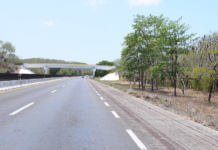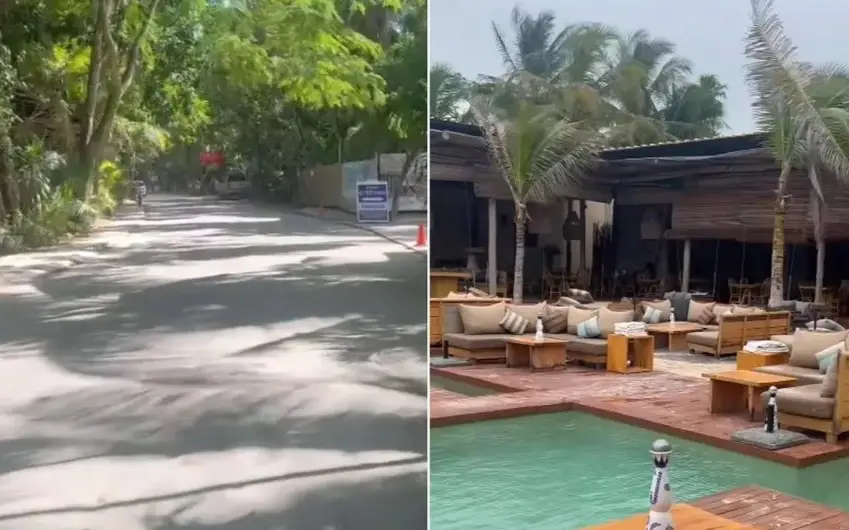

Empty streets, closed restaurants, and deserted beaches paint an unusual picture for Tulum, which in previous years was overflowing with tourists. This is evidenced by multiple videos shared on social media, sparking a debate that has already reached the National Palace.
In recent hours, social media users and residents of Quintana Roo have begun to point out that what was once a booming paradise in the Riviera Maya is now facing an unprecedented tourism crisis.
Oaxaca is much more than a tourist destination: it is a meeting point where traditions, gastronomy, indigenous heritage, and a wealth of culture intertwine.
Tulum, known for its white-sand beaches, oceanfront Mayan ruins, and vibrant alternative scene, is seeing a sharp drop in visitors, hotel occupancy, and economic activity. But what’s behind this crisis?
What’s happening in Tulum?
In recent days, users on social media platforms like TikTok and X—formerly Twitter—have shared photos and videos demonstrating the low tourist influx at beaches, restaurants, archaeological sites, and local businesses.
In the comments, Mexicans point out that the situation is a consequence of the high costs not only of lodging and recreational activities, but also of basic food consumption.
“Even the small stores wanted to sell you a soda for 200 pesos. I hope they saved up for the time they enjoyed it,” shared one user, who has more than 69,000 likes.
“Even for Mexicans, traveling to Europe was cheaper than going on vacation to Cancún or Tulum itself. It was unthinkable, it was a rip-off,” shared another user.
Local media reports indicate that hotels in the coastal and downtown areas of Tulum are experiencing their lowest occupancy in recent years, while merchants in the archaeological site point out that the summer of 2025 has been worse than during the COVID-19 pandemic.
Figures from the Quintana Roo Tourism Information System show a downward trend at the start of the 2025 fall season.
While during the week of July 26th to August 1st, Tulum registered an occupancy rate of 62.6%, well below other Quintana Roo destinations such as Costa Mujeres, Isla Mujeres, and Cancún, the latest report indicates that between September 27th and October 3rd, an occupancy rate of 54.2% was reported, a drop of 8.4%.
There is also evidence of a drop in the arrival of domestic and international flights. In the last week of July 2025, Quintana Roo registered 1,967 flights: 746 domestic and 1,221 international.
Meanwhile, in the last week of September, the state received 1,513 flights: 712 domestic and 801 international, a drop of 454 flights in just two months.
Meanwhile, data from the National Institute of Anthropology and History (INAH) indicates that the number of visitors to archaeological sites has also declined in Quintana Roo, dropping from 239,487 in January to 119,000 in May.
What has caused the decline in tourism in Tulum?
According to social media users who recently visited Tulum, the Caribbean tourist gem has become a destination with exorbitant prices.
Minimum consumption fees on beaches, restricted access to the sea, and high rates in restaurants, taxis, and hotels have generated discontent among tourists, especially domestic tourists.
Furthermore, the new “Jaguar Park,” a government initiative, has been criticized for allegedly limiting free access to beaches and archaeological sites, without offering any clear improvements to the experience.
What is Jaguar Park?
Jaguar Park is a tourism and ecological conservation project located in Tulum, Quintana Roo, promoted by the Mexican government as part of the Maya Train development plan and the restructuring of tourism in the Riviera Maya.
It surrounds the Tulum Archaeological Zone, north of the municipality’s center, very close to the Caribbean coast.
Some of the beaches in this area are: Mangle Beach, Maya Beach, Pescadores Beach, Santa Fe Beach, and Paraíso Beach.
Sargassum and environmental degradation in the area are also key factors. For much of 2025, the beaches have been covered in algae, generating unpleasant odors and murky waters, which discourage tourists seeking the typical turquoise sea.
Added to this is the deteriorating tourism infrastructure, overexploitation of real estate, and the lack of basic public services such as drinking water and proper waste management.

Source: milenio