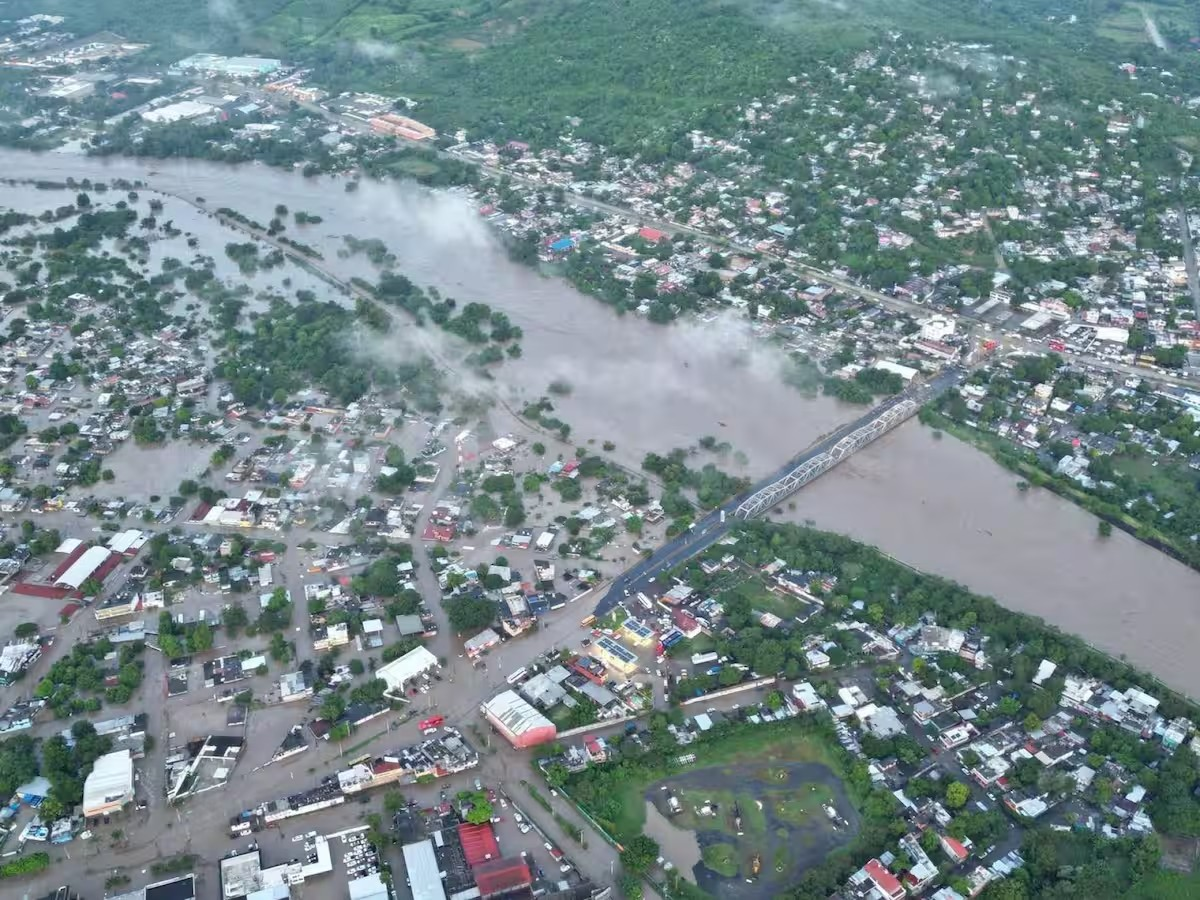

The extraordinary rains of October 6-9 left 64 people dead and 65 unaccounted for in Veracruz, Puebla, Hidalgo, Querétaro, and San Luis Potosí.
We don’t just inform you, we explain the politics. Click here and receive our free daily newsletter.
In addition, an estimated 100,000 homes were damaged and more than 42,000 people were without electricity.
What was the Fonden?
The Natural Disaster Fund (Fonden) was created in 1996 and began operating in 1999 as a public trust.
Its objective was to guarantee immediate funding to rebuild public infrastructure and assist the affected population. Activation required a declaration of emergency or disaster from the Ministry of the Interior.
According to CNN en Español, the fund had annual allocations close to $800 million by 2011, consolidating its position as the primary financial tool for emergencies.
Why was it eliminated?
In 2020, former President Andrés Manuel López Obrador proposed the dissolution of 109 trust funds, including the Fonden, as part of his austerity policy.
AMLO argued that the fund was “a petty cash fund” for officials who made overpriced purchases without any aid reaching the people.
The measure was approved by Congress, and in July 2021, the Ministry of Finance published the repeal of its operating rules in the Official Gazette of the Federation, which sealed the trust’s extinction.
However, according to Animal Político, although there were irregularities in its management, specialists warn that instead of eliminating it, oversight could have been strengthened to ensure transparency.
How are emergencies handled now?
The trust fund no longer exists, but resources are channeled through budget allocations in Branch 23, under the control of the Treasury.
President Claudia Sheinbaum assured that there is a 19 billion peso fund allocated for disasters, with the possibility of reallocating money from other areas if necessary.
“If more resources are needed, there will be more resources to reduce budgets in other areas and allocate them to the emergency,” Sheinbaum stated during her morning press conference.
Mexico also has catastrophe insurance and a catastrophe bond totaling more than US$700 million for emergencies, although their activation depends on specific conditions.
The current operating protocol includes:
Declaration of emergency
Restoration of roads and energy
Cleanup of affected areas
House-to-house censuses
Delivery of immediate support
Criticism of the new model
The current model has raised questions.
According to Animal Político, there are no longer automatic rules or pre-allocated amounts, causing potential delays in the first days of the emergency.
Analysis by IMCO and reports by EMEEQUIS also warn of opacity, underspending, and cuts.
In 2025, for example, the approved budget of 18.677 billion pesos was reduced to 16.765 billion pesos, and by mid-year not a single peso had been spent.
México Evalúa points out that attention has focused more on social assistance than on infrastructure reconstruction, which increases the vulnerability of communities.
Meanwhile, La Silla Rota adds that, in addition to the financial gap, Mexico lacks an Incident Command System that would have improved coordination in emergencies.
Source: politico