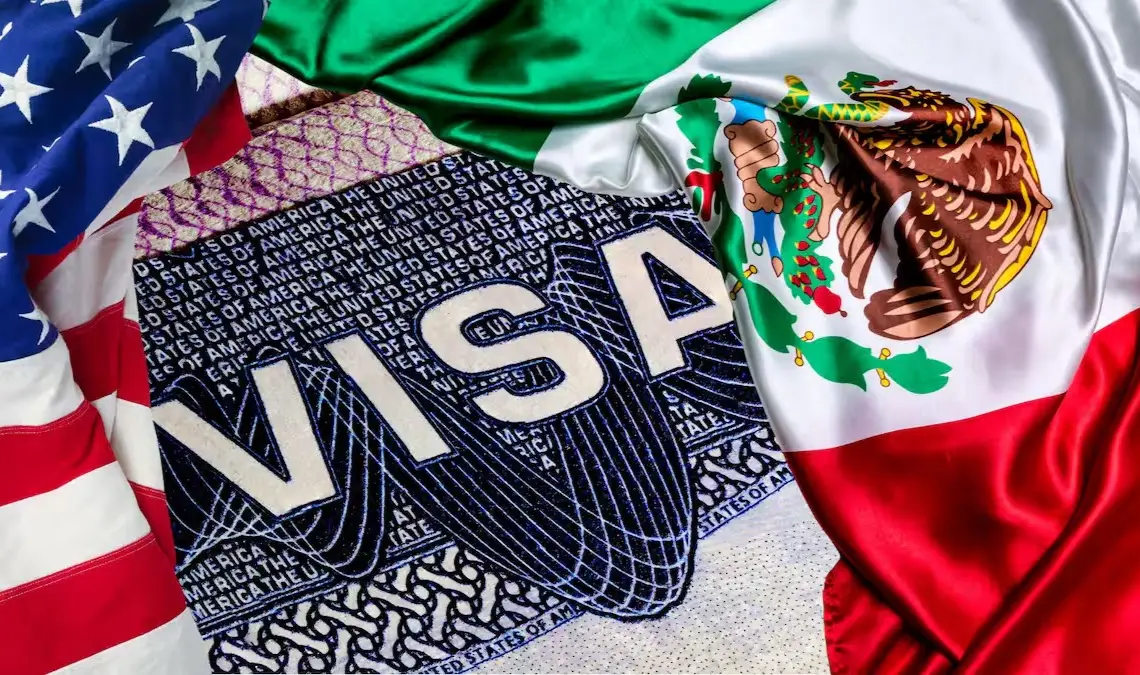

The US crackdown on criminal organizations, labeled by President Donald Trump as terrorist organizations, has generated diplomatic tensions with Mexico and led to the revocation of visas that undermine the image of figures from Morena, the ruling party in the country.
In this context, this Wednesday it was revealed that the administration of Republican President Donald Trump revoked the visas of three more Mexican politicians.
Former Guerrero Governor Héctor Astudillo Flores confessed during Ciro Gómez Leyva’s newscast for Grupo Fórmula that the US government revoked his visa on July 31.
The former PRI member stated that he was notified of the decision via email and emphasized that, according to him, it could have been due to statements he made on July 21 regarding tomato tariffs and US President Donald Trump, ten days before his visa was revoked.
However, later, during his appearance on the newscast with Azucena Uresti, a contributor to the same outlet, he revealed that two more Mexican politicians, without naming names or party affiliations, contacted him and told him their visas had also been revoked.
“I wonder, how many have had their visas revoked? I want to tell you that during the intermission I had on the show with Ciro, two people called me and told me: they revoked mine too,” he revealed, without giving further details.
One day before the revelation by former Guerrero governor Héctor Astudillo, the Reuters news agency reported that the United States government had revoked the visas of more than 50 Mexican politicians and officials.
According to the outlet, two Mexican officials, without naming names, detailed to the agency the diplomatic measures that US authorities applied to Mexican politicians.
This measure mostly affected members of Morena, as well as other political parties.
The revocations are seen as a new tactic by the US administration to exert pressure on Mexico in its war against drug cartels.
Although authorities have not confirmed the names, the measure is based on alleged ties to organized crime and its political allies. The measure underscores the increase in bilateral pressure in the fight against drugs.
Politicians without visas
So far, the confirmed cases of politicians whose visas were revoked are:
Marina del Pilar Ávila, governor of Baja California, and her current husband, Carlos Torres Torres;
Juan Francisco Gim, mayor of Nogales, Sonora;
Óscar Eduardo Castro Castro, mayor of Puerto Peñasco, Sonora;
Alberto Granados Fávila, mayor of Matamoros, Tamaulipas; among other Morena supporters.
Landau’s Strategy for Revoking Visas for Mexicans
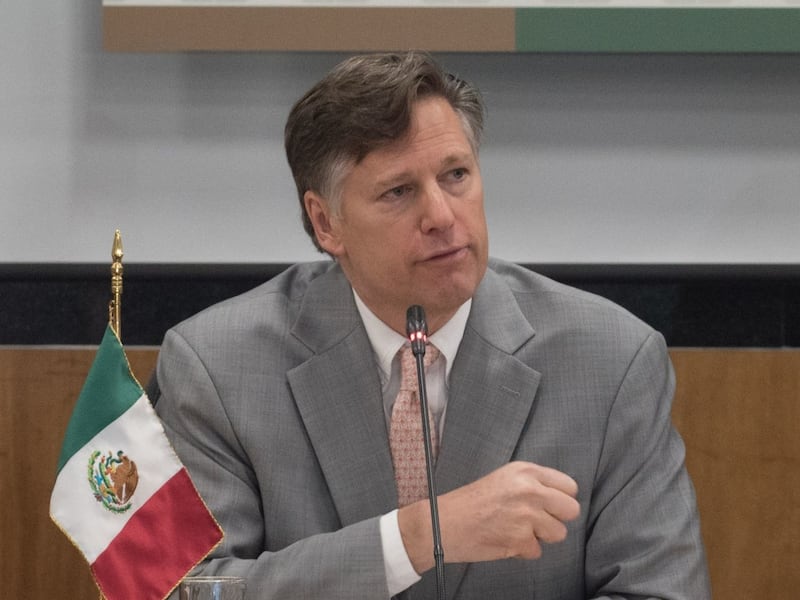
U.S. Undersecretary of State Christopher Landau has increased diplomatic pressure on Mexico, using visa revocations as a direct tool to punish officials and public figures for specific conduct.
His unfiltered actions and statements on social media mark a policy that goes beyond the traditional issues of corruption and drug trafficking.
Landau, who served as ambassador to Mexico (2019-2021) and is known for his active use of social media, has taken the unusual step of publicly announcing visa revocations on X.
One example was when the official ordered the visa revocation of Melissa Cornejo, a Morena state councilor in Jalisco, for a post in which she mocked visa revocations and supported protests against the raids that took place in Los Angeles, California, last June.
Landau’s justification focuses on the fact that “those who glorify violence and defiance of legitimate authorities and public order… are in no way welcome in our country,” as he criticized Salvador Ramírez, former Social Communications Coordinator for Morena in the Mexico City Congress, for his stance following the murder of Charlie Kirk, a Donald Trump supporter.
This policy has also been applied to artists and figures who have praised organized crime leaders on their platforms.
While revoking visas for alleged ties to organized crime or corruption is an established practice of the US administration, Landau has broadened the scope, as the diplomat uses the document as a tool to control speech and security, demonstrating that the US government actively monitors the publications of influential figures in Mexico.
Source: politico