
Left and right have been symbols of political orientation from their origins in the Constituent Assembly of the French Revolution until today. In the years since then, there have been various shifts in meaning. However, as Norberto Bobbio writes in his book “Left and Right,” the former has favored solidarity and the elimination of social inequality, while the latter has favored individualism and the naturalization of inequality.
However, two extremes have also emerged: the left has favored a socialist society; it has been anti-racist; anti-clerical; feminist; environmentalist; anti-capitalist, in favor of democracy but also of revolutionary violence against dictatorial governments; while the right has upheld ultra-nationalism, conservatism, xenophobia, homophobia, anti-feminism, white supremacy; possessive individualism; capitalism; in favor of liberal democracy and violence to eliminate its enemies. Between these two extremes, there are various variants.
In our country, after the Mexican Revolution, at least two left-wing movements developed: one that considered its role to be a struggle for social improvements for the vast majority within capitalism, and the other, an anti-capitalist movement that sought to establish a socialist and communist society. Both opposed American interventionism.
On the other hand, the post-revolutionary state, based on the provisions of the 1917 Constitution, sometimes leaned leftward, as in the case of Cardenas (1934-40), which carried out the expropriation of oil, reforms in favor of peasants, and solidarity with the Spanish Republic. At other times, it leaned rightward, adopting a repressive stance against the socialist left.
This situation led to the emergence of various guerrilla movements, most notably those led by Genaro Vázquez and Lucio Cabañas in the state of Guerrero. There were also struggles for union independence, exemplified by Valentín Campa and Demetrio Vallejo, among others; for agrarian justice (which led to the murder of Rubén Jaramillo and his family); and for democratic freedoms (the student-popular movement of 1968), which ended in the Tlatelolco massacre and the unjust imprisonment of José Revueltas, Eli de Gortari, Heberto Castillo, and many others. Members of the socialist left were subjected to persecution, torture, imprisonment, and death by the government.
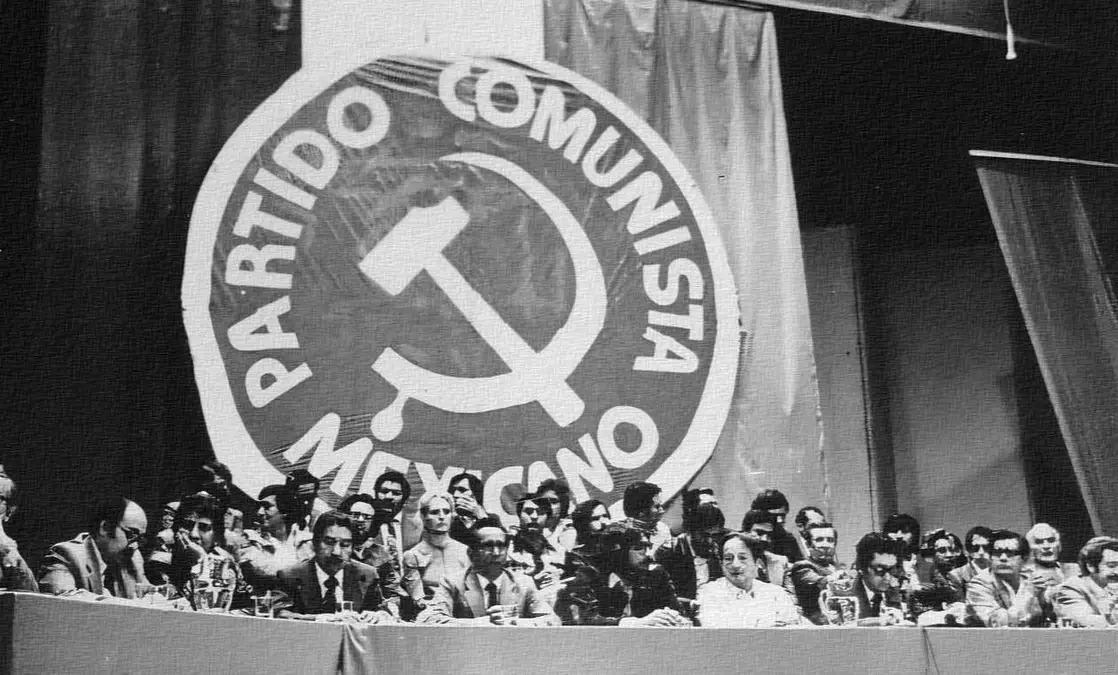
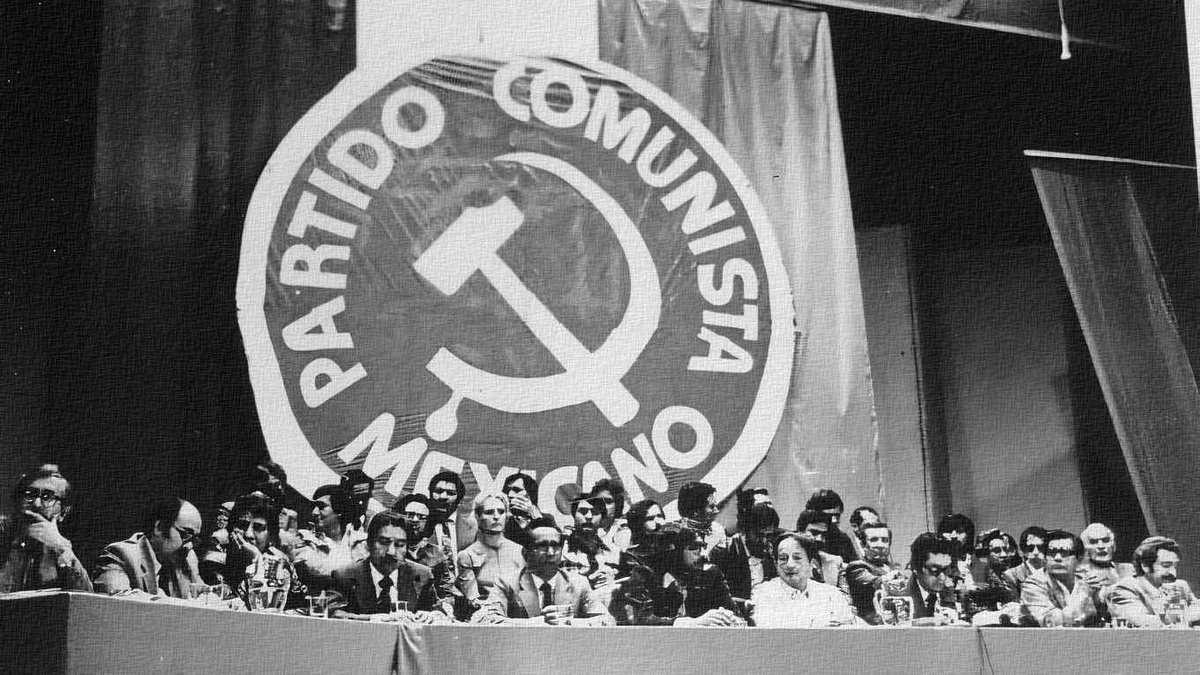
But what happened to this anti-capitalist and socialist left? Throughout the 20th century, the party weakened and became divided over tactical and strategic issues (the Mexican Communist Party, founded in 1919, dissolved and became the PSUM in 1981, giving rise to the Mexican Socialist Party (PMS) in 1987). At this point, it prepared to face the 1988 elections; however, a large majority of organizations and individuals leaned toward the candidacy of Cuauhtémoc Cárdenas, who ran as an independent candidate after President Miguel de la Madrid refused to change the standard procedure popularly known as “the finger” in the selection of the official candidate.
For this reason, the PMS endorsed Cárdenas’ candidacy, and when it was about to win the elections, the government decided to commit the fraud known as “the fall of the computer system” to establish Carlos Salinas de Gortari as the winner of the contest. It was then that the PMS surrendered its candidacy. The Party of the Democratic Revolution was formed in 1989.
The electoral fraud involved breaking the agreement the government had made in 1971 with all political forces to initiate a democratic process. Now it was a matter of continuing neoliberalism at any cost. As we know, Salinas de Gortari sold off state-owned companies; introduced constitutional reforms; signed NAFTA, which made the national economy dependent on the US economy; strengthened the right and fought the left, while maintaining a semblance of democracy.
Neoliberal policies continued to deepen over the next four six-year terms. However, between 1989 and 1991, the left suffered a historic blow: the collapse of so-called “really existing socialism” in Eastern Europe and the USSR in 1989-1991. The Cardenista group believed that socialism should be eliminated as an objective and instead, a “democratic revolution” should be fought for.
What kind of democracy was this? Basically, the fulfillment of traditional liberal democracy with its scope and limits. The only movement that initially championed anti-capitalist socialism was the Zapatista Army of National Liberation, which carried out an armed uprising on January 1, 1994, in Chiapas, although it later eliminated the concept of socialism, adopting a peaceful struggle to achieve a society based on the values of indigenous peoples… (To be continued)
Source: jornada