
The modern history of Mexican drug trafficking cannot be understood without the presence of invisible intermediaries who connected Asia and America in the precursor chemical trade.
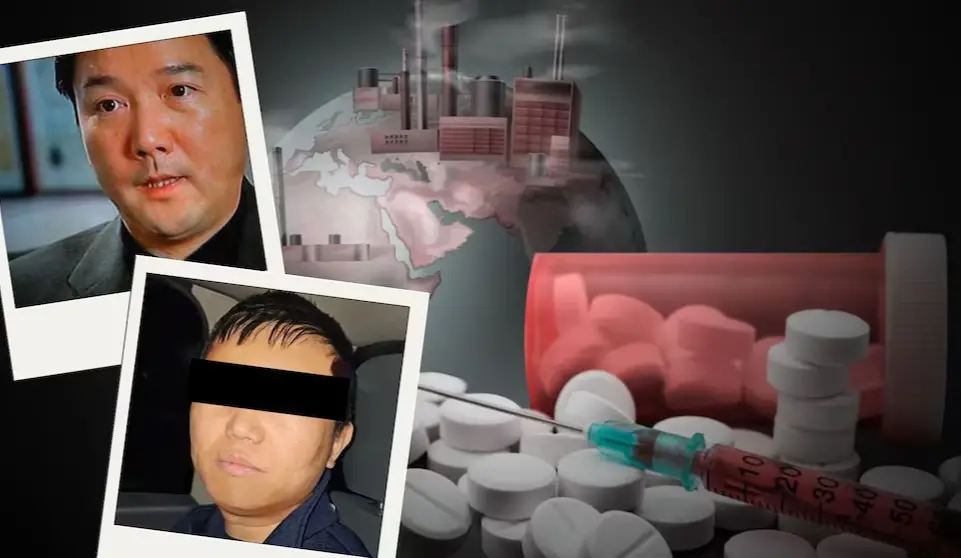
Zhenli Ye Gon, born in Shanghai in 1963 and a Mexican citizen, was one of the pioneers in opening this corridor.
As head of Unimed Pharm Chem México, he obtained official permits to import pseudoephedrine and ephedrine between 2004 and 2006, under the pretext of supplying the pharmaceutical industry. During that period, according to judicial investigations and reports from the DEA and the now-defunct PGR (Public Attorney General’s Office), more than 80 tons of these compounds entered Mexico legally.
Most of these supplies never reached legitimate pharmacies or laboratories. Ye Gon’s model—based on front companies, legal contracts, and institutional contacts—allowed the main buyers to be Sinaloa Cartel operators, associated cells, and, to a lesser extent, emerging gangs like the Valencias, precursors to the Jalisco New Generation Cartel (CJNG).
In March 2007, the Federal Police and the then-SIEDO (National Intelligence Service) conducted an operation at Ye Gon’s residence in Las Lomas de Chapultepec, Mexico City, where they found $205 million in cash, euros, jewelry, luxury watches, and firearms.
This seizure, considered the largest in Mexican history at the time, along with the seizure of nearly 20 tons of pseudoephedrine at the port of Lázaro Cárdenas, demonstrated the size and scope of the network headed by the Chinese-Mexican businessman.
After the operation, Ye Gon fled to the United States, where he was arrested by the DEA in Maryland and, in 2016, extradited to Mexico.
The case highlighted the ease with which disguised commercial networks could supply the nascent synthetic drug industry.
The businessman claimed that the money found was the result of politically motivated extortion and coined the phrase “Coopelas o cuello” (cooperates or neck) when he accused federal officials of forcing him to hold funds for a presidential campaign.
Investigations confirmed that the Ye Gon case was the seed of a model replicated years later: that of legally incorporated businessmen in Mexico, Asia, and the United States, with multinational networks and institutional ties that facilitated the entry of precursors not only for the Sinaloa Cartel but also for laboratories in Michoacán and Jalisco, as well as other organizations.
In the following decade, with increased international pressure and new regulatory restrictions, a generation of more discreet and versatile brokers emerged.
Zhi Dong Zhang, a Chinese citizen known by the alias “Brother Wang,” established himself as the essential link between Asian precursor suppliers and Mexican laboratories, now primarily focused on the manufacture of fentanyl.
According to the investigations against him, Zhi Dong Zhang coordinated maritime and air routes that supplied clandestine laboratories controlled by the Sinaloa Cartel and the CJNG.
His organization used at least 150 shell companies and 170 bank accounts to move drug money between 2020 and 2021, consolidating a financial network impossible for conventional authorities to trace.
Zhang is identified in the US as responsible for the management, export, and distribution of more than 1,000 kilograms of cocaine, 1,800 kilograms of fentanyl, and more than 600 kilograms of methamphetamine for the main Mexican cartels.
US authorities estimate that the money laundering schemes coordinated by Zhang moved between $20 million and $150 million annually, using banking networks, front companies, and international circuits spanning the Americas, Europe, and Asia. Zhang operated under multiple identities and used false passports.
In October 2024, Zhang was arrested in Mexico City following intelligence and international cooperation efforts. Despite facing extradition to the United States on drug trafficking and money laundering charges, a judge granted him house arrest.
On July 11, 2025, Zhang managed to escape from his home in the capital using a tunnel, an incident reminiscent of the escapes of Joaquín “El Chapo” Guzmán. The escape led to the issuance of an Interpol red notice and an international search operation.
A couple of days ago, it was revealed that Zhang unsuccessfully attempted to seek refuge in Russia and later arrived in Cuba with false documentation, where he was recaptured. This Thursday, it was announced that he has been extradited to the United States.
The trajectory of Zhenli Ye Gon and Zhi Dong Zhang illustrates Mexico’s transformation into the epicenter of the synthetic drug market.
Ye Gon established the first industrial channels, teaching cartels how to turn the legal importation of chemicals into a criminal value chain; Zhang perfected these mechanisms, connecting large Mexican groups with suppliers in Asia and money launderers in the Americas, Europe, and China.
Both brokers exploited legal loopholes and deep knowledge of international trade, elevating drug trafficking to levels of sophistication typically associated with multinational companies.

Source: infobae