
A “low-intensity war.” Federico Nastasi, a researcher at the Center for International Political Studies (CESPI), a professor at the Autonomous Metropolitan University Xochimilco Unit in Mexico City, and a journalist, interprets the data from Mexican authorities on missing persons in the Latin American country since 1952, the year official monitoring began, to the present: 134,000, including more than 14,000 during President Claudia Sheinbaum’s first year in office. “It’s one of the ‘epidemics’ the country is experiencing, caused, among other things, by human trafficking for exploitation, murders perpetrated by criminal groups, and corruption,” the analyst explains from the Mexican capital during a conversation with Vatican media.
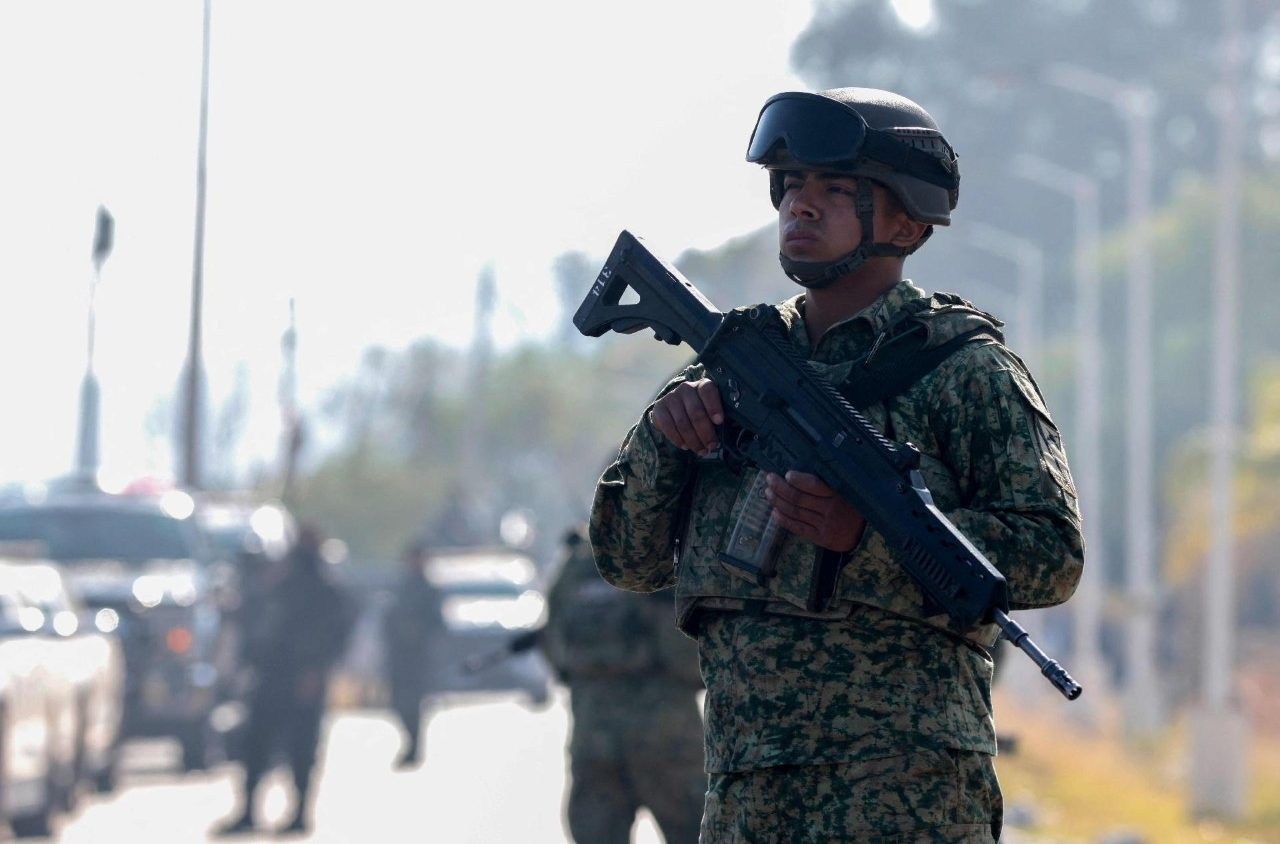
A significant portion of this country, especially the north-central region, finds itself in a situation where drug cartels wield power that sometimes surpasses that of the state: people often say there are sorts of “red zones” they cannot access due to insecurity. If you listen to the radio every morning, you can hear testimonies from people reporting the disappearance of a family member, perhaps the day before.
Despite the appointment of a new prosecutor to investigate the case, the disappearance of 43 students from the Ayotzinapa rural school, whose eleventh anniversary was celebrated at the end of September, remains unsolved, Nastasi recalls. It was in 2014 when, according to investigations, in Iguala, Guerrero state, police intervened after a group of students tried to take buses to a demonstration. Six young people died in the raid, while the rest ended up in the hands of local criminals involved in heroin trafficking to the United States.
Even today, the numbers remain high. “There are between 40 and 45 missing people every day,” notes the CESPI researcher, while observing a kind of resignation among citizens in the face of “the violence that has become part of everyday life,” despite signs of “activism among groups of people, the so-called searchers, who organize themselves into collectives and search for their missing relatives.” “Something that unfortunately happens,” he continues, “is that mass graves containing bodies are discovered relatively frequently, some of which are unidentified.”
It should be noted, Nastasi adds, that, in terms of statistics, of those 134,000 missing people, “72,000 are actually the bodies of murdered people, who, however, have never been identified and are therefore not classified as homicides.” President Sheinbaum’s administration reportedly states that the homicide rate has decreased by 25% in the last year, going from approximately 98 homicides per day in 2024 to 68 in 2025; but, at the same time, there has been a 16% increase in the number of missing persons over the same period, 40 people per day.
The AFP news agency attributes 30,000 homicides per year to criminal violence. Despite the difficult-to-verify figures, the perpetrators are “the main drug cartels, such as Jalisco Nueva Generación or the Chapitos (heirs of Joaquín “El Chapo” Guzmán, co-founder of the Sinaloa cartel, currently imprisoned in a maximum-security prison in the United States), for which there are maps showing their areas of influence in the country.”
In some territories, Nastasi adds, “violence is greater because different cartels are fighting over them,” while in others “a kind of ‘armed peace’ reigns, in which there is no ‘competition’ from other cartels for control of the territory. But even in those cases, small businesses, such as taxi drivers, who do not pay the floor tax, a kind of protection tax, are extorted and risk their lives.”
In recent days, as the country prepares to host the 2026 FIFA World Cup, which Mexico will host alongside the United States and Canada from June 11 to July 19 of next year, the courts in the border city of Tijuana, in the state of Baja California, a key crossing point into the United States and a hub for drug trafficking, have been attacked by drones.
Organized crime is increasingly using these unmanned devices: according to an Insight Crime report, the Jalisco New Generation Cartel has been using them since at least 2020 through a kind of “specialized division” for the use and launch of homemade explosives. They even use these cutting-edge weapons as a show of force on social media.
However, a broad debate has arisen about all this, since—he notes—many of these weapons are manufactured in the United States: there is talk of flows across the border and of Mexico flooding the United States with drugs or insecurity, but, in fact, many Mexican analysts point out that there is also an inverse relationship.”

Source: vaticannews