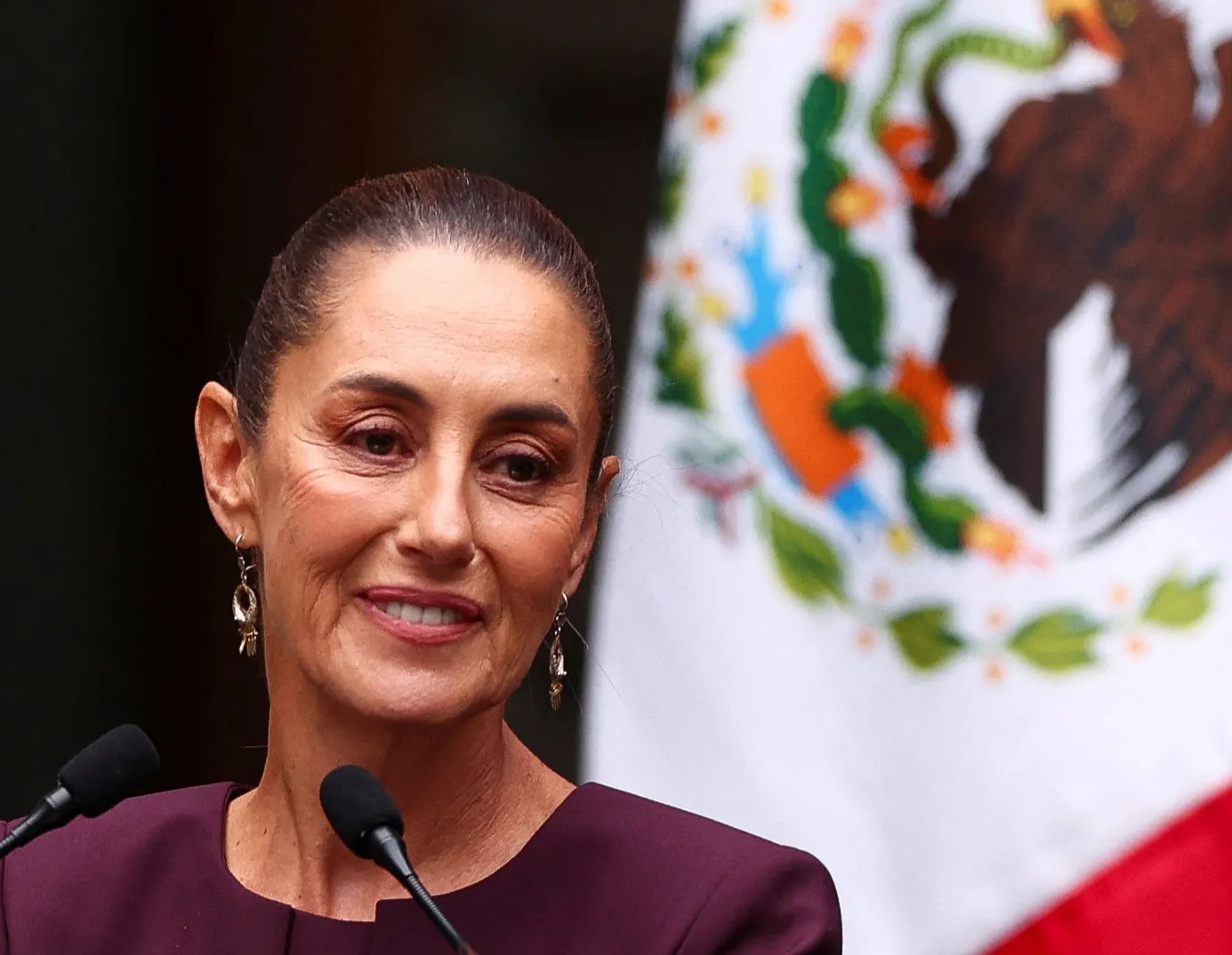

Mayor Claudia Sheinbaum yesterday fully reflected the devastating blow to her administration and security strategy dealt by the assassination of Carlos Manzo, the courageous mayor of Uruapan who repeatedly asked for her support in combating organized crime, which she denied him. And, perhaps due to her confusion or the pressures she’s under, she lashed out at the media and journalists, calling them “scavengers.” Unbelievable. She’s angry with us, but not with the criminals. Nor does she criticize former President Andrés Manuel López Obrador, who left her the mess of a country she’s wading through every day.
Why isn’t she outraged at the National Guard, under whose watch Manzo was killed? Why isn’t she upset with the Secretary of Security and Citizen Protection, Omar García Harfuch, whose intelligence apparatus failed to detect the plot to assassinate him? If the mayor were to start demanding answers from her own government, or if her security cabinet were truly transparent, things might be different. But the easy way out for this regime, like that of past governments and others around the world, is to shoot the messenger. Beware, lest the messenger become the next victim.
Propaganda without results is a boomerang. Self-criticism, however, is not Sheinbaum’s strong suit. In fact, a characteristic of the Obrador regime is its constant victimhood narrative. The president also abuses political rhetoric to turn a blind eye. That’s why she’s immune to the realities laid bare. What good is it for the security cabinet to be “outraged” by the murder? They are not detached from the events. Why didn’t they demonstrate courage by deploying hundreds of federal forces to hunt down the killers?
García Harfuch said that the gun that killed Manzo had been used in two criminal acts, one of them on October 23, when an armed group attacked a couple in a bar in Uruapan. He would, therefore, have a preliminary hypothesis about who carried out the crime. But they did nothing. They haven’t even taken over the case due to the high impact of the crime. They’ve left it at the local level, and since homicide is a state crime, the Michoacán Attorney General’s Office, which hasn’t demonstrated any efficiency, is handling the case.
García Harfuch said that the Public Prosecutor’s Office has already questioned the bodyguards and police officers from Uruapan to determine responsibility, but he didn’t report anything about the 14 National Guard members who were in charge of perimeter security, as the Secretary of Defense, General Ricardo Trevilla, called it. They are an important part of the investigation. Perimeter security has protocols for high-risk cases, such as Manzo’s, and those assigned to his security should have undergone extraordinary background checks. Their role was also to maintain close and constant contact with the security detail. Where were they? Who knows.
No National Guard member can be seen in any of the videos taken by people after the execution. When he lay dead, they weren’t there. When paramedics administered first aid, they were nowhere to be seen. Yesterday, during the morning press conference, one of the real journalists asked him where they were at the time of the murder. The general didn’t answer. There’s no other explanation, except that he’s hiding a crucial piece of this tragedy. General Trevilla, who understands the value of information, has concealed his actions from everyone.
Military personnel, like those in the National Guard, are trained to record, minute by minute, what they do and what happens. It’s unacceptable, even impossible, for the general to hide the existing information, a log that could help establish the truth of what happened in Uruapan. General Héctor Francisco Morán, commander of the 21st Military Zone, based in Morelia, must have it. But how significant must the truth be for the general to prefer appearing uninformed or lacking control over the areas under his responsibility?
The diversion from the fundamental issues has been remarkable in the last 48 hours. The shift in communication strategy since Sunday—eliminating the rhetoric emanating from the National Palace—is focused on perimeter security, aiming to deflect criticism that the federal government abandoned Manzo to his fate, as indeed happened, despite his repeated public requests in recent weeks. The security cabinet chose to cover their tracks rather than risk being deemed incompetent and having their shortcomings exposed.
One issue, obvious to everyone, is Manzo’s safety. The mayor arrived at the municipal presidency in Uruapan, the main avocado-producing center and a critical transit point for methamphetamine trafficking, promising not to make deals with criminals. Faced with extortion of farmers, he began asking for help from the federal government and urging Sheinbaum and García Harfuch to come to Uruapan and see for themselves that their security strategy there was ineffective. Manzo was a high-risk individual who required special attention, especially after the assassination of Bernardo Bravo, the lime growers’ leader from Apatzingán, two weeks ago, which should have raised the alarm even further. It didn’t. They abandoned him.
Michoacán is a testing ground for police militarization and collaboration with the United States in the fight against extortion. As the microcosm of this security strategy, intelligence work should have prioritized Manzo. But the National Intelligence Center, controlled by García Harfuch, detected no threats against him, unless, like the Ministry of Defense, it is concealing information.
How much the president and the security cabinet know about the assassination is a mystery. But addressing the root causes, as they again promise, is not their usual practice. High-impact crimes remain superficial, and to prevent anyone from digging deeper or demanding explanations, they fire the shotgun to shift attention elsewhere, as they did yesterday.
Source: elfinanciero