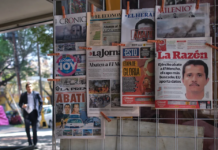

When I began reading Paul Gillingham’s enormous but engaging Mexico: A 500-Year History, Mexican newspapers were once again focused on the recurring drama of political violence. In Uruapan, a mid-sized city in western Mexico, a teenage hitman, working for a drug cartel, had shot and killed a democratically elected, ranchero-style independent mayor.
The alleged assassin (shot dead after his arrest) was the son of a guitar maker from Paracho, a town where members of the Purépecha indigenous community have been handcrafting these instruments since the 16th century. The attack occurred as the mayor was attending a public event for Día de Muertos (Day of the Dead). A couple of weeks later, protests against the national government and its handling of cartel violence surrounded the National Palace in Mexico City and had spread throughout the country.
At least since the failure of the liberal coalition led by President Francisco I. Madero—assassinated in a 1913 coup after less than two years in power—Mexico’s history has been told time and again as the slow-motion tragedy of a nation doomed to attempt to reach its democratic destiny and never succeed. It is as if the only legitimate path to becoming a valid, mature country were to achieve a lasting, American-style electoral system, with a pristine federal authority maintaining a network of representative and orderly governments.
Sometimes, however, as Gillingham makes clear, Mexican democracy has eclipsed its American counterpart. Slavery was abolished in 1837, some two decades before Emancipation in the United States. And even during the truly dark and turbulent years of the early 19th-century republic, Gillingham asserts that “Mexicans enjoyed broader suffrage than those in the United States and the United Kingdom.”
Gillingham is an American academic specializing in Mexican history and politics, affiliated with Northwestern University. Perhaps because he has witnessed the slow erosion of liberal democracy in the United States in recent years, he adopts a more nuanced approach to the Mexican practice of self-government and the strategies that have, thus far, ensured the country’s national integrity.
He understands, as we Mexicans do, that it is a miracle the country exists in the first place, especially considering that the diverse peoples who have called Mexico home have coexisted for five centuries despite the violence and struggles stemming from their frequent tug-of-war with the Spanish and French empires. We have also endured 200 years of relentless U.S. intimidation.
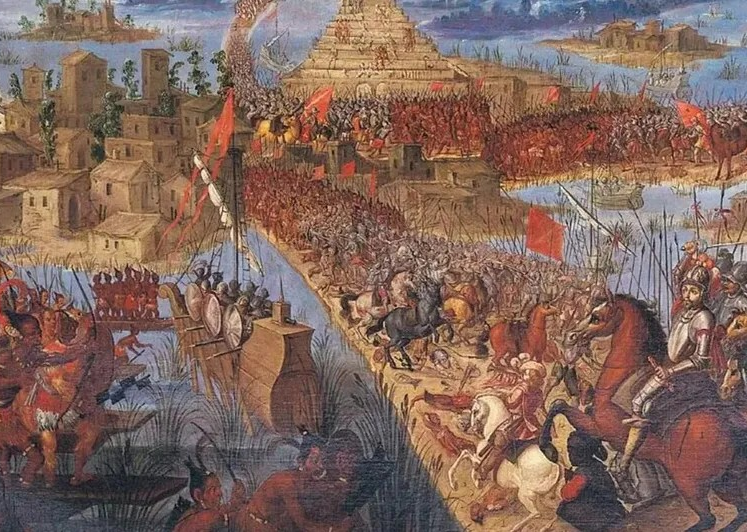
Gillingham’s 700 pages are imposing, yet it’s an absorbing read, beginning with the amusingly skeptical opening line that describes the embellished estimates the Spanish made of the indigenous armies they encountered:
“The figures for what we call the conquest of Mexico, like the chronicles, tend not to add up.” Gillingham can also be charmingly informal. He refers to President Lázaro Cárdenas’s interminable tours in the 1930s as “sweaty political banquets,” and defines pulque, an ancient sacred drink that has become fashionable among urban youth, as “viscous, milky-colored, and hideous—or at least, an acquired taste.” (My Mexican nephews and nieces would disagree.)

Source: milenio