
The soul of Mexico beats in Jalisco. Among dormant volcanoes, mountains that smell of agave, and towns where music seems to rise from the cobblestones, three places survive that encapsulate the essence of an entire country: Tequila, Cocula, and Ajijic.
Each represents a profound symbol of Mexican identity—drink, music, and art—an inseparable trio that forms part of the collective imagination that Mexico offers to the world.
Traveling to these towns is embarking on a journey through memory and emotion. In Tequila, the horizon is tinged blue by the agave fields that nourish the national drink. In Cocula, the air vibrates to the rhythm of trumpets and guitarrones, the proud birthplace of mariachi. And in Ajijic, the walls are filled with color, art, and spirituality, reflecting the serene mirror of Lake Chapala.
Three destinations that, more than just points on a map, are living chapters of the same story: that of a state that transformed its culture into a universal heritage.
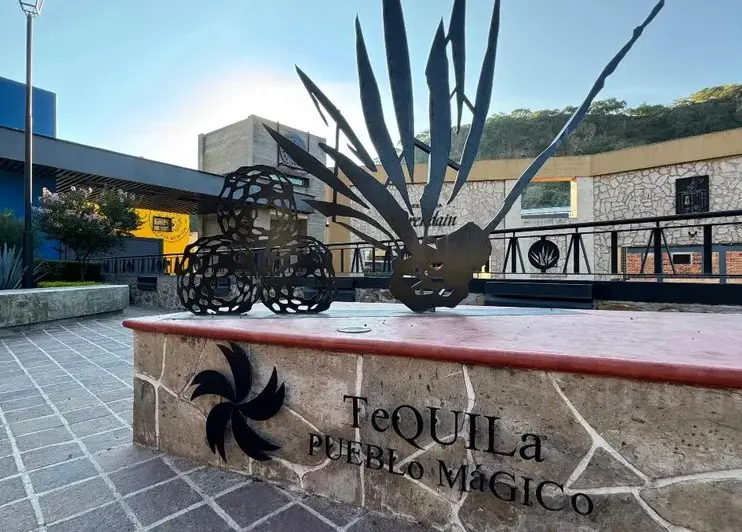
The road to Tequila begins 60 kilometers from Guadalajara, nestled among hills that hold the scent of agave and villages where time seems to slowly distill. The traveler feels the air change as the blue fields appear, carpeting the landscape until they disappear into the horizon. This is the Agave Landscape, declared a World Heritage Site by UNESCO in 2006, a setting where land and history merge in a single sip.
Tequila is not just a drink; it’s a way of life. The centuries-old distilleries preserve the echo of generations who learned to tame the fire and sugar of the sacred plant to create “the drink of the gods.”
In distilleries like La Perseverancia, El Llano, La Martineña, or the legendary Cuervo, visitors discover that the process is almost a ritual: the slow cooking in ovens, the precise milling, the bubbling fermentation, and the double distillation that gives life to the spirit of the agave.
The work of the distilleries and the tequila industry drives the town’s economy (Jorge Barajas).
The jimadores, with their gleaming coas, bend over the plants to cut the piñas with a gesture that blends strength, precision, and respect. Each strike is an ancestral choreography.
“It fills us with pride to know that we live in a small, picturesque town, but one full of culture and flavor,” says Pedro Núñez, a local agave farmer, as he holds a freshly cut piña, still warm from the sun.
In the heart of the town, the air smells of sweet stew and new barrels. The cobblestone streets lead to colonial mansions where time seems frozen in time, adorned with stained glass and murals.
On every corner, you can hear the clinking of clay cups or the echo of laughter from Cantina La Capilla, birthplace of the famous Batanga.
For locals, drinking tequila isn’t an impulsive act, but a gesture of respect: it’s sipped slowly, allowing it to linger in the mouth, as if paying homage.
Tequila is also a symbol of resilience. During the pandemic, its industry employed 70% of the local population. Today, the town vibrates with renewed pride, celebrating the Immaculate Conception, its patron saint, every December, and keeping alive the tradition of the jimadores, the agave growers, and the master distillers who have made this land a global brand.
Just over an hour from Guadalajara, Cocula welcomes visitors with the unmistakable sound of mariachi. This is where the music the world associates with Mexico was born. The town, with its quiet streets and lively plazas, beats to the rhythm of guitars, vihuelas, and trumpets. On every corner, a melody awaits to be heard.
At its Mariachi Museum, on Juárez Street, visitors can see the first instruments that shaped the genre: the guitarrón, “the heart of mariachi,” and the vihuela, responsible for establishing the harmony.
“If the guitarrón disappears, everything disappears,” says Rafael Plazola, musician and museum curator, son of Víctor Plazola Serrano, one of Cocula’s greatest figures, with pride.
The museum also pays tribute to the Cuarteto Coculense de Justo Villa, the first mariachi group in the world to record albums, between 1908 and 1909. A legacy that extends through time and that today nourishes new generations from the Regional Mariachi School, where more than 160 children learn to play and sing each year, perpetuating a heritage that is passed on with the same passion as in the past.

Source: milenio