
The Ministry of National Defense (Sedena) published an official agreement that redefines who must fulfill military service requirements, how training will be conducted, and what the new legal obligations will be in 2026. This change seeks to modernize a system that has been in place for more than eight decades.
What does the new agreement for Military Service establish?
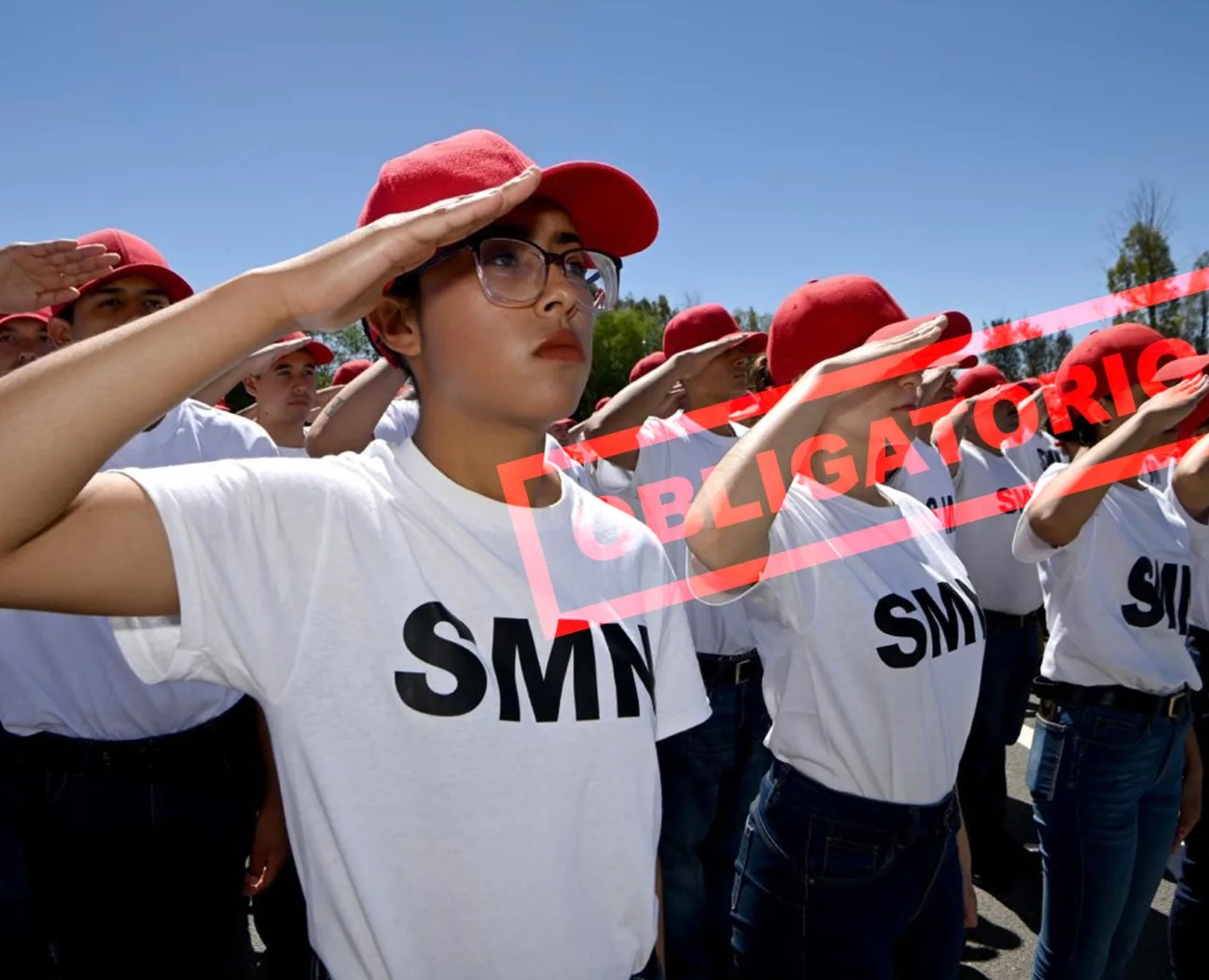
According to Sedena, starting in 2026, “military service is declared mandatory and a matter of public order for all Mexicans by birth or naturalization.” This means that all men will have the legal obligation to participate in the National Military Service (SMN), either in the Army or the Navy, according to their abilities.
Although the decree uses the term “Mexicans” in general, the operational rules confirm that the obligation will apply only to men. Women may continue to enlist voluntarily, as has been the case for several years.
One of the most significant changes is the modification of the military training program. The traditional model, based on 44 Saturday sessions over nearly a year, will be phased out. Instead, the National Military Service (SMN) will operate under a more concise and structured system.
Young men will now attend 13 Saturday sessions per training block. In 2026, there will be two phases:
February 14 to May 9, 2026
August 1 to October 24, 2026
Upon completion, participants will receive a certificate of completion. Official release of the military service card is scheduled for December 2026.
Who must enlist?
The agreement stipulates that:
All Mexican citizens, by birth or naturalization, must begin the process upon turning 18.
Men will be required to enlist.
Women may participate voluntarily.
This new system aims to organize and standardize service completion, eliminating the regional differences and direct release options that previously allowed individuals to obtain their military service card without training.
The Ministry of National Defense (Sedena) argues that the reform is designed to strengthen the civic-military training of young people, but also to make it compatible with the participants’ school and work lives.
The Saturday sessions allow recruits to fulfill their obligation without significantly affecting their personal schedules.
Furthermore, one of the key objectives of the agreement is to end the practice of “release without training,” which in recent years allowed thousands of young people to obtain their military service card without undergoing military instruction.
What happens if I don’t do my military service? Risks and consequences
Young people who are selected must attend the Saturday sessions. Failure to do so will leave them in an irregular military status.
The military service card remains an important document for various processes, including:
Public employment
Procedures requiring military accreditation
Some federal and state administrative processes
National Military Service has formally existed since 1940, and although the law already stipulated its mandatory nature for men, effective compliance was uneven. The reform seeks to close these gaps, standardize the process, and modernize a system that, in essence, had remained virtually unchanged since the mid-20th century.
Source: altonivel