
“Thanks to the master craftsman Juan Quezada, the pottery tradition was born here in town. In the 1950s, he found a piece from the ancient Paquimé culture, began making vessels with the same decoration, and then taught the technique to his family and friends, including my mother,” says the ceramic artist, whose works have won international awards.
Laura Bulgarini’s family are ejido members, but they have very little information about a gas pipeline that would have to pass through the town. Only her husband, Héctor Gallegos, has participated in a community meeting where a company presented its plans. “About two years ago, they came to the ejido assembly with the gas pipeline project, but they didn’t bring much information, and people were left with questions,” says Héctor Gallegos.
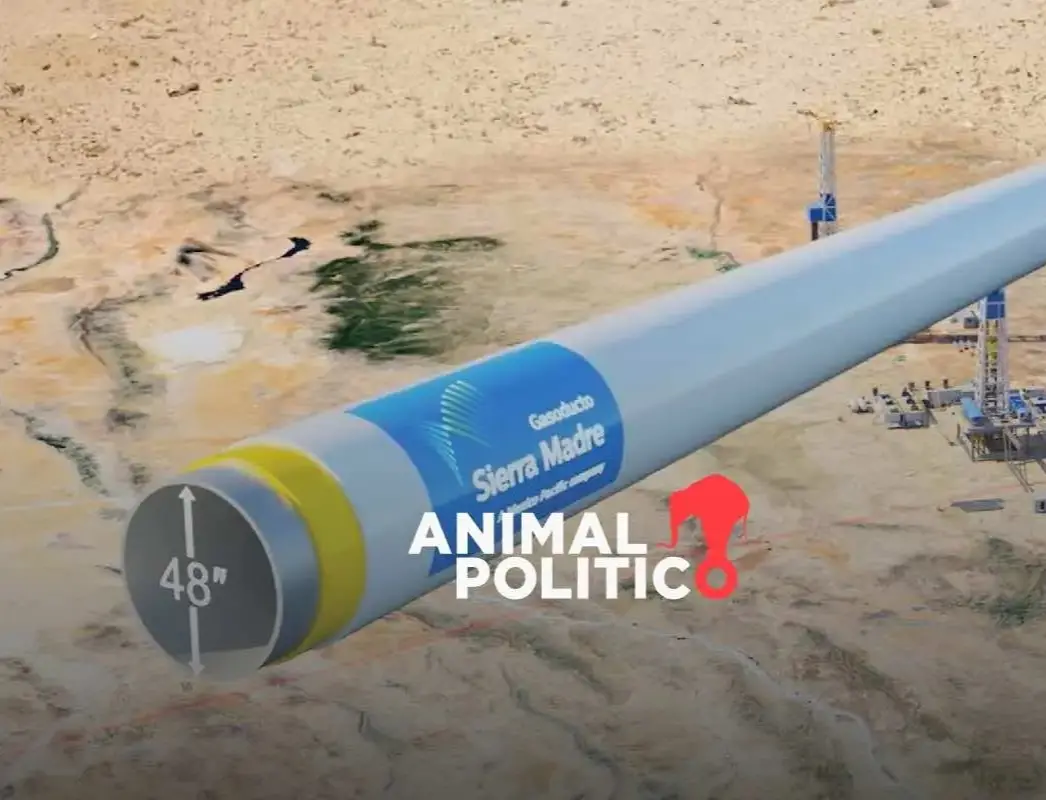
The gas pipeline that would have to cross the Mata Ortiz plains is called Sierra Madre: an 800-kilometer pipeline with a diameter so large that an eight-year-old child could stand inside it. Its owner will be the US company Mexico Pacific, which Animal Político requested an interview with but received no response.
According to the project’s Environmental Impact Statement (EIS), Sierra Madre will begin its route on the border between the United States and Chihuahua, where it will connect with the Saguaro Connector pipeline, which will bring shale gas extracted through fracking in the Permian Basin of Texas to the Mexican border.
Sierra Madre will cross six municipalities in Chihuahua and ten in Sonora, and its methane will fuel the Saguaro Energía terminal in Puerto Libertad, Sonora: a 400-hectare complex whose flares will permanently pollute the air. They will burn “natural gas,” composed almost entirely of methane, promoted as “clean energy,” which in reality has up to thirty times the global warming potential of CO2.
At the Saguaro Energía terminal, which is slightly less than twice the size of the Roma Norte neighborhood in Mexico City, methane will be liquefied and loaded onto 300-meter-long ships that will cross the Gulf of California, impacting Sonoran fishermen, whales, and other species that live in this sea, considered the “aquarium of the world.”
The ships will travel to Asia: Mexico Pacific has already signed a dozen agreements, including with the Korean company Posco International Corporation and the Chinese companies Zhejiang Energy and Guangzhou Development Group.
Once completed, Saguaro Energía will represent the largest private investment in Mexican history: the total projected cost reaches $15 billion, and $3.262 billion will be dedicated to the construction of the Sierra Madre gas pipeline. Santander, JP Morgan, and Mitsubishi Bank are acting as financial advisors, meaning they are trying to secure the investment, but have not yet achieved their goal.
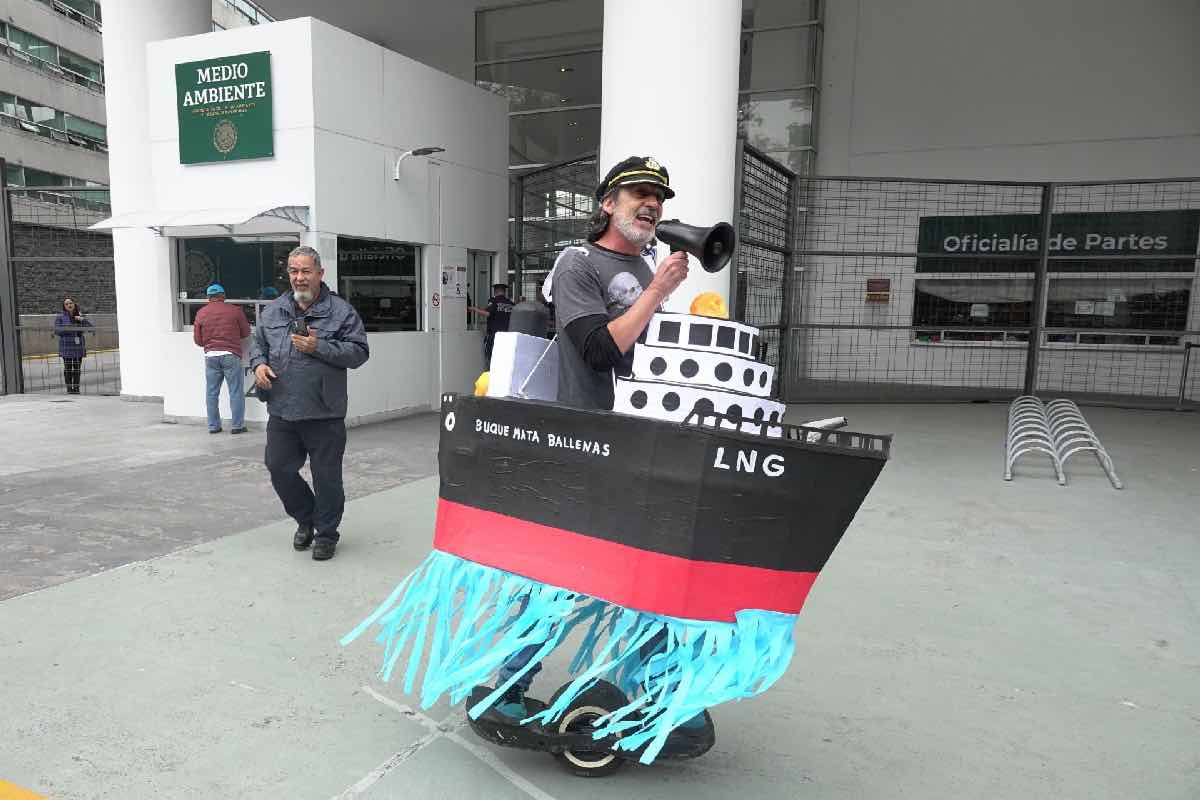
Another factor that has so far prevented the start of construction on the Sierra Madre gas pipeline and the liquefaction plant in Puerto Libertad, Sonora, is the opposition from civil society, which filed ten injunctions, gathered some 300,000 signatures against the megaproject, and organized several street protests.
Furthermore, the Sierra Madre gas pipeline obtained a permit from the Energy Regulatory Commission (CRE), but not authorization from the Ministry of Environment and Natural Resources (Semarnat).
Source: animalpolitico