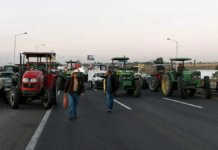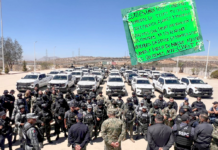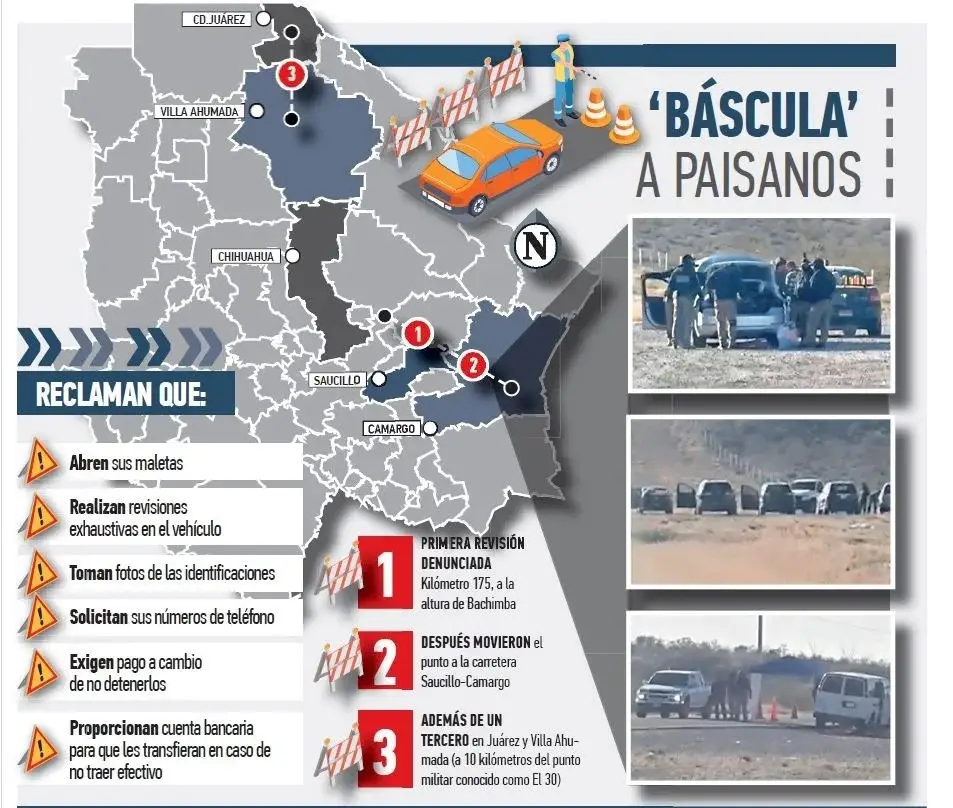

The checkpoints set up on Highway 45 between Juárez and Villa Ahumada, and between Saucillo and Camargo, operated by the Attorney General’s Office (FGR), have prompted complaints from Mexican nationals and travelers alleging extortion.
According to testimonies given to the mayor of Delicias, Jesús Valenciano García, the amounts demanded reach $200 USD and, in some cases, include demands for bank transfers.
The mayor confirmed that for the past week he has been receiving reports from citizens who claim to have been stopped, photographed, and thoroughly searched, including having their suitcases opened and being asked for personal information. He stated that no one wants to go to the Public Prosecutor’s Office out of fear, since officers are taking pictures of IDs and cell phones.
Valenciano stated that the checkpoint that the residents of Delicias reported was originally located at kilometer 175, near Bachimba, on Federal Highway 45; However, he stated that after the public complaint, they moved the checkpoint to the Saucillocamargo highway.
He added that he also received a report of a similar checkpoint between Juárez and Villa Ahumada, approximately 10 kilometers past the military checkpoint known as El 30, where, according to citizen complaints, FGR agents demand payments in cash or by bank transfer.
He asserted that complaints increased after he made the situation public and that the extortion has escalated. “Our fellow countrymen work all year round, send remittances, return full of hope, and then they still get extorted. It’s not right,” he expressed.
The mayor displayed the official document that the FGR sent him on December 8, identified as FGR/UILZC/CHIH/737/2025, in which the agency requests that he provide, within 24 hours, the names of victims, location data, and any information that would allow them to open an investigation.
The document cites Article 222 of the National Code of Criminal Procedure and states that any public servant who has knowledge of acts that may constitute a crime must report them. It also provides contact information for the Specialized Prosecutor’s Office for Internal Affairs for those who do not wish to provide information to the state prosecutor’s office.
Valenciano stated that he has invited those affected to file their complaints, but insisted that there is widespread fear. He added that he uploaded the official document and the initial evidence to social media so that more citizens are aware of the reporting channels, although he admitted that most do not wish to expose themselves.
For his part, the Secretary General of the Government, Santiago De la Peña Grajeda, confirmed that the issue is already being reviewed in coordination with federal authorities, including the Attorney General’s Office (FGR).
He said there is concern about the proliferation of checkpoints on the Chihuahua-Juárez highway and about complaints describing duplicate inspections by the National Guard, the FGR, and the Ministry of Defense, which causes delays and inconveniences for travelers.
De la Peña indicated that the State Government requested an evaluation of the officers’ conduct and suggested that the checkpoints be operated jointly by the National Guard and the Attorney General’s Office, in order to provide security without generating abuses.
“We all appreciate their presence on the highways, but we must also protect our fellow citizens and those traveling during this time,” he stated.
“We all appreciate their presence on the highways, but we must also protect our fellow citizens and those traveling during this time,” said Santiago De la Peña, Secretary General of the Government.
El Diario has documented the presence of three checkpoints between the capital and the border, one in Saucillo-Camargo, and another reported by drivers on the route from Jiménez to Durango.
While federal authorities review the issue, citizen reports continue to increase and confirm a common pattern: mobile checkpoints, thorough inspections, and demands for cash or wire transfers under threat of detention.
“Today they tell us that the checkpoint didn’t disappear, it just moved away from where the people of Delicias saw it,” Valenciano pointed out.

Source: diario