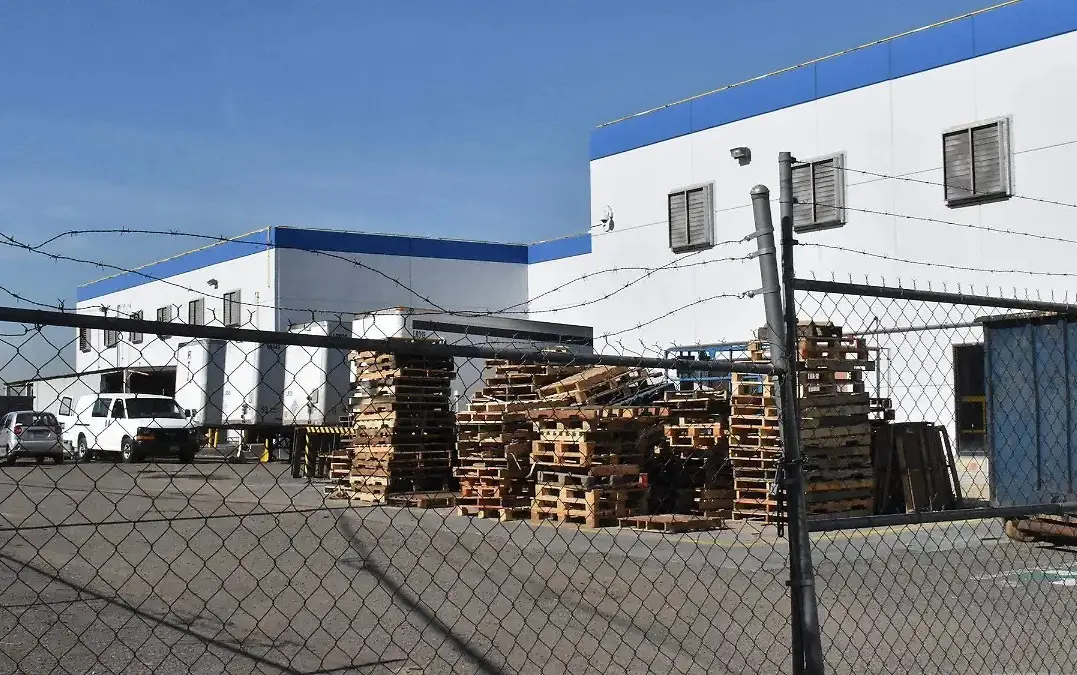

In the city, there are 88 vacant industrial buildings, equivalent to approximately four million square feet, according to Xavier Fernando Ibarra Quintana, president of the National Chamber of the Housing Development and Promotion Industry (Canadevi) in Tijuana.
This Chamber is not the only business group that has reported negative figures in the city and state’s industrial sector over the past year.
At the end of November, Federico Serrano Bañuelos, president of the National Council of the Maquiladora and Export Manufacturing Industry (Index) in the Coastal Zone of Baja California, stated that the closure of companies is a consequence of a global economic downturn that is generating uncertainty.
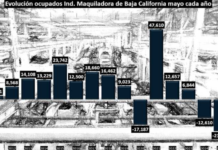
The industry indicates that the shortage of jobs has changed the behavior of workers, who are avoiding resignations in order to maintain their job security. This uncertainty led to the closure of 8,000 companies in the state between October 2024 and October of this year, 43 of which were in the manufacturing sector, Serrano Bañuelos noted at the time.
The main factors are the tariffs imposed by U.S. President Donald Trump on aluminum, steel, alloys, textiles, and medical devices, added the local president of Index.
With the closure of these companies, the job market contracted by 21,000 jobs, according to data from the Mexican Social Security Institute (IMSS), Federico Serrano commented.
The projections for hiring during the first half of 2026 are also discouraging, stated Alejandro Jaramillo Osuna, president of the National Chamber of the Transformation Industry (Canacintra) in Tijuana.
Jaramillo Osuna estimated that job openings at the beginning of next year will be the lowest compared to the last three years.
Wage increases mandated by decree could lead to unemployment and informality
Plascencia López concluded that these decreed wage increases, which have been accumulating, could translate into unemployment and informality.
The local president of Canacintra (National Chamber of the Transformation Industry) believes that the uncertainty will continue until July 2026, the month in which the renegotiation of the United States-Mexico-Canada Agreement (USMCA) will begin.
This period of uncertainty has also led to a reduction in home sales in Baja California, mentioned the president of Canadevi (National Chamber of Housing Developers) in Tijuana.
“It is a driving force within the state’s economy. In the housing sector, we have seen a contraction in sales of more than 30%,” he concluded.

Source: oem