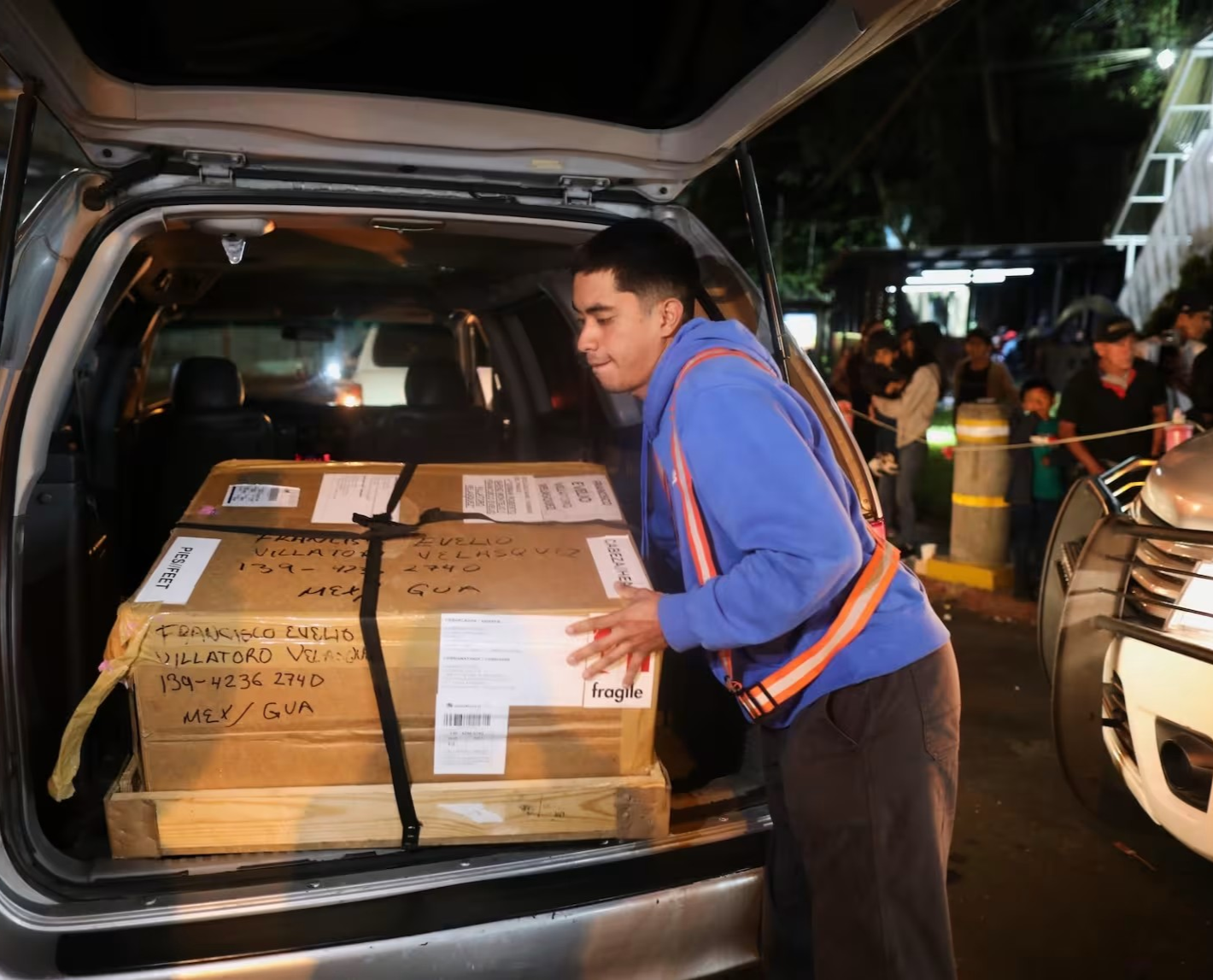

The remains of two Guatemalan migrants who drowned 19 years ago in the Rio Grande, on the border between the United States and Mexico, finally arrived in Guatemala on December 12.
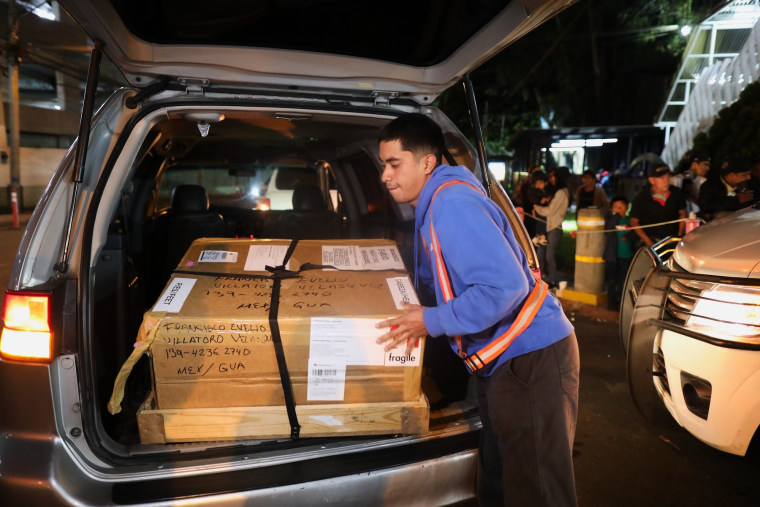
Francisco Evelio Villatoro Velásquez and Osman Roberto Sáenz Montejo returned to their homeland in two small brown cardboard boxes labeled with their names. A funeral home received them and transported them to their communities, as their families were unable to travel to the capital to retrieve them due to a lack of funds.
Villatoro Velásquez and Sáenz Montejo were farmers and friends, and were 21 years old when they left together from the department of Huehuetenango, bordering Mexico, on September 16, 1996, to try to migrate to the United States.
Three days later, already on the northern border of Mexico, they tried to cross the Rio Grande. Sáenz Montejo jumped into the water but began to drown, so Villatoro Velásquez tried to rescue him. Both men lost their lives, according to the account Sáenz Montejo’s family received from witnesses and local authorities when they traveled to Mexico ten days later to identify the bodies. The migrants were buried in Mexico, as documents identifying them as Mexican citizens were found among their belongings.
Rubia Villatoro Velásquez, Francisco’s sister, recounted that the families saw their photos in a newspaper article and recognized their clothing. She and her brother were orphaned as children; their parents were killed by the Guatemalan army in 1982, during the armed conflict with the guerrillas.
According to reports from two historical truth commissions, one from the United Nations and the other from the Catholic Church, during the war in Guatemala, between 1960 and 1996, there were 250,000 deaths and approximately 45,000 disappearances. Both reports hold the army and paramilitary groups responsible for 90% of the deaths and disappearances.
“My brother said, ‘I’m going to leave because I have nothing here.’ He wanted to go work to buy a house, because without parents, we had no way to survive,” Rubia Villatoro Velásquez told The Associated Press by phone.
She recalls that they first learned of Sáenz Montejo’s death and then that her brother had also died trying to save his friend. “Osman’s father went to Mexico and recognized them. He went to see where they were buried. They were laid to rest together, each in a separate grave, but side by side,” she said.
Both were buried in a cemetery in the city of Matamoros, in the northern state of Tamaulipas.
For years, both families, who were of limited means, didn’t know how to recover their relatives’ remains. It wasn’t until April 2019 that they decided to report them missing, in order to officially establish that they were the people buried and be able to repatriate them, Villatoro Velásquez explained. However, they didn’t receive support from consular authorities until this year when the assistance finally arrived.
“We didn’t know what to do; there was no one to help us until an organization called Ecap [Community Studies and Psychosocial Action Team] helped us,” said the deceased’s sister. The Foundation for Justice, based in Mexico, also collaborated in the repatriation of the remains.
Villatoro Velásquez says she will finally be at peace, as her “brother will be buried near my parents.” “I feel more at peace knowing I’ll have them close,” she added, “there’s now a place to put flowers on his birthday or on the Day of the Dead.”
Attorney Rosmery Yax Canastuj, who helped the family repatriate the remains, explained that the process took years. “It was 29 years of the family working to pave the way for their return, and finally, the cycle is complete.” “The Guatemalan state never took any steps to support the families; it was through the Foundation for Justice that mechanisms were used to achieve this,” he added.
“It is important to call on the Guatemalan state not to be indifferent and to address the requests of all the families involved in these search and truth processes, as well as the need for best practices in forensic identification and transnational search mechanisms for migrants,” he said.
Source: telemundo