
In 2025, the U.S. Treasury Department designated 64 individuals and 87 companies in Mexico as money launderers for drug traffickers and terrorists, adding them to a blacklist that results in the freezing of their assets and bank accounts, and the inability to conduct transactions within the financial system.
Milenio created a database based on reports and lists from the Office of Foreign Assets Control (OFAC), which revealed that among the money launderers in Mexico are not only Mexican nationals, but also Colombians, Albanians, Indians, and Canadians.
The blacklist of 151 companies and individuals has diversified, and efforts are now focused not only on cartel structures that have been well-identified for years, but also on cells that had previously gone unnoticed, even by Mexican authorities.
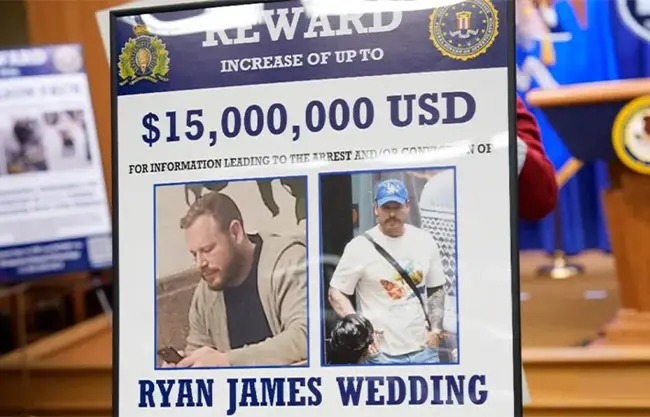
Such is the case of Ryan James Wedding, a former member of the Canadian Olympic snowboard team, whom authorities in Canada and the United States consider a criminal organization in itself, dubbed the Ryan Wedding Drug Trafficking Organization. In March 2025, the Federal Bureau of Investigation (FBI) even included him on its list of the 10 Most Wanted Fugitives.
His organization is accused of trafficking tons of cocaine through Colombia and Mexico for distribution in the United States and Canada. The criminal network has used cryptocurrencies to move, conceal, and launder large amounts of illicit money derived from this drug trafficking.
According to the criminal investigation, several key associates have facilitated Wedding’s operations, including the Mexican Édgar Aarón Vázquez Alvarado, known as El General, owner of Mexican companies such as VRG Energéticos, Grupo RVG Combustibles, and Grupo Ares Imperial, who provided him with protection in Mexico.
The former Olympian has been married and divorced several times; Today, he is linked to a Mexican woman named Miryam Andrea Castillo Moreno, who, along with Édgar Aarón Vázquez, laundered drug money for Wedding from the State of Mexico, Nuevo León, and Mexico City.
Among those named are former elite athletes, energy sector businesspeople, and financial operators who, until being blacklisted, could present themselves as legitimate businesspeople with legitimate activities in the three North American countries.
Where do the individuals on the blacklist operate?
Of course, the U.S. Treasury Department’s blacklist includes drug trafficking organizations that have historically used front companies and businesspeople to launder money, such as the Sinaloa Cartel, particularly the group known as “Los Chapitos,” and the Jalisco New Generation Cartel (CJNG).
But, in addition, this year’s ominous list includes 64 people. Of that total, 55 are Mexican, representing 85.9 percent. Of the remaining 64, only nine are of other nationalities: four Albanians, two Colombians, two Indians, and one Canadian. All of them operated within Mexican territory.
Of these 64 individuals, 35 were designated under the category of “terrorism”—a first for Mexico—representing 54.7 percent of the total. In 19 cases, equivalent to 29.7 percent, they were identified for their involvement in narcotics activities, and the remaining 10, 15.6 percent, were linked to the general category of “organized crime.”
On the geographical map, Sinaloa appears as the main area of operation, with 16 individuals linked to that state (a quarter of the total), followed by Baja California with 12 sanctioned individuals and Jalisco with nine.
Below them are Mexico City and Tamaulipas, with five cases each, Guerrero with four, and there are isolated cases in Quintana Roo, Coahuila, Chiapas, Colima, the State of Mexico, Nuevo León, and Durango.
Of these, at least 26 people—40.6 percent—are linked to the Sinaloa Cartel. Another 16—25 percent—appear to be related to the Jalisco New Generation Cartel. That is, 65.6 percent of those sanctioned, almost two out of every three, belong to one of these two organizations.
To which criminal groups do they belong?
The records of OFAC and the Financial Crimes Enforcement Network (known as FinCEN), with the participation of the Mexican government, show that nine of these individuals are identified as the Hysa Organized Crime Group, which includes members of that family: Luftar Hysa, Arben Hysa, Ramiz Hysa, Fatos Hysa and Fabjon Hysa, who, according to the joint investigations, use their influence through their investments or control over various businesses.
These include establishments in Canada and Poland, but their primary focus is Mexico, where they built casinos and gambling centers, as well as restaurants, which they allegedly used to launder drug trafficking proceeds.
According to the Treasury Department, the Hysa operate with the approval of the Sinaloa Cartel, which maintains criminal control over much of the territory where the group carried out its activities this year, including Sinaloa, Sonora, Baja California, and Tabasco.
Furthermore, five individuals are connected to the Ryan Wedding Drug Trafficking Organization; four to La Nueva Familia Michoacana; two to the Northeast Cartel; and one case is associated with the Beltrán Leyva organization.
Another individual is Jumilca Sandivel Hernández Pérez, leader of the López Human Trafficking Organization (HSO). This criminal group is reportedly based in Guatemala and is responsible for trafficking thousands of undocumented immigrants from Guatemala to the United States via Mexico.

Source: zocalos