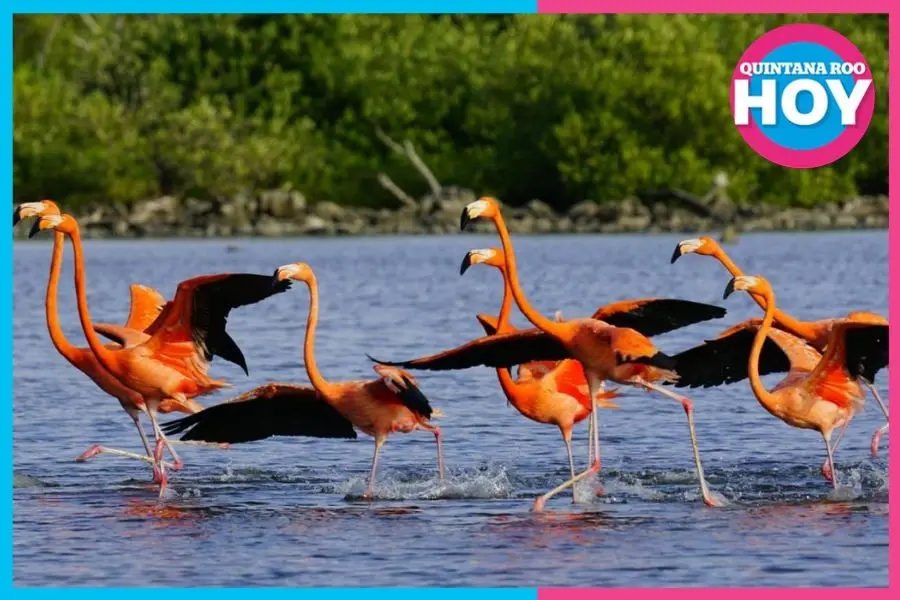

The constant presence of the American Flamingo (Phoenicopterus ruber) in the wetlands of Punta Sur Ecotourism Park has become an indicator of the good conservation status of this ecosystem, thanks to the protection, monitoring, and environmental management work carried out by the Cozumel Parks and Museums Foundation (FPMC).
Recognized for its beauty and distinctive reddish plumage, the flamingo is also a keystone species for the ecological balance of the wetlands. Its presence in the Punta Sur Nature Reserve is not accidental: it is due to the optimal conditions for shelter and feeding offered by Laguna Colombia, a Protected Natural Area that has been permanently safeguarded by the FPMC.
Since Punta Sur was declared a Natural Protected Area in 1996, flamingo sightings began to be recorded, including banded individuals, starting in 2000. With the site’s reclassification in 2011 as Laguna Colombia State Ecological Park, the FPMC (Fundación para la Conservación del Maldonado y Maldonado) strengthened monitoring efforts, managing to document the presence of banded individuals and groups exceeding 30 birds year after year, explains the area’s director, Jesús Benavides Andrade.
This work is carried out in coordination with the National Commission of Natural Protected Areas (CONANP), the state government, and various non-governmental organizations, as part of a joint effort that, for more than 25 years, has promoted the banding of the American Flamingo in Mexico, a fundamental tool for understanding their migratory routes, dispersal, and population dynamics.
In Punta Sur, flamingos have been identified by their unique band combinations, including DLAS, DHHT, HZTN, ABBB, and DXZZ. This last sighting has generated more interest, as it was first recorded in 2000 and has been observed at the site on several occasions since. This season’s sighting is the most recent record of its presence and preference for this area.
These sightings are reported by the FPMC team to Flamenco Lab, a citizen science initiative led by the Pedro and Elena Hernández Foundation, contributing to regional and international knowledge of the species.
Although the American Flamingo is considered a winter resident, sightings have been documented at Punta Sur during various months of the year.
The constant monitoring carried out by Punta Sur Park staff, supported by innovative drone monitoring techniques for conducting censuses and population counts, has allowed for obtaining precise information about its behavior and movement within the lagoon, using non-invasive methods and under strict conservation protocols.
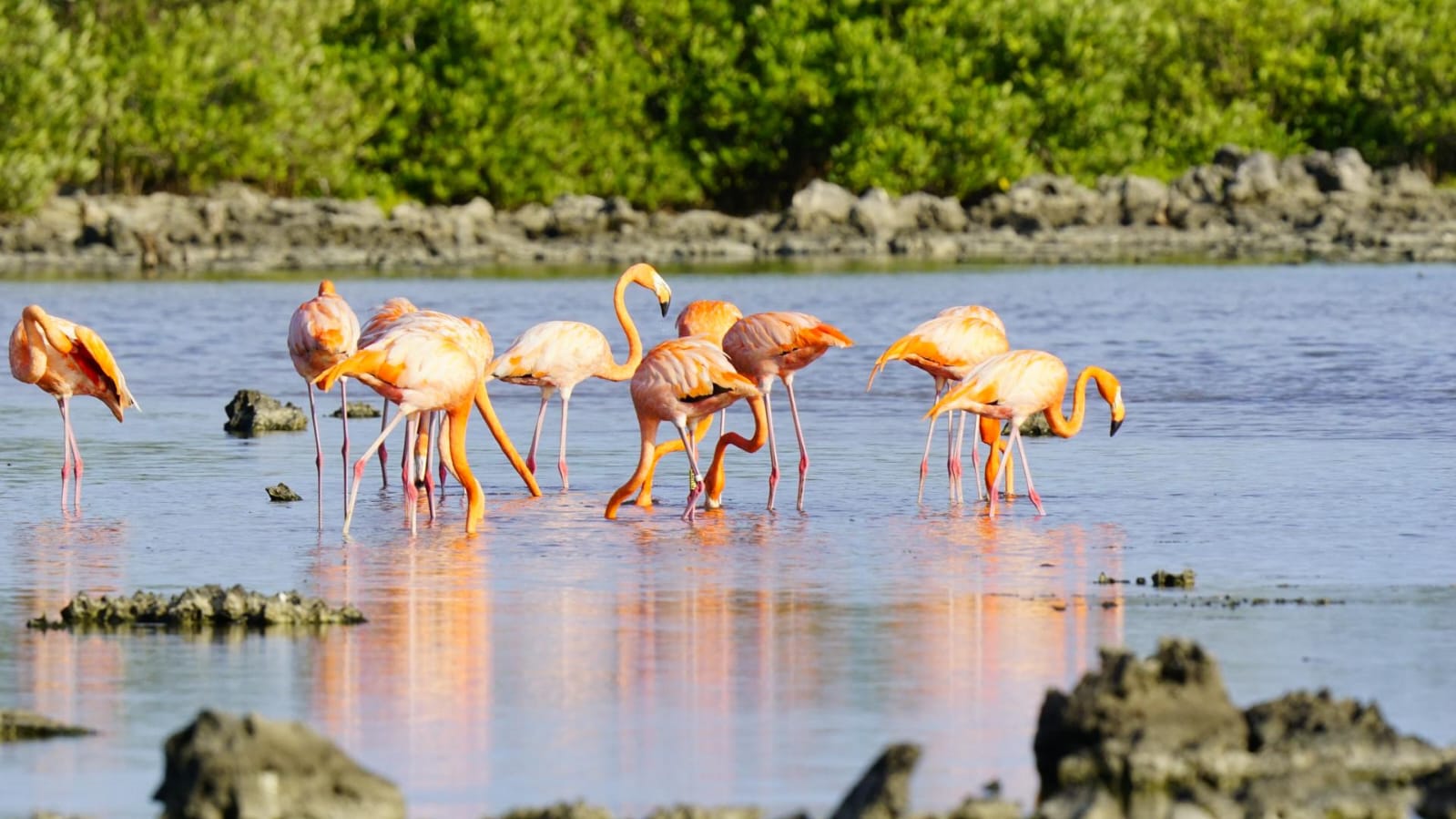
The captured images have revealed how the flamingos feed cooperatively, stirring up the substrate in search of small crustaceans and microalgae. This behavior directly contributes to soil aeration, nutrient cycling, and habitat reshaping, thus promoting biodiversity in the lagoon ecosystem.
Source: quintanaroohoy