

Around 40,000 resident physicians in Mexico face precarious working and economic conditions each year while specializing in public hospitals. A new legislative proposal in the Chamber of Deputies seeks to transform this reality by guaranteeing monthly financial support during their training period, a measure that could significantly impact the professional and personal lives of those preparing to care for the population’s health.
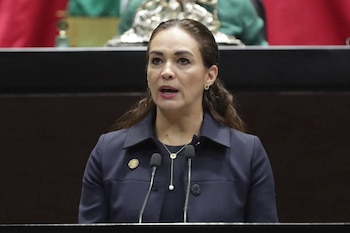
Congresswoman Liliana Ortiz Pérez, representing the National Action Party (PAN) in the Chamber of Deputies, presented an initiative to amend Article 95 of the General Health Law.
According to the proposal, all physicians in their undergraduate internship or residency must receive a monthly payment from the healthcare facility where they are training. The congresswoman specified that “this payment cannot be less than the current monthly minimum wage” and must also be regular, sufficient, and proportional to both the residency period and the training program’s workload.
Ortiz Pérez emphasized that medical residency is an intensive form of professional training. In this process, resident physicians must work extended shifts of 24 or even 36 continuous hours, participating in emergency room duties, operating rooms, medical rounds, on-call shifts, administrative activities, clinical teaching, and research protocols, according to information shared in the Chamber. The initiative was referred to the Health Committee for analysis and a ruling.
In her statement of reasons, the congresswoman explained that, while the General Health Law recognizes residency as a form of professional training, it does not obligate public institutions to guarantee financial support during this stage.
At the same time, the General Law on Humanities, Sciences, Technologies, and Innovation establishes principles of support for postgraduate studies, but does not explicitly mention medical residency as a priority or protected field.
Ortiz Pérez referenced Article 4 of the Political Constitution, which recognizes the right to health and education, as well as the existence of a national scholarship system.
However, she emphasized that “no secondary law specifically includes resident physicians as mandatory recipients of scholarships.” This omission, she asserted, has created a structural regulatory gap that places tens of thousands of resident physicians in a situation of economic uncertainty, despite their essential role in the daily operation of hospitals and clinics in the country.
The proposed legislation seeks to provide resident physicians with legal certainty, regularity, and sufficient financial support, which could also prevent them from dropping out due to financial reasons.
Congresswoman Ortiz Pérez stated that by explicitly and legally establishing the right of these professionals to receive an incentive, “their inclusion as beneficiaries in the laws governing public health and science and technology is guaranteed.” In this way, the reform would represent progress toward justice, dignity, and the professionalization of medical personnel in training.
According to data presented in the explanatory statement, more than 40,000 resident physicians train annually in Mexico in specialties such as internal medicine, pediatrics, anesthesiology, surgery, gynecology, and emergency medicine.
During their residency, these professionals pursue specialized studies at higher education institutions, mostly public, and complete mandatory clinical rotations under demanding and highly responsible conditions. Ortiz Pérez maintained that the initiative will also promote territorial and intergenerational equity in access to medical specialties.
Each year, 40,000 resident physicians in Mexico work in public hospitals with low salaries and difficult conditions.
A proposal in Congress seeks to ensure that all physicians in training receive a monthly stipend equal to or greater than the minimum wage.
Currently, the law does not require public hospitals to provide residents with guaranteed financial support.
Resident physicians often work very long hours and perform demanding tasks, but lack clear labor protections.
The reform aims to provide them with a fair and stable salary so they do not abandon their studies due to lack of money.
Source: infobae