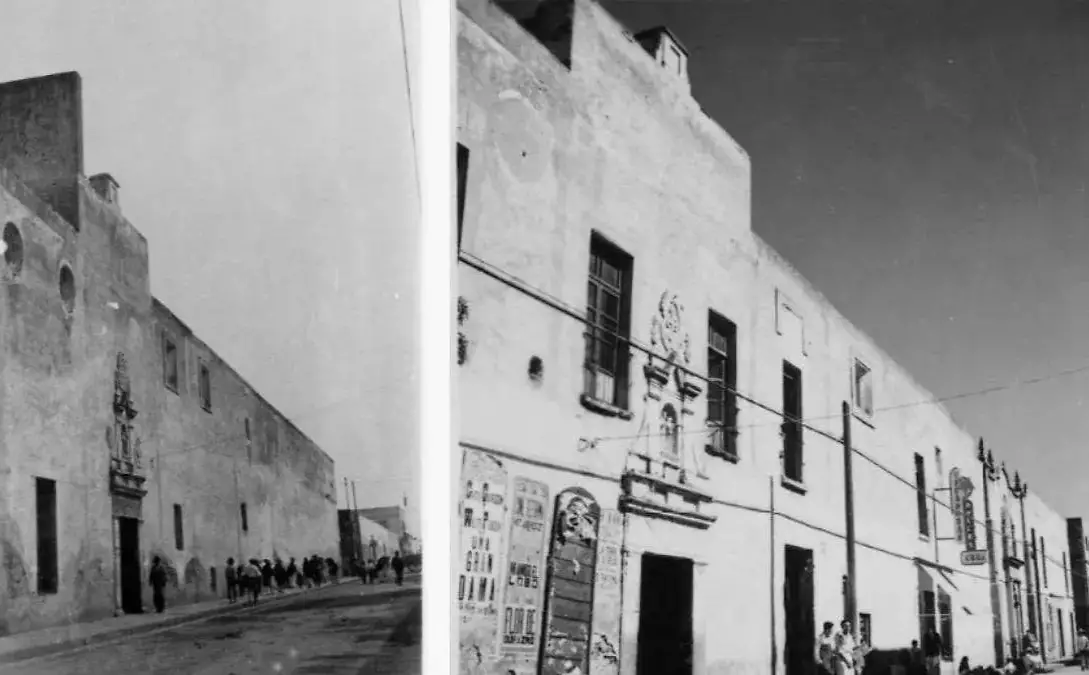

On the outskirts of Puebla’s Historic Center, amidst the bustling street vendors and the few remaining tenement buildings, stands a historic structure that has transformed from a cloister to a hospital, then to a residence, and now a museum: the former Convent of Santa Rosa.
Located at 1210 3 Norte Street, between 12 and 14 Poniente Streets, the former Convent of Santa Rosa, now the Museum of Popular Art, dates back to the 17th century. It was originally founded as a convent for Dominican nuns, according to chronicler Pedro Mauro Ramos Vázquez.
In 1679, it received a Royal License, and by 1740, Bishop Pantaleón Álvarez de Abreu had elevated it to the status of a convent, dedicated to Saint Rose of Lima. The chronicler explained that at the time, it was “a space for spiritual retreat and religious education for women seeking a life of seclusion and prayer in the heart of colonial Puebla.”
The building’s architecture, like other structures of the period, is an interpretation of European Baroque with its own unique exuberance. The expert noted that the construction displays details from indigenous artisans, as well as the single-nave church, typical of convents for women.
“The architecture of the cloisters and corridors is very solemn, and the windows facing the street are small and high. The design aimed to ensure that the nuns’ gaze was always directed toward the sky or the inner courtyard,” Ramos Vázquez explained.
The building’s structure also includes revolving doors and parlors, the latter used as small windows for the nuns to receive communion from the church. The chronicler pointed out that the vow of enclosure and silence were very important for the religious women of that era.
These small openings in the walls are key architectural elements of silence: they allowed the entry of provisions or minimal communication without breaking the vow of enclosure. It’s an architecture designed to be in the world, but unseen by it, he pointed out.
The kitchen, built in the former convent, is one of the main attractions of what is now a museum and is considered by Ramos Vázquez “a feat of 17th-century engineering,” due to its three barrel vaults, which serve to create an airflow that expelled the smoke from the braziers.
Aesthetically, the room is lined from floor to ceiling with Talavera tiles, not uniform, but handmade and adapted to the curves of the vaults, like a “ceramic puzzle that has survived centuries and earthquakes.”
He also highlighted that it has a “colonial refrigerator.” Nearly two centuries before appliances were used to cool food, the building had a room with water ducts under the floor that maintained a low temperature.
Regarding the origins of Puebla’s quintessential dish, the chronicler affirmed that the Santa Rosa kitchen holds the title of Cradle of Mole. Legend recounts that Sister Andrea de la Asunción created mole in the 17th century with a mixture of ingredients.
“According to tradition, she prepared it to honor Viceroy Tomás Antonio de la Serna y Aragón, blending chilies, spices, and chocolate. Although historians debate whether mole was a centuries-long mestizo evolution, Santa Rosa proudly holds the title of Cradle of Mole,” he stated.
The convent operated until 1859, after the promulgation of the Reform Laws and the subsequent Law of Nationalization of Ecclesiastical Property. The nuns were expelled, and the property passed into the hands of the State. From this point on, he commented, a process of “fragmentation” and “deterioration” of the original building began, the Puebla chronicler noted.
From 1870 until the mid-1920s, the site was used as a hospital. Initially, it functioned as the Santa Rosa Mixed Hospital and at one point cared for people with mental illnesses.
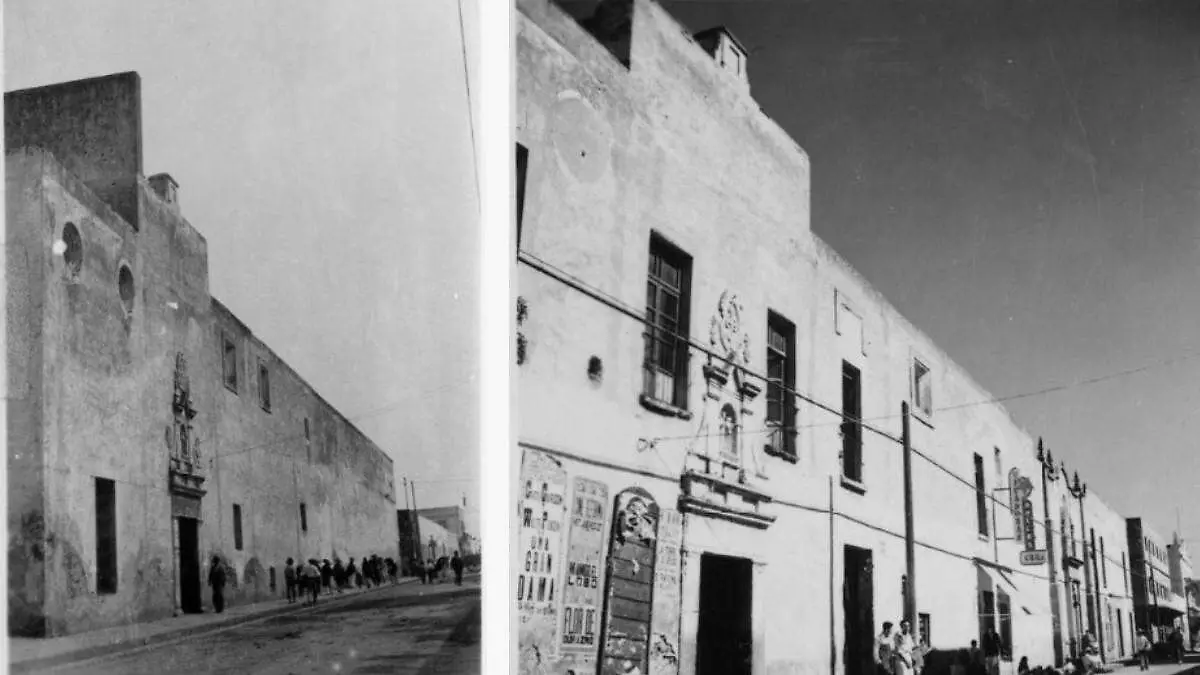
When the hospital closed, the building fell into partial disrepair and was used as a tenement. For a little over two decades, various families lived in the building, but they also damaged its historical value, even using the kitchen as a public laundry.
It was a miracle that it didn’t collapse. During its time as a tenement, walls were perforated and wooden and adobe partitions were added to create rooms. Fortunately, the restorations of the 1970s and the more recent one after the 2017 earthquake managed to recover its essence, he indicated.
Source: oem