
Mexican cuisine has long been a feast of flavor, but primarily known for its spiciness, widely recognized around the world. It is estimated that chili pepper varieties began to be used more than eight thousand years ago, when they were domesticated along with squash, beans, and corn.
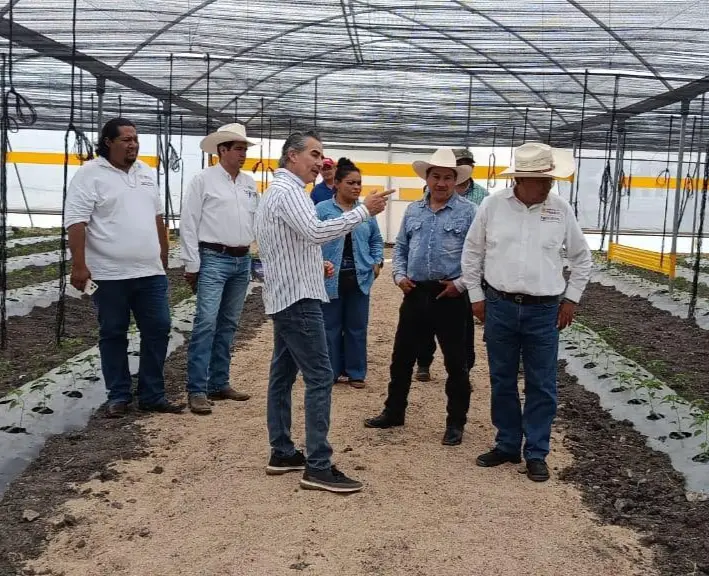
To learn more about this Mexican agricultural product, the Chiapas State Representative Office (OREF) visited the habanero chili pepper nurseries at the Corpus Christi Agricultura Tecnificada production center, located in the town of Emiliano Zapata, in the municipality of Chiapa de Corzo.
The visit included colleagues from OREF, led by Obilfrido Gómez Álvarez, who were welcomed by the owner of the production center, Héctor Fabián Olguín Ruiz, and members of his administrative team.
The habanero pepper is believed to have originated in South America, specifically in the Amazon basin, but when it arrived in Mexico, it found the specific agro-climatic conditions for its development in Yucatán.
As a result, Capsicum chinensis has been in high demand in both the national and international markets, which is why Olguín Ruiz decided to invest and begin building the first greenhouses.
The story of Corpus Christi began when its owner, who has been an entrepreneur for the last 30 years, traveled to California, USA, and visited greenhouses that impressed him with their production process. When the opportunity arose, he acquired land focused on technologically advanced agriculture.
The owner explains that the habanero has experienced tremendous growth and the export market is very large. He emphasizes that this product has many advantages and benefits, starting with its continuous harvest and relatively stable price compared to other crops.
Currently, Corpus Christi is producing three hectares, with another one and a half hectares nearing completion. Their medium-term goal is to cultivate 10 hectares within five years. Three greenhouses are currently operational, and a fourth is under construction.
Each greenhouse houses 20,000 plants, which produce 10 tons of a hybrid variety called PX-11459057 monthly. This variety is characterized by its quality and yield, its attractive appearance, and its intense, glossy orange color and pleasant spiciness.
The farm currently has seven ponds and three water channels. Rainwater is collected from the greenhouses via gutters, and each greenhouse has downspouts that redirect the water to three channels. These channels then carry the water directly to one of the existing ponds and to an absorption well.
When the well exceeds its maximum capacity, water is released into the core zone, home to a wide variety of plants and animals, including boas, iguanas, spiny-tailed iguanas, and especially birds. Ninety percent of the collected water is absorbed by the planted area.
The harvest cycle lasts from 52 to 72 weeks, depending on the care given to the shrub. After this time, it is essential to remove the plant because it produces little fruit and its quality declines.

A single plant can produce up to 60 chili peppers per week, so it’s important to be careful with diseases and pests, such as whiteflies, through biological control. But this doesn’t stop production because the quality of the habaneros is export-grade.
This exchange has been facilitated through intermediaries; for example, the product is sold in the states of Puebla, Mexico City, Nuevo León, Baja California, and, of course, Chiapas.
“The countryside is so beautiful that we’ve been able to provide work for about 70 people, and we plan to hire 30 more soon, which will mean 100 families making a living from this agricultural activity,” he shares.
The work of women in habanero cultivation is also indispensable. They perform what is called “cultural labor,” which is the meticulous care of the plant; there’s no better tool than women’s hands.
Héctor Fabián Olguín’s priority is to increase the square footage of greenhouses, and later they would like to explore the possibility of biofactories, using biomass to produce fertilizers, contributing to the reforestation of urban areas, and collaborating with academia, “so that this becomes a school for people who choose to live from and for the land.”
Without a doubt, agriculture will continue to be the lifeblood of our country. But it is necessary to make it more efficient every day and optimize resources such as water and land. People must invest much more in agriculture because our future lies there, he concludes.
Mexicans, along with chili peppers, are a blend of pre-Hispanic heritage, culture, tradition, and identity. This is the perfect ingredient to enhance flavors in the fields and in the kitchen.

Source: gob