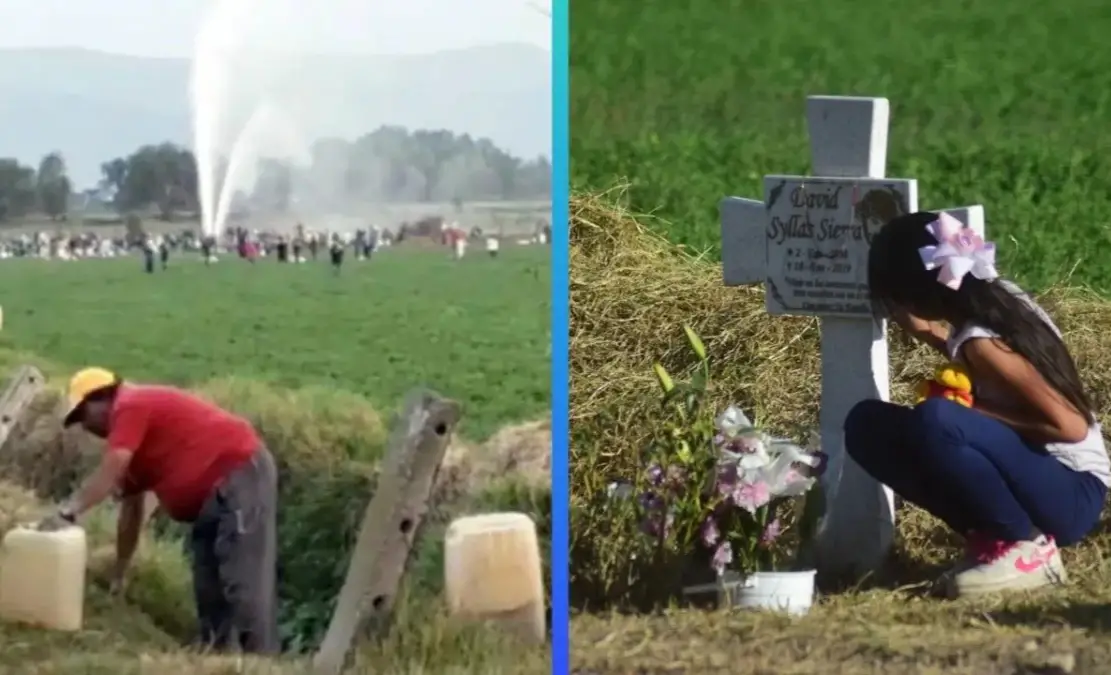

Seven years after the Tlahuelilpan tragedy, where 137 people died, Hidalgo was the state with the highest number of illegal fuel taps (or “huachicol”) in 2025, according to data from Petróleos Mexicanos (Pemex) shared by the Institute of Municipal Management, Administration, and Liaison (IGAVIM).
Between January and September 2025, Hidalgo registered 1,918 illegal taps, a 0.37 percent increase compared to the same period in 2024, when 1,911 taps were recorded. This means that a new tap was identified every three hours and 25 minutes.
Considering the entire year of 2024, Hidalgo also led in the number of clandestine taps located, with 2,450, according to data from IGAVIM obtained through information requests made to Pemex. In 2023, the same state registered 3,667 clandestine taps.
Jalisco, Guanajuato, and Querétaro are the states with the highest number of clandestine taps after Hidalgo, between January and September 2025. It’s worth noting that Guanajuato is the epicenter of the Santa Rosa de Lima Cartel, a criminal group dedicated to fuel theft.
In 2019, the year of the Tlahuelilpan tragedy, Pemex recorded a total of 13,053 illegal taps, a figure that dropped to 9,132 in 2020. In 2023, this crime surged again, with a total of 12,005 taps located, according to data obtained by IGAVIM.
What happened in Tlahuelilpan?
On January 18, 2019, between 2:30 and 3:30 p.m., an illegal fuel tap was discovered in the municipality of Tlahuelilpan, located 58 kilometers west of Pachuca. Only eight people were present at the site, but the alert was spread through social media—such as WhatsApp and Facebook groups—reaching up to 800 people.
The forces of the Gendarmerie and the then-Military Police proved insufficient to disperse the people who were stealing fuel from the pipeline running from the port of Tuxpan (Veracruz) to the city of Tula. Pemex personnel closed the valves, but the tragedy still occurred.
At 6:52 p.m., an explosion occurred at kilometer 226 of the pipeline in question: 69 people died at the scene, and 81 were taken to nearby hospitals with burns of varying degrees. In total, 137 people died, and only 13 were discharged.
The consequences of the Tlahuelilpan tragedy are still visible seven years later: at least 194 children were orphaned, and the soil surrounding the explosion site was contaminated with hydrocarbons, according to a report by the National Human Rights Commission (CNDH).
Source: radioformula