
On the border between Mexico and Guatemala, citizens, business owners, and activists acknowledged a climate of unease and concern on Wednesday following the 30-day state of siege declared by the Guatemalan government to combat gangs and the risk of criminals crossing the border.
Walter Orozco, a businessman from Tapachula, called on Mexican authorities to reinforce the southern border and increase security with patrols in its various sectors, given the fear and uncertainty surrounding the entry of gang members across the southern border.
“The ‘cockroach effect’ of migrants crossing the river. There is practically no control; it serves as a passage for these types of people, and all sorts of things happen there. That is why we are calling on the authorities to reinforce security on the Suchiate River (the natural border between the two countries),” Orozco told EFE.
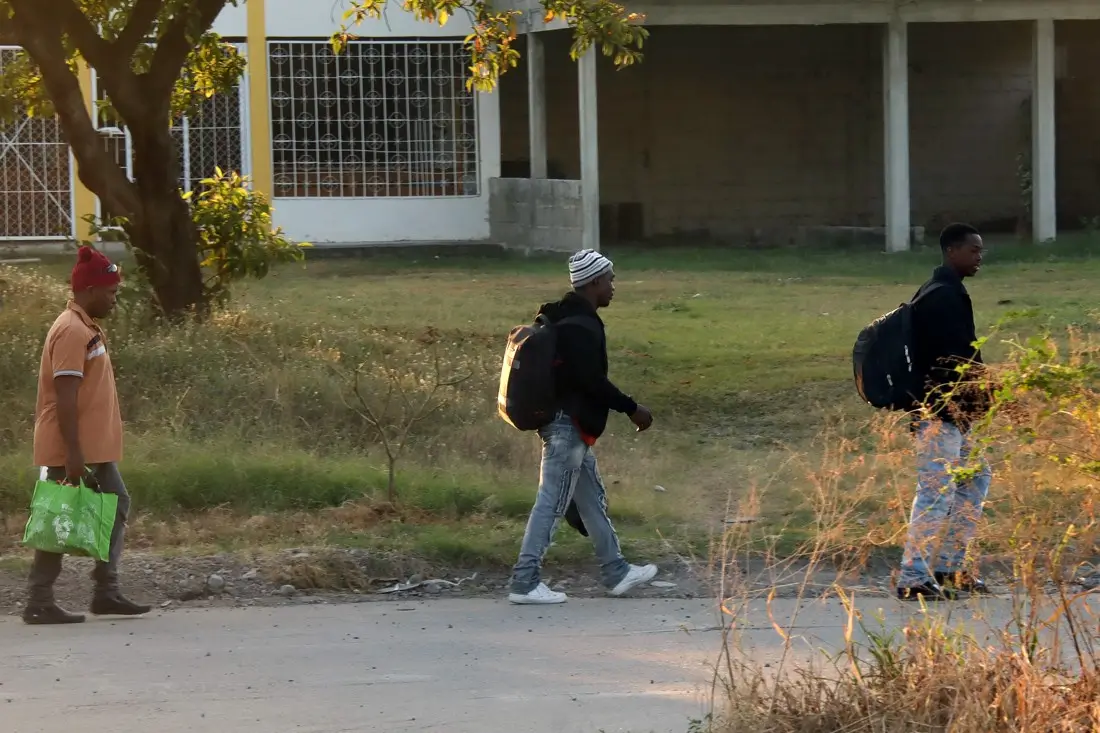
Tapachula, the largest city on the border with Guatemala and located in the state of Chiapas, has been one of the epicenters of the global migration crisis in recent years.

National Guard personnel carry out surveillance operations in Tapachula. (Photo by Juan Manuel Blanco of the EFE news agency)
In this regard, activist and human rights defender Luis Rey García Villagrán, who works on the southern border, pointed out that gang members frequent the offices of the Mexican Commission for Refugee Assistance (COMAR) and the National Migration Institute (INM) to regularize their status or take advantage of vulnerable migrants.
“Tapachula, on the southern border, is ‘Mara’ (gang) territory. There are definitely testimonies from migrants who are allegedly harassed by gang members, and there have been homicides in which they are responsible. The authorities and the public must be very aware of what is happening,” García warned.
From Guatemala, President Bernardo Arévalo de León defended the response capacity and preparedness of his country’s intelligence agencies following the crisis sparked by simultaneous riots in three prisons and a subsequent wave of coordinated attacks against the National Civil Police (PNC).
Arévalo linked the street violence—which has left ten police officers dead—to direct retaliation by “political-criminal mafias” and the Barrio 18 and Mara Salvatrucha gangs. According to the president, these groups attempted to create a hostage crisis that failed due to state intervention.
Meanwhile, José Luis Alvarado, Mexico’s consul in Tecún Umán, a town on the Guatemalan side of the border, told EFE that, for the moment, the state of siege has no implications beyond Guatemala.

“No changes have been reported, as if the situation were normal. We are monitoring the situation closely, but we urge the Mexican population in Guatemala to remain calm and stay informed,” he emphasized.
Regarding the fight against gangs and the possibility that some of their members might enter Mexico, he noted that the fight against organized crime is an ongoing battle, stressing that “there is strong collaboration (between the two countries), not only now, but always.”
Carlos Siles Torres, the socioeconomic representative for the state of Chiapas, stated that the message is to remain calm and prudent, while also indicating that they are monitoring any developments to strengthen security strategies.
“Guatemala is currently experiencing a situation where we must rise to the challenge, but this will help Guatemala begin to create or strengthen strategies that can benefit both countries in terms of binational coordination,” she emphasized.
Mexican President Claudia Sheinbaum announced this Monday that she will contact her Guatemalan counterpart to determine if he requires “any support” after declaring a 30-day state of emergency.
Sheinbaum indicated that everything will be done “with respect” for Guatemala’s sovereignty “and with whatever is needed, but to determine if any special measures are required on our border,” although she clarified that no security measures have been reinforced in that area so far.

Source: elcomentario