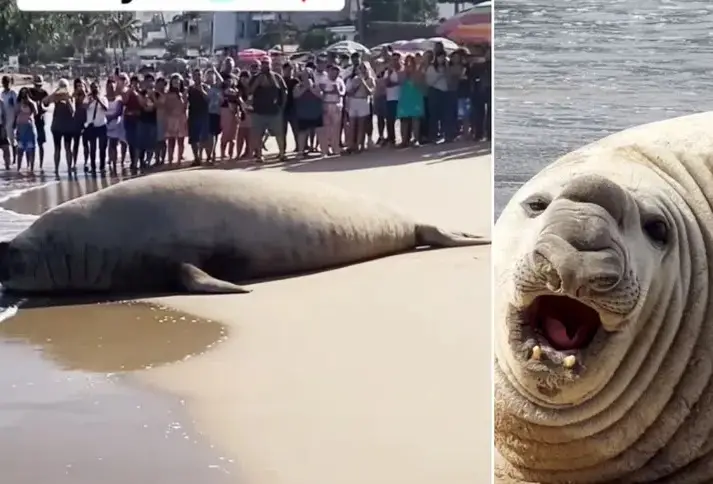

The beaches of Nayarit offer more than just sun, sand, and sea… they also boast a giant elephant seal. Yes, you read that right. This Tuesday, a specimen of this species—which normally inhabits cold waters like those of Antarctica—surprised locals and tourists by appearing peacefully on the sand in Los Ayala, Compostela.
The story began in San Blas, where the enormous mammal was spotted last Sunday. After observing its presence, onlookers left it alone, and the animal returned to the sea. But now, in a new appearance, it decided to take another break and was captured by hundreds of cell phones.
The Mexican Navy, PROFEPA (Federal Attorney for Environmental Protection), Civil Protection, and even firefighters responded to the scene. Not because of a dangerous situation, but to ensure the elephant seal could rest without stress.
Authorities cordoned off the area and asked those present to keep their distance. The priority is for the animal to recover peacefully and then continue its journey back to its natural habitat.
Seeing a southern elephant seal strolling along Mexico’s beaches is extremely rare, so the general recommendation is to keep your distance and simply admire this natural wonder from afar.
This makes it abundantly clear that Nayarit is not only a tourist paradise, but also a place where nature continues to leave us speechless.
The southern elephant seal (genus Mirounga) is a large marine mammal belonging to the Phocidae family, or “true seals.” It is the largest pinniped in existence, characterized by marked sexual dimorphism and an elongated snout in males that resembles that of terrestrial elephants.
Size and Weight: Males can measure up to 5 or 6 meters in length and weigh up to 4 tons, being up to ten times heavier than females.
The Snout: Exclusive to males, this large nose allows them to emit powerful sounds to mark their territory and helps regulate their temperature.
Marine Adaptation: They spend approximately 90% of their lives in the water and are expert divers, capable of diving to depths of more than 2,500 meters and remaining underwater for more than two hours.
)
Source: record