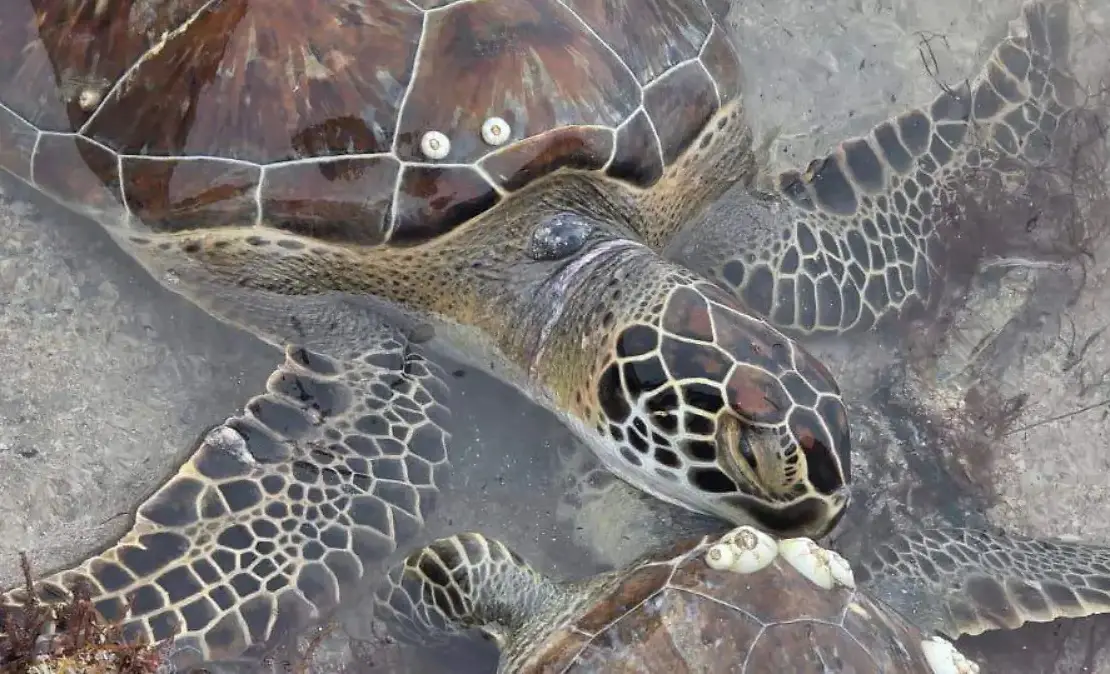

On Tuesday, January 27, residents of Enramadas, in Soto la Marina, awoke to a peculiar sight: a hundred sea turtles had washed ashore. Environmental specialists say the turtles’ presence is a direct result of the low temperatures recorded in Tamaulipas following cold front number 30.
As reptiles, turtles are ectothermic, meaning they cannot generate their own heat and their body temperature depends on the ambient temperature.
It is presumed that the turtles that arrived in Soto la Marina are green sea turtles, classified as Least Concern by the International Union for Conservation of Nature (IUCN) Red List of Threatened Species.
In Mexico, sea turtles are considered protected species under Official Mexican Standard NOM-059-SEMARNAT-2010.
Conibio Global shared a series of photographs on social media showing sea turtles on the coast of Soto la Marina, specifying that the low temperatures increase the risk of hypothermia in the reptiles.
The organization listed a series of suggestions for preserving the species:
Do not handle them.
Report the presence of the turtles to PROFEPA (Federal Attorney for Environmental Protection) or technical personnel in the vicinity.
Arctic air, associated with cold front number 30, caused a drop in temperature in the northeast of the country. In the case of Soto la Marina, Tamaulipas Civil Protection recorded a temperature of 9°C on Sunday the 25th; 7°C on Monday the 26th; and 5°C on Tuesday the 27th of January.
The Ministry of Environment and Natural Resources explains that, being cold-blooded animals, sea turtles come ashore to bask in the sun, seeking warmth.
Thanks to the World Wildlife Fund (WWF) and the Ministry of Environment and Natural Resources, we know the following information:
Sea turtles have inhabited this planet for more than 110 million years, and their current lifespan is half a century. While male sea turtles never leave the water, females come ashore to nest.
There are seven types of sea turtles in the world, six of which inhabit Mexico. Tamaulipas is home to the Kemp’s ridley sea turtle and the green sea turtle.
With the exception of the green sea turtle, the rest of the sea turtles are carnivorous and feed on squid, jellyfish, and sea anemones; meanwhile, green sea turtles prefer algae and seagrass.
Their presence in the Gulf of Mexico fosters environmental balance, having a direct and beneficial impact on the thriving populations of shrimp, lobster, and tuna.
For over 110 million years, sea turtles have swum the world’s oceans. In the last century, the species has faced poaching, bycatch, illegal trade, climate change, marine pollution, and habitat loss.
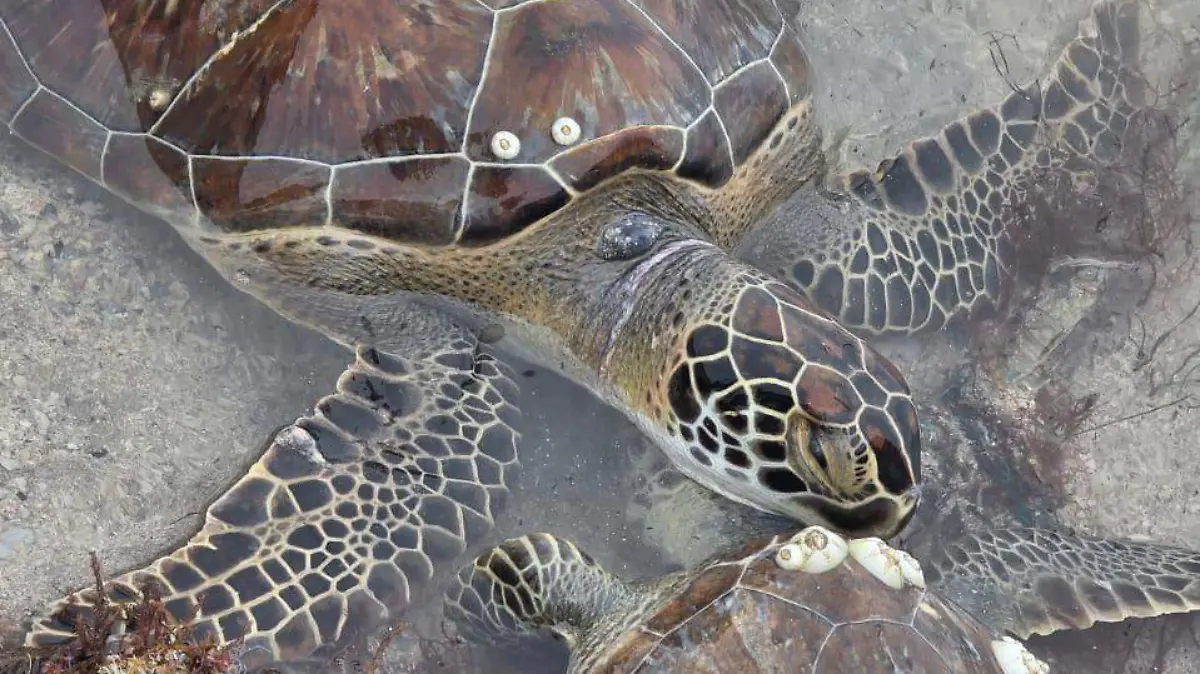
Now, due to the low temperatures in the Gulf of Mexico caused by the Arctic air from cold front 30, a hundred green sea turtles have arrived on the shores of Enramadas, Soto la Marina. Let’s hope they are safe.
Source: oem