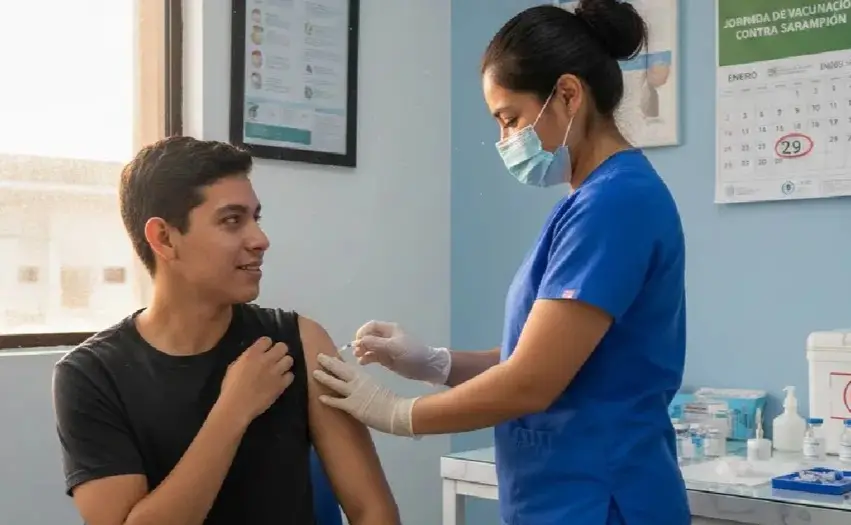

Due to the current epidemiological situation, the Ministry of Health has decided to strengthen the National Vaccination Strategy to address the measles outbreak, which is characterized by being a highly transmissible virus.
The danger of measles stems from its ability to remain active in the environment for up to two hours, during which time an infected person can transmit the virus to 15 or 16 other people. Given this risk, it is important for the public to be informed about vaccination sites and the population groups that should receive the corresponding doses.
Where can I get the measles vaccine in Querétaro?
Currently, there is a sufficient supply of the measles vaccine in the state, so people can go to any state health unit to receive it, regardless of where they live.
As part of these efforts, the municipality of Querétaro has launched a special vaccination campaign taking place on January 29 and 30 at the Civic Center (located at Prolongación Bernardo Quintana 10000, Centro Sur), from 9:00 a.m. to 12:00 p.m. For those requiring additional information about this campaign, authorities have set up the WhatsApp number 442 458 5566.
It is important to note that if a person is unsure whether they have been previously vaccinated against measles, they can get a booster at any health unit. Available vaccination sites include the New General Hospital of Querétaro and the units of the Mexican Social Security Institute (IMSS); in both cases, it is necessary to present the national health card.
Authorities urge citizens to stay informed and get vaccinated promptly, emphasizing that this is the key action to prevent infections and protect the health of the entire population.
There are six toll booths along the route from Querétaro to Aguascalientes, and it’s important to remember that the cost varies depending on the type of vehicle.
The vaccination strategy is divided into priority groups to ensure herd immunity:
Early childhood and childhood: The routine MMR (measles, mumps, rubella) vaccine is administered at 12 and 18 months of age. However, due to the current outbreak, an extraordinary zero dose has been implemented for infants aged 6 to 11 months. Children between 2 and 9 years old who are behind in their vaccination schedules are also encouraged to get vaccinated.
Adolescents and adults: People between 10 and 49 years old who do not have a complete vaccination schedule or are unsure if they have been vaccinated should receive the MR (measles, rubella) vaccine.
Occupational risk groups: Healthcare workers, education personnel, and agricultural workers are considered priority groups due to their high mobility and risk of exposure.
Special cases by year of birth: Adults vaccinated between 1962 and 1967 must be revaccinated, as the formula from that time was less effective; and those who received the dose between 1967 and 1989 must verify their immunity, as only one dose was administered during that period.

Source: telediario