
Mexico City | Let’s get uninformed. The Fray Bartolomé de las Casas Human Rights Center (Frayba) provided evidence of torture, cruel and inhuman treatment, fabrication of culprits, political repression, and prison conditions of the State Centers for Social Reintegration for Sentenced Persons (CERSS) in Chiapas, during the third official visit to Mexico of the UN Subcommittee on Prevention of Torture (SPT).
According to information from Frayba, at least 20 cases of torture and human rights violations were registered in the prison system of Chiapas between 2010 and 2025, of which four correspond to people arbitrarily deprived of their liberty and tortured by the Pakal Immediate Reaction Force (FRIP) in the municipalities of Cintalapa. Frontera Comalapa, Tapachula and Tuxtla Gutiérrez.
Among the cases collected, Frayba highlighted the case of Óscar Trinidad Carvajal, arrested on November 4, 2025, and currently held in CERSS Number 3, “without adequate medical attention or care for his recovery after the torture he suffered.” “Likewise, the young student Yonny Ronay Chacón González, arrested and tortured on March 3, 2019, was sentenced to 31 years and 6 months in prison for a crime he did not commit,” the human rights center said.
In addition to torture and cruel treatment, detainees who enter the CERSS face forced labor, poor food, lack of medical care, overcrowding, and constant threats “both from internal self-government groups and from the prison authorities themselves,” Frayba added. Inside the cells, he continued, prisoners have reported searches, theft of belongings, extortion of both other inmates and CERSS staff, forced labor, and the obligation to pay a “tax” to be able to use the bunk beds.
“In Chiapas, the Prosecutor’s Office for the Investigation of the Crime of Torture was closed, and, in April 2025, the Specialized Unit for the Investigation of the Crime of Torture was established, under the Human Rights Prosecutor’s Office. To date, this instance has not generated significant progress,” the human rights center charged.
Faced with torture as a “widespread practice” in Chiapas prisons, Frayba demanded that the Mexican authorities act against “self-government and corruption” in the CERSS and that complaints of torture and ill-treatment do not go unpunished, through “ex officio, prompt, exhaustive and impartial” investigations.
Finally, it demanded that statements obtained under torture not be used as evidence in any procedure and insisted on the need to respect the right to dignity of persons deprived of liberty, “guaranteeing the physical and psychological safety and integrity of both inmates and their families.”
Below is the full statement:
The Subcommittee on Prevention of Torture [1] (SPT) of the United Nations (UN) made an official visit to Mexico. Within the framework of its mandate, the SPT goes to places of deprivation of liberty – prisons, military installations, psychiatric hospitals, and migrant holding centres – to assess the treatment of persons and to conduct interviews under the principle of strict confidentiality, in order to avoid reprisals. The Fray Bartolomé de Las Casas Human Rights Center (Frayba) provided information on the situation of torture and prison conditions in Chiapas. This was the third official visit of the SPT to Mexico, after those made in 2008 and 2016.
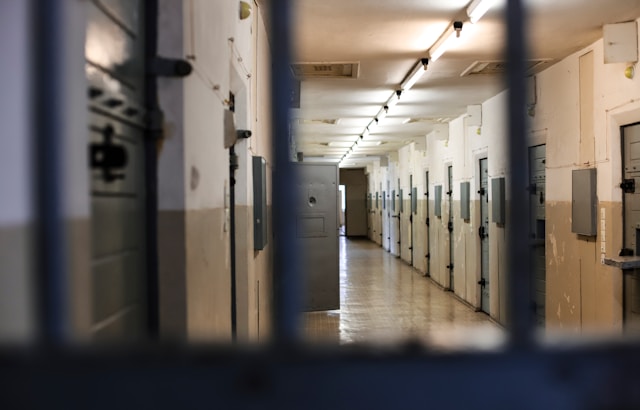
The documentation we carried out shows that human rights violations in the State Centers for Social Reintegration for Sentenced Persons (CERSS) persist. From the very moment of arrest, several persons deprived of liberty are subjected to acts of torture and cruel, inhuman, and degrading treatment, following patterns of fabrication of guilt and political repression. Upon entering the CERSS, they also face forced labor, poor nutrition, lack of medical care, overcrowding, and constant threats from both internal self-government groups and the prison authorities themselves.
Despite the reforms and implementation of the National Mechanism for the Prevention of Torture (MNPT), attached to the National Human Rights Commission (CNDH), torture continues to be a widespread practice. The lack of access to information, following the elimination of the National Institute of Transparency, Access to Information and Protection of Personal Data (INAI), constitutes a barrier to obtaining public data, affecting democracy and limiting the possibility of improving conditions in detention centers.
We have documented 20 cases of torture and human rights violations in the prison system between 2010 and 2025. Four of them correspond to people arbitrarily deprived of their liberty and tortured by the Pakal Immediate Reaction Force (FRIP) in the municipalities of Cintalapa, Frontera Comalapa, Tapachula, and Tuxtla Gutiérrez. Of particular note is the case of Óscar Trinidad Carvajal,[2] who was arrested on November 4, 2025, and is currently being held in CERSS No. 3, without adequate medical attention or care for his recovery from the torture he suffered. Likewise, the young student Yonny Ronay Chacón González [3], arrested and tortured on March 3, 2019, was sentenced to 31 years and 6 months in prison for a crime he did not commit.
The complaints of the persons deprived of liberty and their relatives reveal that the prison situation is inadequate due to overcrowding. There is unjustified segregation in cells with precarious conditions, which prevents inmates and their families from supporting themselves economically. In specific circumstances, the authority charges 10% for the entry of materials and the sale of products, using it as a form of sanction or punishment. Unjustified transfers continue to be a constant problem that exposes inmates to situations of vulnerability and disadvantage, even hindering their social reintegration with their families or the development of their criminal proceedings, since in many cases they are not transferred together with their files, which causes non-compliance with the principle of continuity.
In terms of health, the inmates recurrently present stomach pains and vomiting due to the ingestion of spoiled food, without receiving adequate medical attention. Most suffer from post-traumatic stress and generalized anxiety. Inside the cells, they have suffered searches, theft of belongings, extortion from both other inmates and CERSS staff, forced labor, and the obligation to pay a “tax” to be able to use the bunk beds.
In Chiapas, the Office of the Prosecutor for the Investigation of the Crime of Torture was closed, and, in April 2025, the Specialized Unit for the Investigation of the Crime of Torture was established under the Office of the Prosecutor for Human Rights. To date, this instance has not generated significant progress.
In the face of this, we demand that the Mexican authorities take action against self-government and corruption in the CERSS of Chiapas. It also demands that complaints of torture and ill-treatment do not go unpunished, that investigations be carried out ex officio, prompt, exhaustive, and impartial, and that statements obtained under torture not be used as evidence in any proceedings. It is essential to respect the right to dignity of persons deprived of liberty, guaranteeing the physical and psychological safety and integrity of both inmates and their families.