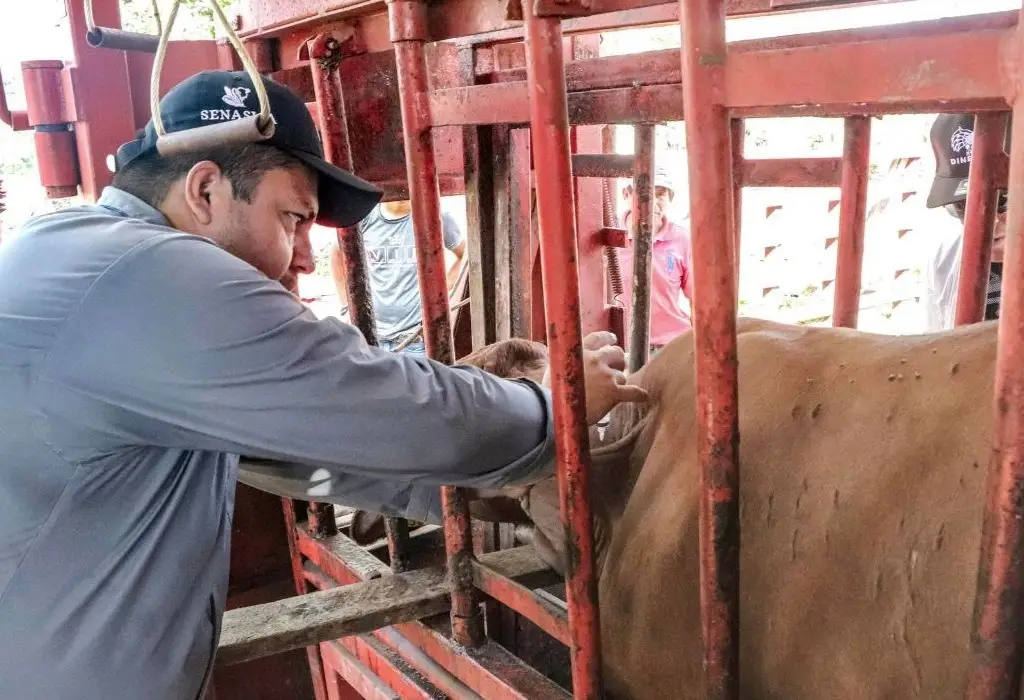

The Ministry of Agriculture and Rural Development (AGRICULTURA) reported positive results in the sanitary strategy implemented to contain the cattle screwworm (GBG) in southern Tamaulipas, northern Veracruz, and the Huasteca Potosina region, through coordinated actions by the National Service for Agrifood Health, Safety, and Quality (Senasica).
During January, technical personnel covered more than 1,600 sanitary routes, inspected more than 80,000 animals, and applied preventive treatments, which reduced the number of active cases in the targeted regions, as part of the reinforced Emergency Operation.
As part of the comprehensive strategy, more than 261 million sterile flies were released, a tool considered key to containing the pest, in addition to strengthening the control of livestock movement through mobile sanitary inspection points.
According to the Ministry of Agriculture, active cases in Tamaulipas decreased from 16 to eight, in San Luis Potosí from nine to four, while in northern Veracruz the number dropped from 30 to 28, indicating a trend toward containing the plague.
The federal agency reported that the special operation will continue until the eradication of the giant bacterial fly (GBF) is achieved in Tamaulipas and the Huasteca Potosina region, as well as its containment in Veracruz. It reiterated its commitment to protecting animal health, the livelihoods of producers, and the country’s food security.

Source: sanluispotosi.quadratin