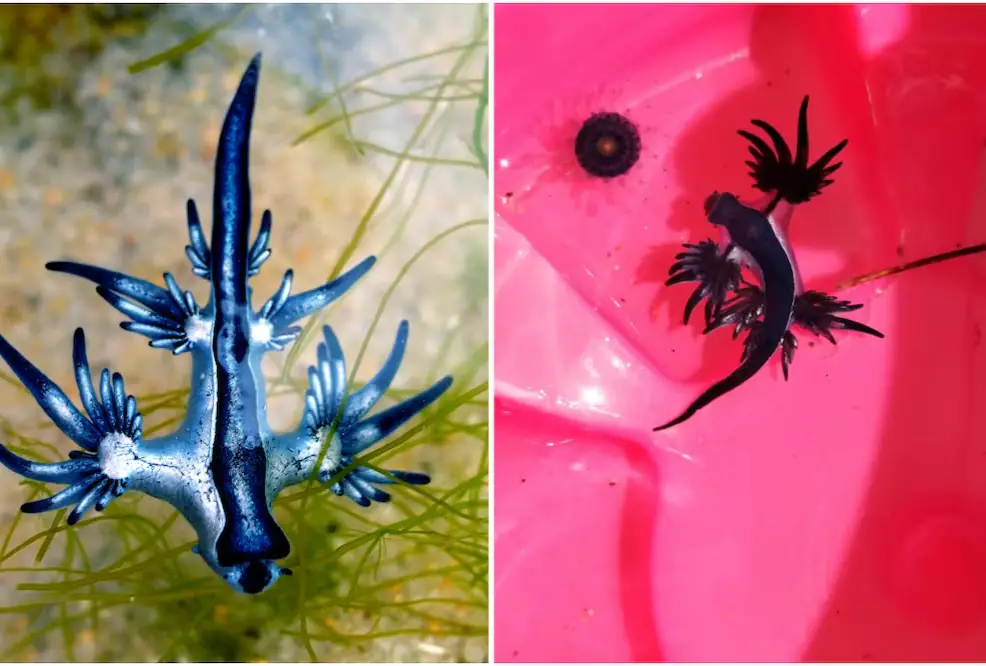

On February 3, 2026, the Colima State Civil Protection Unit (UEPC) issued an alert regarding the presence of a blue dragon, a unique marine species, on the beaches of Manzanillo, urging the public to take precautions and avoid contact with the animal.
They also recommended that visitors remain vigilant while at the beaches and explained that, in case of a sting, they should immediately contact 911 or seek help from lifeguards or emergency personnel for medical attention and appropriate instructions.
According to recommendations from Dr. Julio Armas Castro, in case of a sting, it is advised not to rub or scratch the area, but rather to rinse the affected area with seawater or salt water, avoiding the use of fresh water. Additionally, it is recommended to apply an ice pack wrapped in a cloth to reduce swelling, avoiding the use of home remedies such as vinegar.
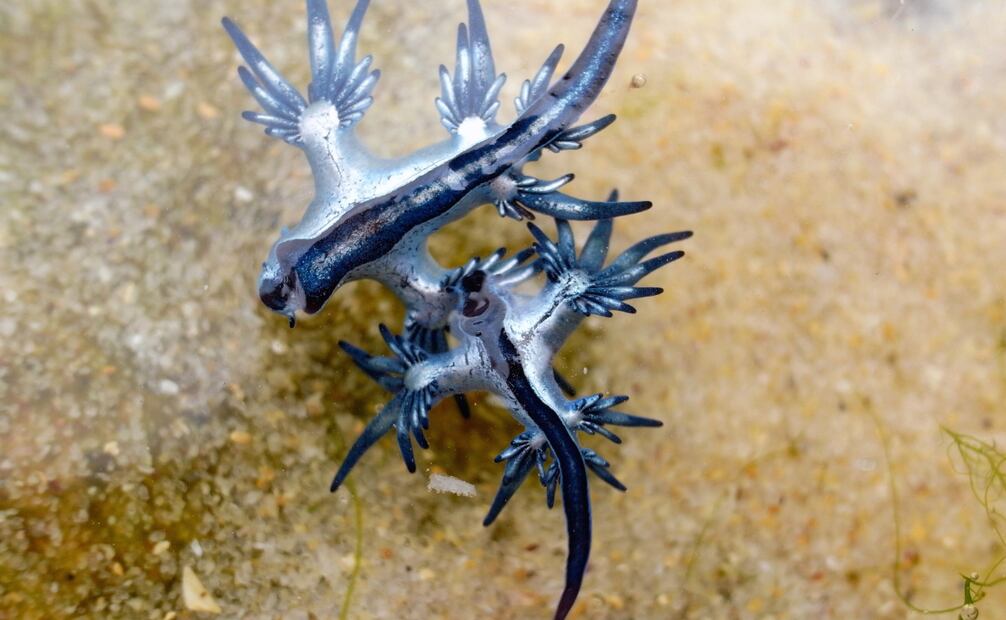
According to National Geographic, the blue dragon, scientifically known as Glaucus atlanticus, is a small sea slug that can reach between 3 and 4 centimeters in length. Its elongated body is characterized by an intense metallic blue color with a silvery sheen, allowing it to camouflage itself from predators.
This species also has six branched appendages called cerata, which resemble feathery wings, giving it an exotic appearance. Although the mollusk typically inhabits open waters in the mid-to-surface areas, avoiding the seabed and coastlines, it can sometimes be carried by ocean currents.
This species is hermaphroditic, meaning it possesses both male and female reproductive organs. The blue dragon moves across the surface by swimming on its back, thanks to an air bubble in its stomach. It feeds on other venomous organisms, such as the Portuguese man-of-war jellyfish.
Despite its size, the sting and direct contact with the blue dragon jellyfish can cause intense pain, as well as itching, redness, swelling, and blistering of the skin, including other skin and allergic reactions, more intense and painful than those of any of the common jellyfish species.
This is because its cerata allow it to store the venom of its prey and use it for defense, releasing the toxic substances only when its appendages are compressed. Therefore, the detection of this specimen on the state’s beaches alerted authorities and drew the attention of the local population and other visitors.
Source: eluniversal